
What happened
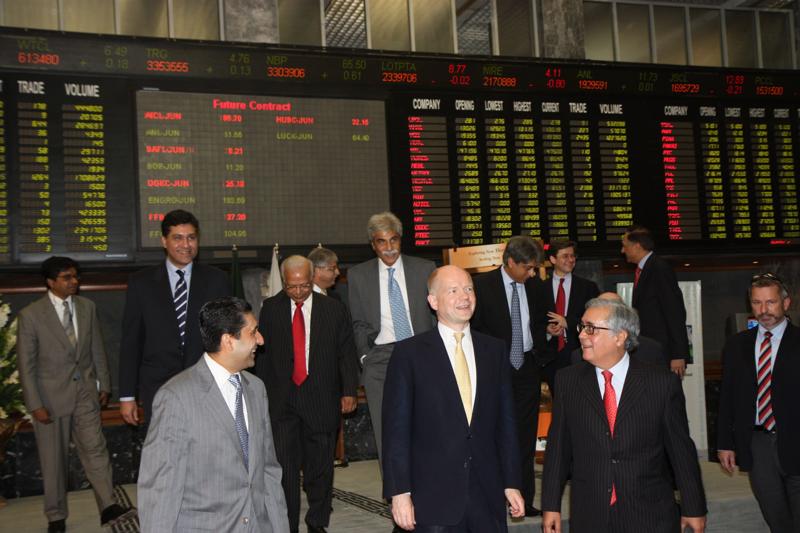
Pakistan’s benchmark KSE-100 index posted its largest-ever single-day fall on Monday, 2 March 2026, closing down 16,089.17 points, or 9.57 per cent, at 151,972.99 as panic selling over the widening Middle East conflict swept the Pakistan Stock Exchange.
The index had closed at 168,062.16 on the previous Friday. Selling began at the opening bell, and the KSE-100 plunged more than 15,000 points within minutes. The sharp fall in the KSE-30 index triggered an automatic circuit-breaker halt at 9:22am, suspending equity trading for about an hour before the market resumed. Intraday, the benchmark swung between a high of 159,328.59 and a low of 151,747.96.
“Due to panic selling, PSX fell 9%. Leveraged position coupled with Iran and Afghanistan positions added fuel to the fire,” Topline Securities chief executive Mohammed Sohail told The News. Analysts described the session as a “bloodbath” and said the index had fallen about 19 per cent from its January peak of roughly 189,000.
Why the market fell
The sell-off followed the joint United States and Israeli strikes on Iran over the weekend and Tehran’s retaliatory missile barrages across the region, which raised fears of a broader war and a disruption to global energy supplies. Oil prices jumped on the opening, with Brent crude briefly climbing above $82 a barrel before easing, and attention focused on the Strait of Hormuz, through which about a fifth of the world’s seaborne oil passes.
Commercial banks, fertiliser, oil and gas and cement stocks led the decline. Analysts said the slide was compounded by an already weak market: the KSE-100 had fallen in February as well, and on Sunday 1 March the earlier Pakistan-Afghanistan hostilities had weighed on sentiment.
The outlook
Brokerages differed on how quickly the market would recover. AKD Securities said the KSE-100 had “overreacted” to the conflict and that it expected the index to stage a recovery because the direct economic impact on Pakistan appeared manageable and the country “is not a direct party to the conflict.” Topline Research warned that the Strait of Hormuz risk remained central and that volatility could persist until the conflict is resolved or de-escalates.
What is still uncertain
It was not clear at publication how long the circuit-breaker halts would stay in force in coming sessions, whether the market would rebound or extend its losses, or how far oil prices would move. The KSE-100 remained close to the 20 per cent decline from its peak that is commonly used to define a bear market.
Sources & reporting notes
This is a synthesis of published material, not eyewitness reporting. Sources were reviewed on 2026-03-03.
- The News International — Massive sell-off wipes out 16,000 points at PSXPublished 2 March 2026 · Closing level, point and percentage decline, previous close, intraday range, the one-hour trading halt and Mohammed Sohail's comments.
- Dawn — KSE-100 plunges 16,089 points in record one-day dropPublished 2 March 2026 · Chronology of the morning crash, the halt, the partial recovery and the oil-price and AKD Securities reaction.
- The Express Tribune — PSX tumbles over 16,000 points as panic selling over Middle East war triggers record single-day fallPublished 2 March 2026 · Sector-level detail, the circuit-breaker trigger and the January peak used to measure the drawdown.
.jpg)