Reporting snapshot · 22 Feb 2026. The weekly figures reflect trading through Friday 20 February 2026. Market conditions remained volatile.
What happened
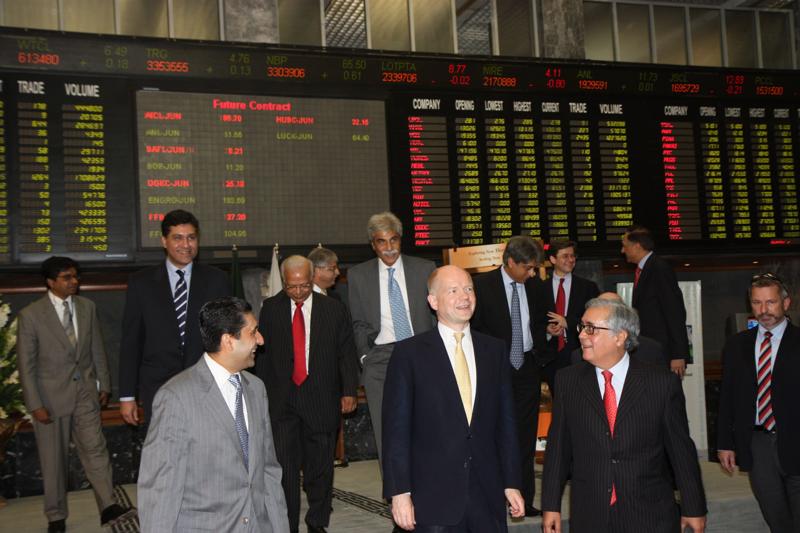
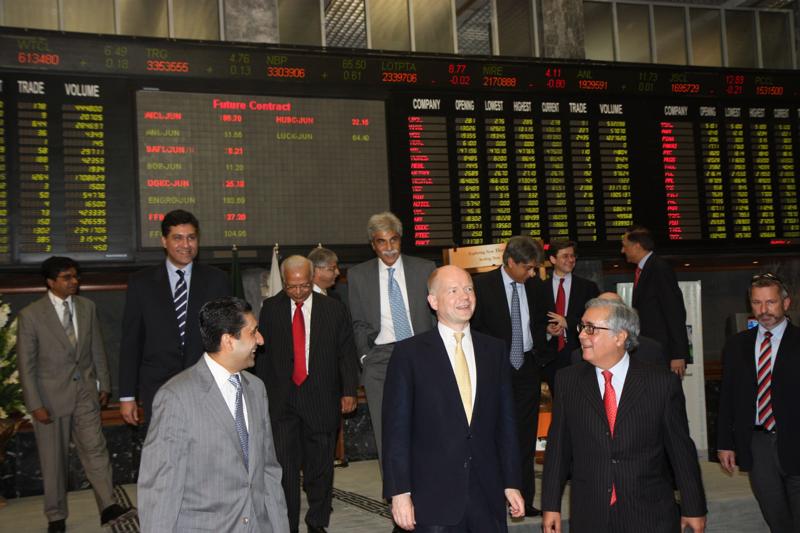
Pakistan’s benchmark KSE-100 index extended its slide for a second consecutive week, closing at 173,170 points, down 3.6 per cent week-on-week, as persistent foreign selling and rising geopolitical tension overshadowed a mid-week rebound, brokerage data showed.
Arif Habib Limited’s weekly review, reported by The Express Tribune, said the index ended the week 15,997 points, or 8.5 per cent, below its January 2026 peak of 189,167. The Pakistan Stock Exchange opened the week with a sharp sell-off, the KSE-100 plunging 5,150 points (-2.87 per cent) to close at 174,454, then slipped a further 1,304 points (-0.75 per cent) to 173,150. It staged a strong rebound on Wednesday, surging 5,703 points (+3.29 per cent) to 178,853, before heavy selling returned on Thursday, when the index fell 6,683 points (-3.74 per cent) to 172,170. The benchmark consolidated on Friday, closing 999 points (+0.58 per cent) higher at 173,170.
Why it matters
The decline reflects a market pulling back from record highs reached in January amid a confluence of external and domestic pressures. JS Global’s Syed Danyal Hussain attributed the weak global sentiment to escalating Iran-United States tensions, which lifted international oil prices, with Brent crude rising to a seven-month high of about $72 a barrel. Pakistan is a net oil importer and is exposed to higher energy costs through inflation and the external account.
Domestically, the market was cautious ahead of an International Monetary Fund mission scheduled to arrive on 26 February 2026 to review Pakistan’s progress under the $7 billion Extended Fund Facility and begin discussions on the next federal budget. On the economic data front, large-scale manufacturing output grew 0.4 per cent year-on-year in December 2025, up 9.3 per cent month-on-month; the high-speed diesel price rose Rs7.32 to Rs275.70 a litre; auto financing rose 35.8 per cent to Rs328 billion in January 2026; and the trade deficit stood at $2.76 billion for the month, with exports of $3.1 billion and imports of $5.8 billion. January also recorded a current account surplus of $121 million, while the cumulative July-January deficit reached $1,074 million.
What is still uncertain
Whether the correction has run its course or marks a deeper reassessment of Pakistan’s market outlook remains open KhabarWire’s report on the record 19 February crash traced the steepest single-day fall of the episode. Analysts flagged the pending IMF review, foreign portfolio flows and the trajectory of oil prices as the variables most likely to determine direction, with the 172,000-170,000 range seen as critical support.
Sources & reporting notes
This is a synthesis of published material, not eyewitness reporting. Sources were reviewed on 22 February 2026.
- The Express Tribune — "Bearish run continues for second week at PSX"Published 22 Feb 2026 · KSE-100 weekly close of 173,170 and the 3.6 per cent fall, the day-by-day moves, Arif Habib Limited's data on the January peak, the macro indicators (LSM, RDA, diesel price, auto financing, trade and current account) and JS Global's commentary on US-Iran tensions and the IMF mission.
- NewsGuru — "PSX Falls 3.6% Amid Investor Caution"Published 22 Feb 2026 · Corroborating summary of the weekly decline, the January peak comparison and the scheduled arrival of the IMF mission on 26 February 2026.