Reporting snapshot · 9 October 2026 (Asia/Karachi). Prime Minister Shehbaz Sharif chaired the 8 October 2026 Digital Nation Pakistan Programme review in Islamabad and directed all federal ministries to provide their digitised data to the central data centre. Health, agriculture and other "basic service sectors" were singled out as the first priorities, while the Ministry of Law was tasked with consolidating national legislation onto one platform. The article is a dated synthesis of the meeting, not eyewitness reporting. No timeline for the central data centre's public launch, no completion date for sector-specific digitisation and no central cost figure have been published by the Ministry of IT and Telecom.
What the prime minister ordered
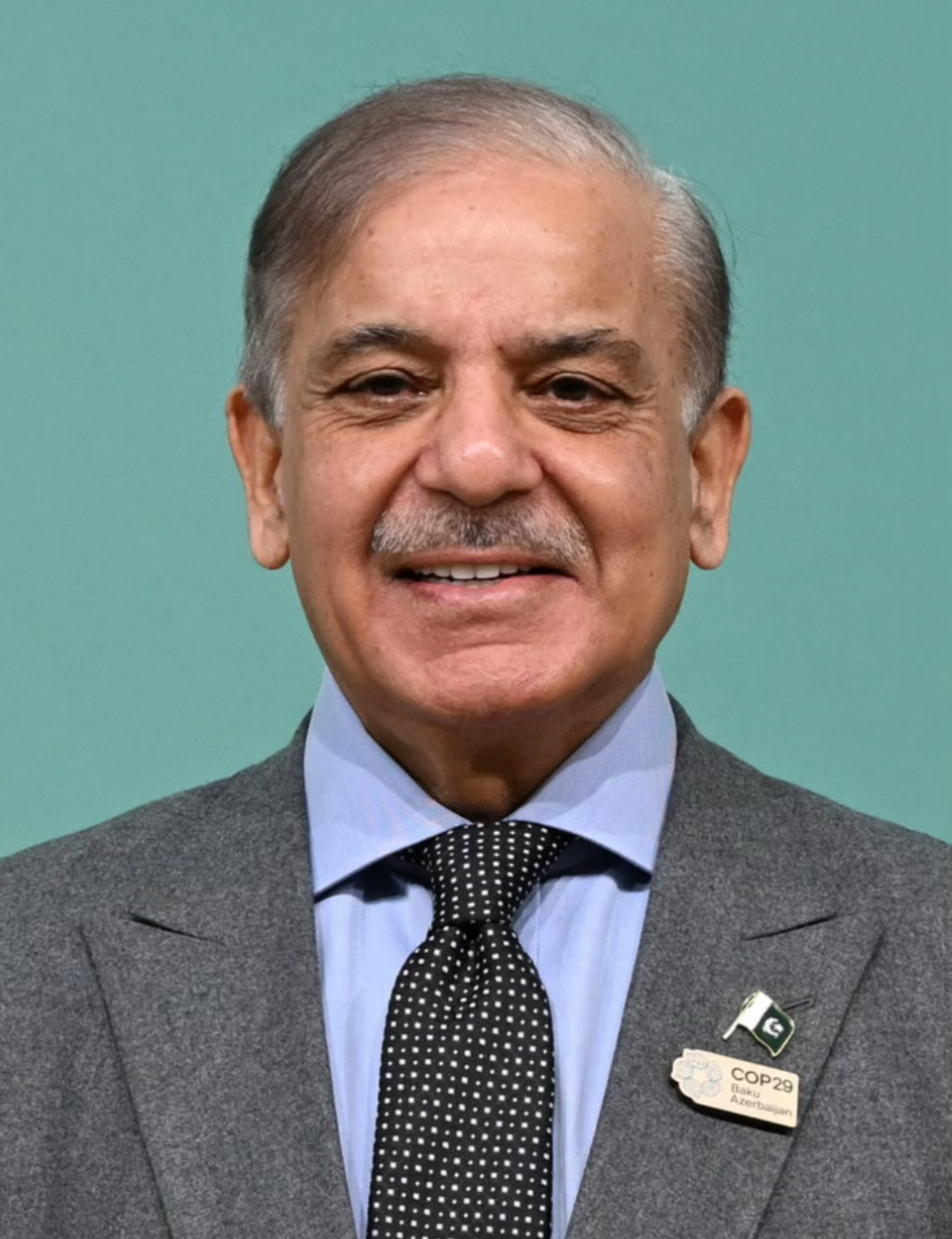
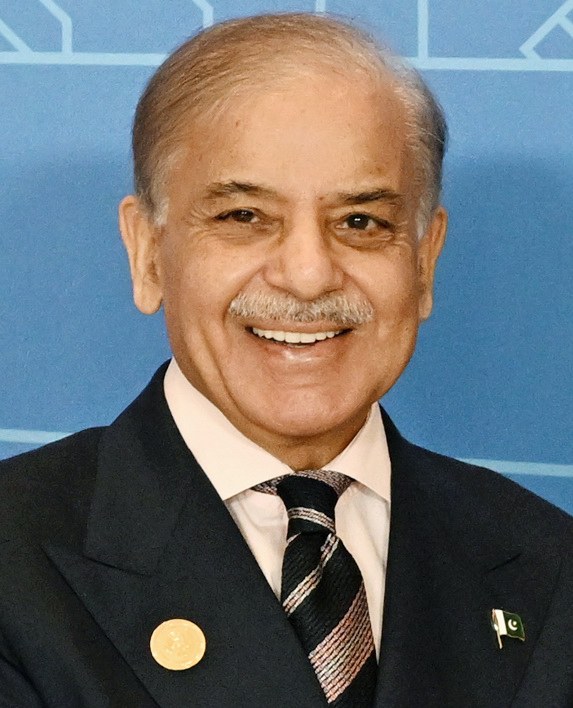
Prime Minister Shehbaz Sharif on Thursday, 8 October 2026, directed all federal ministries to complete, within a stipulated timeframe, the measures needed to digitalise their data and send it to the national central data centre under the Digital Nation Pakistan Programme, in coordination with provincial governments and the institutions concerned, Radio Pakistan reported.
Chairing a progress review meeting in Islamabad, the prime minister said the central national data centre “would play a key role in the delivery of government services and provision of facilities to citizens”, according to the same state-broadcaster account. He framed digitisation as a precondition for bringing the federal government’s workings “in line with modern requirements” and for moving the economy onto a more efficient digital base, the Associated Press of Pakistan (APP) carried.
Shehbaz specifically tied the data centre to the running of the fuel subsidy scheme for “deserving segments of society”, saying inter-agency data sharing was why the subsidy had worked in practice, the Express Tribune confirmed. He argued that digitisation of ministry performance and data was “important for preventing corruption and institutional mismanagement”.
Which sectors are first
The Ministry of Information Technology briefed the meeting that “comprehensive measures were being taken for sector-specific digitisation” and that health, agriculture and other ministries “serving the common man” had been prioritised, Radio Pakistan reported. The prime minister singled out the Ministry of National Health Services, commending the steps taken — with provincial counterparts — to build a universal medical record at the national level and to roll out QR codes to verify and trace the supply of quality medicines.
The Ministry of Information Technology, working with the Ministry of Law, was also tasked with consolidating “relevant national laws” onto one platform to “provide better guidance for future legislation”, Radio Pakistan said.
The prime minister also received individual briefings from the federal ministries on their current public-service offerings and the data they were feeding into the centre, APP reported, with the Ministry of National Health Services giving a separate briefing on its data and the QR-code medicine verification.
Why the central data centre matters now
The directive is the clearest top-level signal yet that the central data centre has moved from a policy slogan to a working deliverable. The fuel subsidy is the proof point Shehbaz used. The subsidy was rolled out in mid-2026 after the IMF staff-level agreement and the launch of the Pakistan Identity, Beneficiary and Protection (IBCC) targeting system, and was designed to direct monthly fuel credits to verified bikers, rickshaw drivers and other low-income beneficiaries through a database matched to NADRA’s national ID and to vehicle registrations, as KhabarWire reported on 13 September and on the 15 September rollout. Shehbaz’s framing — that “data sharing among institutions had played a key role in its successful implementation” — is the political acknowledgement that the same data plumbing must now extend across the federal government.
The anti-corruption framing is also a thread through the meeting. The prime minister told the gathering that digitisation was “important for preventing corruption and institutional mismanagement” — language that aligns with the government’s stated priorities of widening the use of digital channels for citizen-facing services and reducing the manual handoffs that have historically been the point of leakages in fuel-subsidy, tax-refund and welfare-payment flows. Wider context for the digitisation push includes the IMF-mandated agenda through the 19 September fourth-review read-out and the digital-government work Pakistan showcased at the 6–7 October ASOCIO Digital & AI Summit in Jakarta, where eleven Pakistani organisations won categories on 6 October.
What was and was not announced
Three points are on the record. First, the deadline: every federal ministry must, within a “stipulated timeframe”, digitalise its data and send it to the central data centre; the exact timeline is not published. Second, the priority list: health, agriculture, law and other “basic service sectors” are first. Third, the design intent: the data centre is positioned as the single national repository that all ministries must feed, with the Ministry of IT and Telecom as programme manager and the Ministry of Law as a contributor on legislation.
Three points are absent. First, no overall cost figure for the central data centre. Second, no procurement timetable, vendor list or interoperability standard (open API versus a government-specified schema). Third, no public-facing access plan has been laid out — whether citizens will be able to see what the state holds on them, in line with the data-protection obligations the Personal Data Protection Bill 2024 would impose once enacted.
What is still uncertain
Three open questions follow the 8 October order. First, what the centre will do once populated. Two strands are plausible. It could be primarily an internal interoperability layer to unify ministries and cut manual reconciliation, like India’s JAM trinity. It could be a citizen-facing identity wallet, with a single sign-in to government services, closer to Singapore’s Singpass. The readout describes both ends — Shehbaz said the data centre would help “delivery of government services and provision of facilities to citizens”, while the IT ministry’s briefing positioned it as a back-end consolidation tool. The published material does not privilege one over the other.
Second, the legal architecture. Pakistan has no comprehensive federal data-protection law in force; the Personal Data Protection Bill is still pending in Parliament. That creates real legal risk for a data centre that aggregates personal data across every federal ministry. A separate gap is the legal enforceability of any cross-ministry data-sharing mandate; federal-provincial coordination has historically depended on political agreement, and there is no published reconciliation mechanism for a provincial dispute in the 8 October order.
A related question is whether the centre will absorb or sit alongside the National Database and Registration Authority (NADRA)’s master ID, the IBCC targeting database and the Federal Board of Revenue’s taxpayer registry. Each is already a large national dataset under its own statute; coordination — not consolidation — is the more likely near-term answer.
The political timing is worth flagging. The fuel-subsidy cross-check argument made the central data centre a fiscal-viability story for the IMF, not only a service-delivery story. The Sharif government has committed to phase out the subsidy under its 8 October IMF staff-level agreement on the $1.2 billion fourth review, and a working data centre strengthens the case that phasing out the subsidy will not mean losing the targeting data that made it work — a quiet but consequential point for the IMF programme’s implementation through the rest of FY27.
Sources & reporting notes
This is a synthesis of published reporting on the 8 October 2026 Digital Nation Pakistan review, not independent on-the-ground reporting. Quotations are attributed to the cited sources. The key directive, sectoral priorities and named agencies were cross-checked across the state-broadcaster readout and two independent news organisations. The internal anti-corruption framing was drawn from the same primary record. Sources were reviewed on 9 October 2026.
- Radio Pakistan — PM emphasizes timely digitization of relevant govt data8 October 2026 · Primary state-broadcaster account; the most direct record of the prime minister's directive, the central data centre's role, the priority sectors (health, agriculture, law), the QR-code medicine verification work and the Ministry of IT and Telecom's briefing.
- Express Tribune — PM orders ministries to push digitisation9 October 2026 · Independent confirmation of the directive and the anti-corruption framing; corroborates the central data centre's positioning in fuel-subsidy implementation and the Ministry of Health's universal-medical-record and QR-code work.
- Associated Press of Pakistan (APP) — official feed8 October 2026 · State newswire account of the review, with individual ministry briefings on data being fed into the central data centre and the QR-code medicine verification system.
- Radio Pakistan — Pakistan, IMF reach staff-level agreement for $1.2b tranche8 October 2026 · Context on the same-day IMF staff-level agreement; relevant because the central data centre work intersects with the IMF's call to phase out the fuel subsidy without losing targeting accuracy.