Reporting snapshot · 9 October 2026. Dates, scale and the lead organising bodies are confirmed by the Arts Council of Pakistan Karachi and the Sindh government; full country-by-country line-up, ticketing links and venue maps were still pending at the time of writing and may change before the 29 October opening.
What was announced
The Arts Council of Pakistan Karachi and the Sindh government will stage the third edition of the World Culture Festival in Karachi from 29 October to 22 November 2026, with artists from about 150 countries due to take part across 25 days, the Arts Council president Ahmad Shah told the Express newspaper on Thursday. Pakistan Today ran the same announcement the same day, and the Arts Council’s official Instagram account confirmed the dates in a 3 October reel that the Tribune story embedded.
The festival will bring together more than 1,000 international performers and over 500 Pakistani artists, with about 80% of the programmes free and the remaining ticketed events limited to six to eight headline concerts, Shah said. The Arts Council did not publish a full country-by-country line-up, schedule or venue map on 8 October and said those would follow closer to the opening night; this article will be updated once the council publishes those details.
Shah framed the third edition as the largest yet by country count, telling the Tribune that the first WCF in 2023 drew artists from 43 countries and the second in 2024 brought artists from 144. The 150-country figure for 2026, if confirmed by the published programme, would mark a small but visible step up from the previous edition and would come after both earlier events were held in Karachi.
Who is behind it
The festival is a joint venture between the Arts Council of Pakistan Karachi, a private-sector cultural body, and the Sindh government, with federal ministries and security agencies also coordinating on logistics, Shah said. The festival’s day-to-day anchoring at the Arts Council’s main campus on M.R. Kiyani Road means the institution remains the operational hub, while provincial departments handle the surrounding infrastructure, security and international delegations.
Shah, who is also the Arts Council’s elected president, has led the institution through all three editions and made cultural diplomacy the central pitch for the 2026 line-up. “We decided to use cultural diplomacy to remove misconceptions about Pakistan, Sindh and Karachi,” he told the Tribune, arguing that inviting foreign artists and delegates so they can “experience the country firsthand” was a deliberate message back to international audiences. Sindh Chief Secretary Syed Asif Haider Shah added that the province wants to extend the festival’s footprint beyond the Arts Council by turning the surrounding area into what he called an “Art Village” with road improvements, lighting, benches and pedestrian pathways before winter.
Sindh Culture and Tourism Minister Syed Zulfiqar Ali Shah told the Tribune that all relevant provincial departments had been mobilised and that coordination is also under way with the Civil Aviation Authority, the Airport Security Force, police and other security agencies. The festival’s broader political framing — that Pakistan has moved past being “previously associated with the image of terrorism” and is using cultural events to project a positive identity — was repeated by both Shah and the minister, and aligns with the federal government’s push to grow cultural tourism, which the minister said had risen by about 50% over the past three years.
What is new for the 2026 edition
Three elements distinguish the 2026 festival from the 2023 and 2024 editions, beyond the higher country count:
- Programme length. The 25-day run is the longest in the festival’s history. The 2023 edition ran on a shorter timeline, and the 2024 edition was a multi-week but more compressed programme. The 2026 window deliberately extends through most of November, including the run-up to the 22 November closing.
- Provincial infrastructure plan. Sindh has committed to an “Art Village” surrounding the Arts Council, with a coordinated plan from the Karachi Metropolitan Corporation, town administration, the Water Board and the deputy commissioner’s office to complete road and lighting work before winter. The 2024 edition operated largely within the institution’s own grounds.
- Cultural-heritage framing. Pakistan’s traditional instruments — Shah named the algoza and borindo from Sindh — and the launch of a Shah Latif Voices Festival alongside the event are new elements aimed at provincial heritage, alongside a Mehran Night showcasing Sindhi culture. The previous editions emphasised international music and dance line-ups.
The country mix is also notable for the explicit inclusion of Iraqi, Palestinian and Iranian contingents, alongside larger returns from the United States, Latin America and European countries. Shah said two Palestinian theatre groups had confirmed participation and noted that several members of those groups had been killed — a point he raised to underline what he characterised as the importance of cultural exchange under pressure, rather than to detail any specific troupe.
What audiences will see
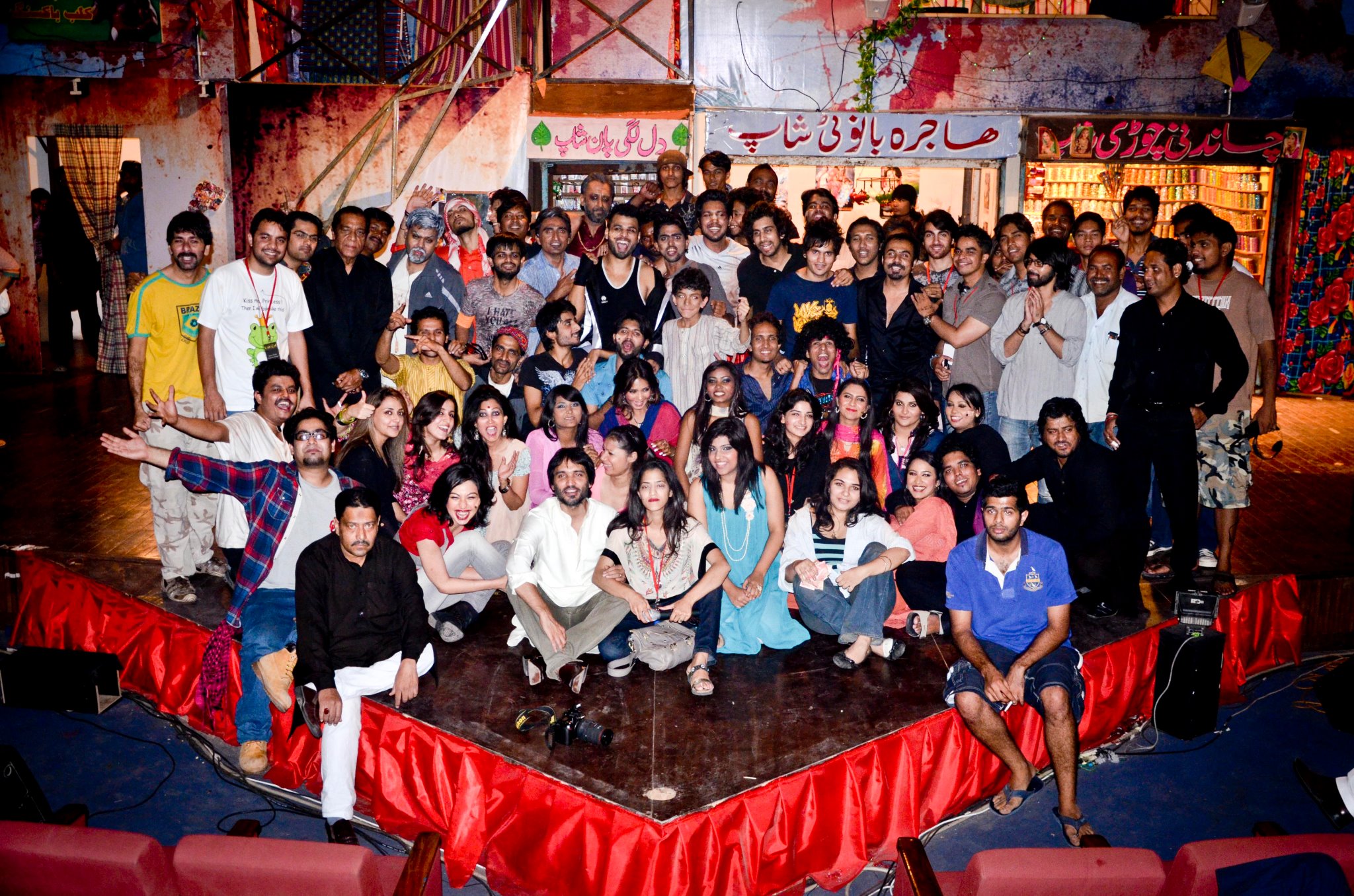
The Arts Council said the festival will combine theatre, music, dance, film and visual arts in one programme, with Pakistani performers from Sindh, Punjab, Khyber-Pakhtunkhwa, Balochistan, Kashmir and the Seraiki belt appearing alongside international artists. Fusion performances involving Pakistani and foreign acts are a recurring feature from earlier editions and are again scheduled, with the Arts Council highlighting Sindh’s traditional music for special focus this year.
Access and ticketing are central to the festival’s positioning. Shah’s announcement that about 80% of the programmes will be free, with advance registration required, reflects an attempt to keep the festival as a public cultural event rather than a gated international arts fair. Six to eight headline concerts will be ticketed; prices were not announced on 8 October.
What is still uncertain
- The published country list and the full schedule of performances, including the timetable of free and ticketed events.
- The venue list beyond the Arts Council main campus, including any performances in other Karachi venues and the format of the proposed “Art Village” surrounding the institution.
- Ticketing arrangements for the headline concerts, including price tiers, on-sale dates and platform.
- The security and diplomatic protocol for the foreign delegations, including the airport-reception arrangements the Civil Aviation Authority and ASF are coordinating.
- How the Pakistan-foreign fusion slots are sequenced and whether the Shah Latif Voices Festival will run as a separate track or be folded into the main programme.
Sources & reporting notes
This article is a synthesis of published reporting and the Arts Council's official statement on 8 October 2026, not eyewitness coverage. Sources were reviewed on 9 October 2026.
- The Express Tribune — World Culture Festival to bring artists from 150 countries to Karachi8 October 2026 · Primary reporting: the 25-day window, the 150-country and 1,500-artist figures, the 80%-free model, the "Art Village" infrastructure plan and the Pakistan-foreign fusion slots. Source of Shah's direct quotes on cultural diplomacy and the security-led hosting model.
- Pakistan Today — Karachi to host artists from 150 countries at World Culture Festival8 October 2026 · Independent confirmation of the dates, scale and organising bodies, with the Arts Council as the lead operator and the Sindh government coordinating provincial departments.
- Arts Council of Pakistan Karachi — World Culture Festival Karachi 2026 reelPosted 3 October 2026 · Primary record from the official Arts Council account: "World Culture Festival – Karachi 2026, bringing Pakistan to the World from October 29 to November 22, 2026 at Arts Council of Pakistan, Karachi." Embedded by the Tribune in its 8 October story.
- KhabarWire — Lahore to hold 10-day Basant festival from 29 January 202730 September 2026 · Context on how Pakistani provincial governments are planning longer cultural festivals this season, with explicit safety-and-crowd-management rules layered on top of multi-day runs.