Reporting snapshot · 11 October 2026 (Asia/Karachi). The prime minister's directives were issued at a Saturday customs review meeting and posted on the Prime Minister's Office X account on 10 October. Pakistan Today reported the meeting and the directives on 11 October. Independent confirmation from a separate wire or national daily was not located at the time of writing; the directives are taken from the PMO X-post and the Government of Pakistan X-post reproduced in the Pakistan Today report. Any updates to the rollout timeline or the FBR enforcement statistics will be reflected in this article.
What happened
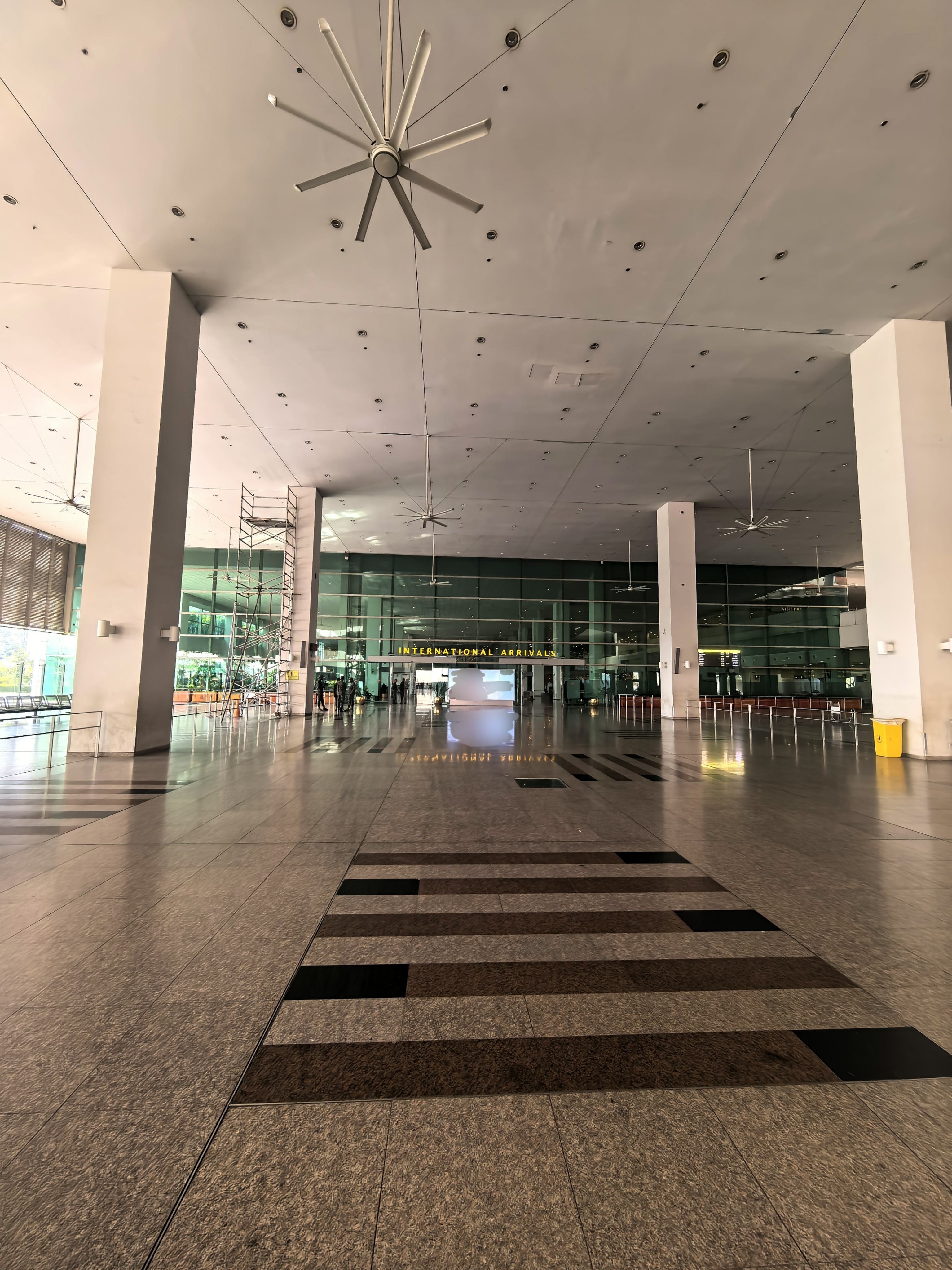
Prime Minister Shehbaz Sharif on Saturday ordered the immediate import and installation of smart scanners at every international airport in Pakistan, telling officials to end the long-standing practice of manual baggage searches once the new equipment is in place, Pakistan Today reported on 11 October 2026.
The prime minister issued the directives at a customs review meeting in Islamabad attended by Deputy Prime Minister and Foreign Minister Ishaq Dar, Law Minister Azam Nazeer Tarar, Industries and Production Minister Dr Musadik Malik, Interior Minister Ahad Khan Cheema, Information Minister Attaullah Tarar and Minister of State Bilal Azhar Kiyani, according to a Prime Minister’s Office statement posted on X on 10 October and reproduced in the Pakistan Today report.
“Pakistan’s airports must switch to modern systems that screen luggage with smart scanners instead of customs officials doing it manually,” the prime minister was quoted as saying in the PMO X-post. The post added that the prime minister directed the scanners to be air-freighted and installed at all international airports without delay, that obsolete baggage-screening procedures would be abandoned, and that no customs officer would be allowed to harass passengers through unnecessary questioning.
A new automated screening system
The PMO statement set out the operating model the government now wants at the country’s international terminals. An automated baggage-screening system in line with international practice will be introduced; airport staff in other service roles will be trained to international standards; and “courtesy and respect for human dignity in service delivery” will be a central part of the training, the statement said, according to the Pakistan Today report.
The directive takes direct aim at the passenger experience. “Passenger convenience and comfort are the top priority, and no one will be allowed to harass passengers,” the prime minister was quoted as saying. The PMO X-post added that the prime minister was briefed on the customs system overall, including the movement of goods and customs monitoring at airports and seaports, the performance of the Customs Enforcement Force, and measures to prevent the smuggling of petroleum products.
The enforcement picture underneath the passenger directive
The customs review also took stock of a recent consolidation of Pakistan’s customs enforcement under the Federal Board of Revenue (FBR). The meeting was told that significant progress had been made in establishing and operating Digital Enforcement Stations under Customs Enforcement, and that the Indus Collectorate (Enforcement) had carried out 80 operations and seized goods worth approximately Rs205 million in its first three weeks, Pakistan Today reported.
The collectorate deployed 865 personnel across 26 major transit routes and is conducting operations against smuggled textiles, vehicles, cigarettes, high-speed diesel and auto parts, the report added. The meeting was also told that 280 goods valuers had been recruited under customs reforms and would be trained during October and November 2026.
Pakistan Today also reported that the prime minister commended the new enforcement system and credited FBR Chairman Rashid Mahmood Langrial and his team for the progress, repeating the government’s “zero tolerance” line on tax evasion. “Tax-paying businesses are respectable, while tax evaders will face strict action. We are custodians of the poor man’s money and will protect it at all costs,” the prime minister was quoted as saying.
Why it matters
The directive pulls two strands of Pakistan’s customs reform into a single announcement. On the passenger side, ending manual baggage searches is meant to address complaints that have been raised repeatedly by travellers, business groups and Pakistan’s overseas missions about delays and confrontations at airports. On the enforcement side, the Indus Collectorate’s first three weeks of Rs205 million in seizures and the consolidation of customs enforcement into a single FBR-led structure give the directive a fiscal counterpart: a more visible enforcement backbone at the borders and on transit routes is meant to widen the tax base and to support the case for further reform. Both strands sit inside the wider revenue-raising effort tracked through KhabarWire’s IMF and FBR coverage, and the timing — after a year of IMF programme reviews and persistent pressure on tax collection — is unlikely to be coincidental. The aviation sector has been the focus of recent customs and tax conversations, including KhabarWire’s 10 October coverage of Pakistan’s 787 ACMI lease deal and its 7 October reporting on the FBR’s role in tracking foreign investment flows, both of which sit alongside the new customs screen.
What is still uncertain
- No second wire or national daily had independently reported the directives at the time of writing; this article draws on Pakistan Today’s report and the PMO X-post it reproduced.
- The timeline for the import, installation and switchover of smart scanners at each international airport has not been published. The PMO directive is to air-freight the scanners and install them “without delay”, but a national rollout schedule is not in the public record.
- The interaction between the new screening system and the customs force’s existing manual-search responsibilities has not been spelled out; the PMO statement tells customs staff to stop manual searches once scanners are in place, but does not address interim duties while the equipment is being installed.
- The figure of 865 personnel on 26 routes and the Rs205 million in seizures are preliminary operational statistics from the Indus Collectorate’s first three weeks; the collectorate is new and the figures may be revised.
- The 280 goods valuers in training and the October-November training schedule are at an early stage and may shift.
Sources & reporting notes
This is a synthesis of the official record and published reporting, not eyewitness coverage. Sources were reviewed on 11 October 2026 (Asia/Karachi). The directive, the prime minister's instructions and the customs review meeting details are taken from the Prime Minister's Office X-post on 10 October 2026 and from the Government of Pakistan X-post on the same date, both reproduced in the Pakistan Today report. The Indus Collectorate enforcement statistics, the 865 personnel on 26 routes, the Rs205 million in seizures, the 280 goods valuers and the customs system consolidation are taken from the same Pakistan Today report. KhabarWire did not attend the review meeting and has not independently confirmed the rollout timing.
- Pakistan Today — PM orders smart scanners at all international airports, bans manual baggage searches11 October 2026 · The Saturday customs review meeting, the prime minister's directives, the PMO statement, the Indus Collectorate seizures and the customs force consolidation.
- Primary source — Prime Minister's Office of Pakistan (@PakPMO) on X10 October 2026 · The official text of the prime minister's instructions on smart scanners, manual searches, staff training and customs enforcement reform.
- Primary source — Government of Pakistan (@GovtofPakistan) on X10 October 2026 · Restatement of the directives on smart scanners, the end of manual baggage searches and the customs reform package.