Reporting snapshot · 2 September 2026. The England–Pakistan series remains in progress, with the final Test due to begin on 9 September. The PCB has not publicly explained each removal, and reports that selector Misbah-ul-Haq resigned have not yet been confirmed by the board.
What happened
Pakistan’s Test tour of England has shifted from a heavy series defeat to a crisis of decision-making. On 31 August, one day after England secured an unassailable 2–0 lead, the Pakistan Cricket Board announced that seven players had been released before the third Test at Edgbaston. Head coach Sarfaraz Ahmed and bowling coach Umar Gul were released too, with white-ball coach Mike Hesson and Australian coach Ashley Noffke brought into the backroom staff.
The players sent home are Mohammad Rizwan, Imam-ul-Haq, Salman Ali Agha, Ali Usman, Aamir Jamal, Muhammad Awais Zafar and Khurram Shahzad. They have been replaced by Saim Ayub, Abdullah Fazal, Arafat Minhas, Mohammad Imran Jnr, Saad Baig, Mohammad Imran and Razaullah. Five of those seven additions have not played a Test.
The scale and timing make the move exceptional. Salman captained Pakistan in the first Test because Babar Azam was injured, then was left out at Lord’s and removed from the squad. Aamir and Awais did not play in either defeat. Ali, meanwhile, took five wickets in England’s only innings at Headingley. The official PCB release listed the personnel changes but gave no reason for individual decisions and no broader account of how responsibility was divided among selectors, coaches, captain and players.
Independent reports added another layer on 1 September. AFP reported that former captain Misbah-ul-Haq resigned from the selection committee after not being consulted about the overhaul. Dawn also reported the resignation, but the PCB had not publicly confirmed it as of this reporting snapshot. That distinction matters in a fast-moving episode: the squad and coaching changes are official; Misbah’s departure remains credibly reported rather than formally announced.
The defeats were comprehensive, but the response is not a performance review
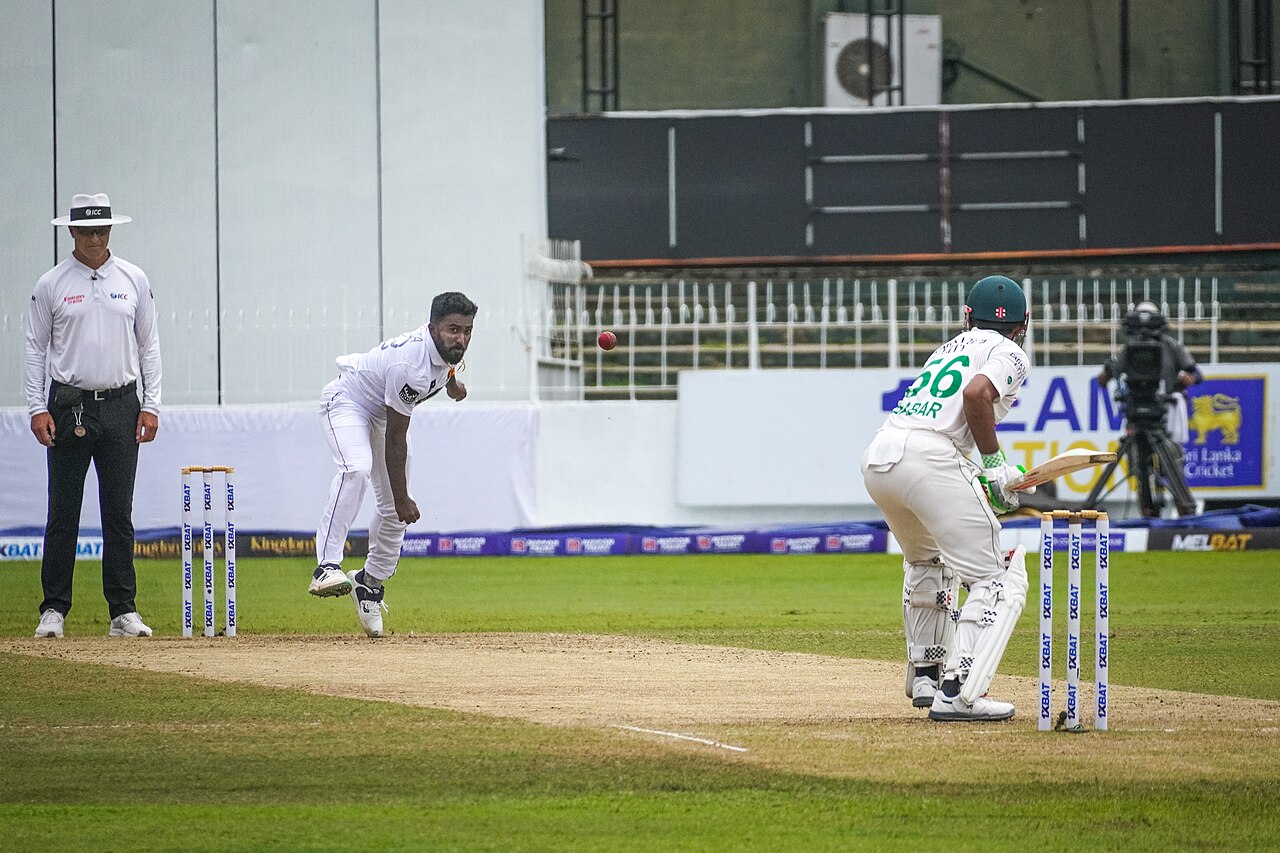
There is little ambiguity about Pakistan’s cricket in the first two Tests. England won at Headingley by an innings and 103 runs, then completed a 194-run victory at Lord’s. Pakistan’s four totals were 171, 135, 110 and 194. No innings lasted beyond 50.5 overs, and only Saud Shakeel’s 97 in the final innings at Lord’s carried a batter close to a century. In July, Pakistan had slid to 267-8 at lunch on day three of the second Test against West Indies after Shan Masood’s 109.
Yet the scorecards do not map neatly on to the list of departures. Mohammad Abbas took nine wickets at Lord’s and remains. Shakeel’s 97 offered the clearest batting resistance and he remains too. Rizwan made 61 runs in four innings and has gone, while Imam made 42 at Headingley before a calf injury kept him from batting at Lord’s. Ali’s removal is harder to explain through output alone: his five-wicket haul at Headingley was one of Pakistan’s few notable performances, even though he played only the first Test.
That does not prove any individual decision is wrong. Selection can account for fitness, role, team balance and conduct as well as runs and wickets. It does show why the PCB’s silence about its criteria is consequential. Without an explanation, the changes look less like a measured assessment and more like an emergency signal directed at the dressing room.
The board’s defence exposes a split over responsibility
National selector Aaqib Javed offered the clearest public rationale in comments reported by Dawn on 2 September. He argued that Pakistan had not merely lost but failed to compete, and that a different combination and “mindset” were needed for the final Test. He also said the touring management had not used options already available, including fast bowler Ubaid Shah and reserve wicketkeeper Muhammad Ghazi Ghori.
That defence spreads accountability rather than resolving it. Selectors chose the original squad; the coach and captain chose the elevens; the players produced the performances. Replacing nearly half the squad and two coaches before the tour ends suggests the board has judged all three layers at once. If Misbah resigned because the selection committee was bypassed, as reported, the process also raises a more basic question: who actually owned the final decision?
BBC Sport described the mid-series response as unprecedented for a touring team. The comparison is useful because international squads are normally adjusted during a series for injury, workload or a small tactical change—not rebuilt after the result is already settled. Pakistan’s move asks five uncapped players to enter an unstable environment and prepare for England’s pace attack with one match left. It also denies the departing staff and players a final Test in which to respond.
The PCB may intend the overhaul as proof that poor performance has consequences. The risk is that abrupt accountability becomes indistinguishable from improvisation. If roles, standards and authority are unclear, changing the people occupying them may produce a different team without producing a more coherent system.
What Edgbaston can—and cannot—settle
The third Test begins on 9 September and the result still matters: it is part of the 2025–27 World Test Championship, and Pakistan are trying to avoid a 3–0 sweep. It will also give the new staff and selected newcomers an immediate, unusually difficult examination.
But one match cannot validate the whole reset. A Pakistan win would show that a changed side can compete; it would not establish that every removal was justified or that mid-series upheaval is a sustainable management model. Another heavy defeat would intensify scrutiny, but it would not fairly measure uncapped players who have entered after the series was lost.
The more durable test comes after the tour. The PCB will need to explain how the original squad was chosen, why specific players and coaches were removed, whether its selection committee authorised the replacements, and what roles Hesson and Noffke will hold beyond Birmingham. Until those questions are answered, Pakistan’s crisis is not only that the team has been outplayed. It is that the institution’s remedy has made its own chain of command part of the story.