Reporting snapshot · 4 September 2026. The market figures describe the 3 September trading session, as reported the following day; KhabarWire did not independently verify the index data.
What happened
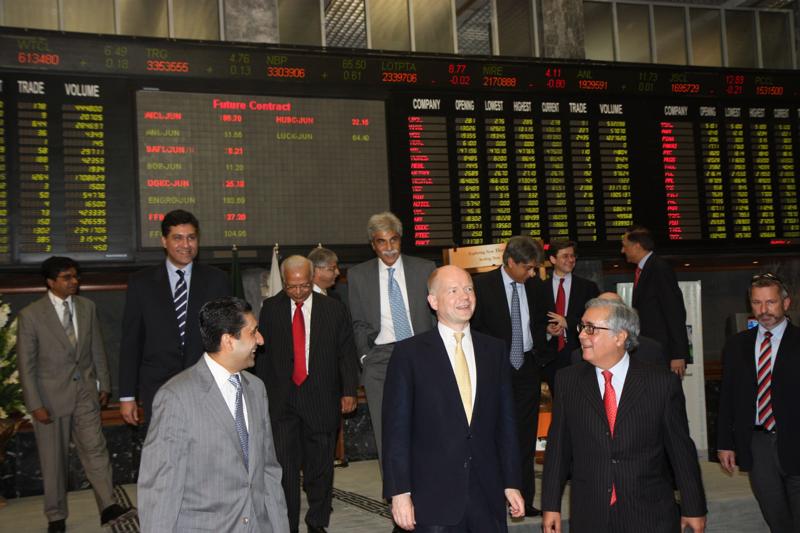
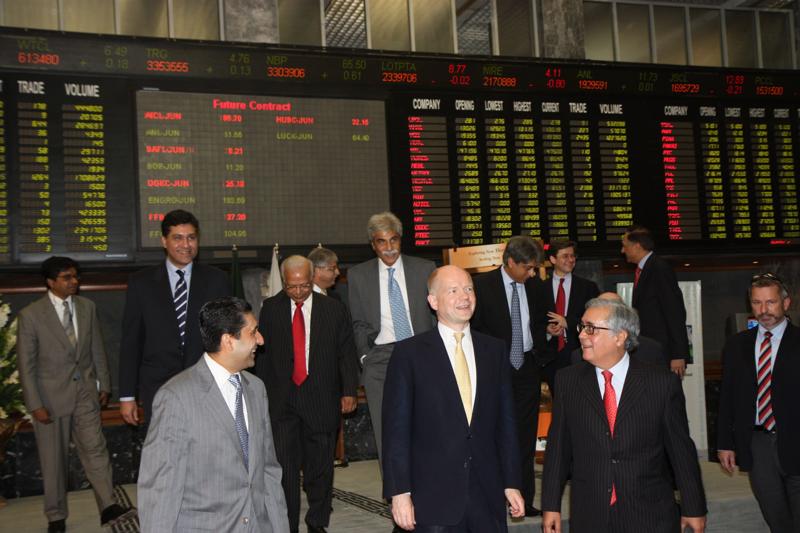
Pakistan’s benchmark KSE-100 index closed at 174,929.69 on Thursday, up 153 points or 0.09 per cent, snapping a three-session losing streak after a topsy-turvy session, according to a report in Dawn.
The index opened higher and climbed to an intraday high of 1,019 points at 175,796.25, but the early momentum failed to hold as profit-taking emerged later in the day, pulling the index to an intraday low of 117 points at 174,893.68 before it recovered into positive territory.
According to Topline Securities, the volatility reflected continued investor caution. Ali Najib, Deputy Head of Trading at Arif Habib Ltd, described a flattish session with mixed sentiment amid intensifying US-Iran military strikes, with Iran targeting merchant vessels and the United States striking IRGC sites, while oil prices continued to rise. On the positive side, the report noted that Pakistan had raised $3 billion through a dual-tranche Eurobond, its largest-ever single international bond issuance.
Bank Al-Habib, United Bank, Pakistan Petroleum, Service Industries and Attock Refinery were the major losers, together dragging the index down by about 196 points. Engro Holdings, Lucky Cement and National Bank provided support, adding roughly 167 points between them. Market participation was subdued: total traded volume reached 627 million shares, while traded value fell 20.94 per cent to Rs25.18 billion. Tasdeeq Information was the volume leader with about 95 million shares.
Why it matters
The marginal gain matters less for its size than for what it interrupts. The KSE-100 had fallen for three straight sessions as the Middle East conflict fed volatility in global energy markets, and the market’s inability to hold its early rally shows that the same forces remain in play. For Pakistan, a sustained oil-price rise is a direct risk to the external account, inflation and the trade balance, all of which have been central to the government’s stabilisation programme.
The session also shows how two opposing forces are pulling at investor sentiment at once. The successful $3 billion Eurobond is a reminder that Pakistan has regained a measure of access to international capital markets. The renewed strikes between Washington and Tehran, and the resulting climb in crude prices, are a reminder of how quickly an external shock can offset that progress.
What is still uncertain
The index’s direction depends heavily on events outside Pakistan’s control. How far oil prices rise, how long the US-Iran exchange continues and how investors price those risks will shape the next sessions more than any single domestic development. Domestic political uncertainty, which the report also cited as a drag on confidence, has not resolved. The 0.09 per cent gain is within normal daily noise, so it is not yet evidence of a change in trend; whether the market builds on it or resumes its slide will become clearer over the coming week.
Sources & reporting notes
This is a contemporaneous summary of published reporting, not eyewitness reporting. Sources were reviewed on 4 September 2026.
- Dawn — PSX snaps losing streak with marginal gain4 September 2026 · The KSE-100 close, intraday range, sector movers, trading volumes and the Middle East oil backdrop.