Reporting snapshot · 30 September 2026. The five bank meetings and the Standard Chartered meeting happened on Tuesday 29 September in London and were filed by APP and Radio Pakistan late on 29 September. The Express Tribune and Geo News ran them on their 30 September pages, and this synthesis treats that 30 September Pakistan distribution as the day the meeting details were credibly reported here. No independent investor announcement from the five firms has been published; commitments reported below come from APP, Radio Pakistan and The Express Tribune, which attributed the statements to the Prime Minister's Office.
What happened
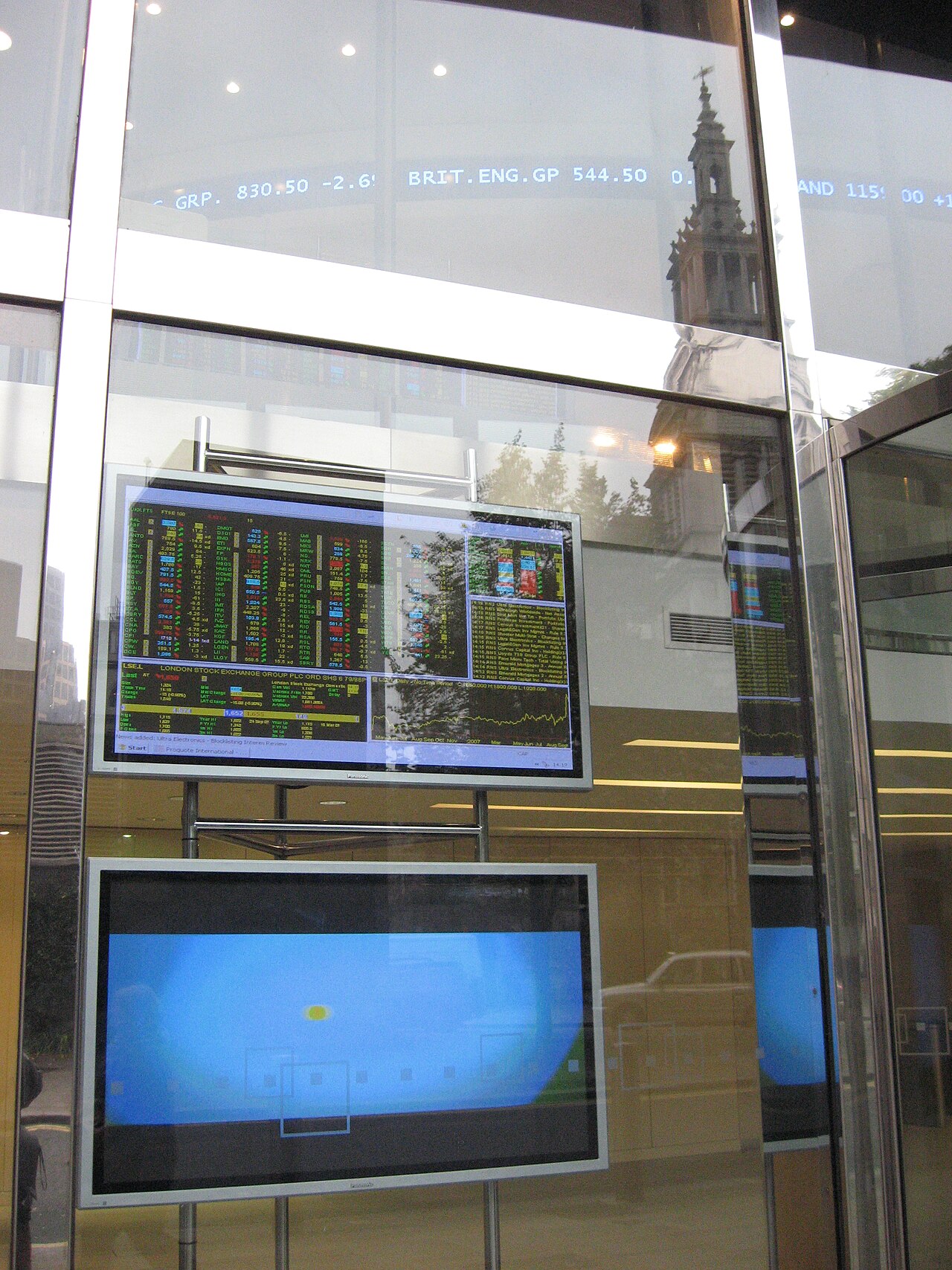
Prime Minister Muhammad Shehbaz Sharif met senior executives of five global financial institutions in London on Tuesday, the Associated Press of Pakistan and Radio Pakistan reported, and his office invited each of them to expand their operations in Pakistan. The meetings followed the 29 September listing of Pakistan’s $3 billion dual-tranche sovereign Eurobond on the London Stock Exchange, where Shehbaz had become the first Pakistani prime minister to open a trading session at the exchange.
The institutions he met were Barclays, J.P. Morgan, Citi, BlackRock and Rothschild & Co. Finance Minister Senator Muhammad Aurangzeb, who accompanied him, separately met Standard Chartered chief executive Bill Winters. Both engagements were framed by the Prime Minister’s Office as a continuation of the London capital-markets push, in which the Eurobond listing is meant to anchor a broader effort to win foreign portfolio and direct investment in non-debt form.
Each meeting was named by APP with the firm and the visiting executive. The Prime Minister’s Office described the combined outcome as a renewed commitment by the five institutions to deepen engagement with Pakistan’s financial sector and a willingness, in the executives’ own words, to explore new business lines on the ground.
The five meetings
Barclays. Shehbaz met Mohammad Kamal Syed, the bank’s UK Head of Private Bank and Wealth Management. APP reported that the prime minister briefed the Barclays executive on the government’s macroeconomic stabilisation measures and “encouraged Barclays to explore opportunities in the country’s financial sector.” The bank already operates in Pakistan; the meeting signalled an appetite to expand rather than a new entry.
J.P. Morgan. A delegation led by Matthieu Wiltz, Co-CEO for EMEA, met the prime minister. APP said discussions covered “deepening the partnership across capital markets, trade finance and investment banking” and that the firm was invited to expand its footprint in Pakistan. The delegation, according to APP, “reaffirmed its interest in sovereign debt capital markets and corporate banking opportunities” — a signal that J.P. Morgan sees continuing room to participate in future Pakistani issuance and in syndicated lending to local corporates.
Citi. Shehbaz met David Livingstone, Citi’s Chief Client Officer, and a group of senior officials. The prime minister “commended the bank’s long-standing presence in Pakistan and encouraged an expansion of its corporate and institutional banking services in the country.” Citi has been one of the most consistent international banks inside Pakistan; the discussion focused on scaling that presence rather than reopening it.
BlackRock. A delegation comprising Gordon Fraser and Sam Vecht, Co-Heads of Emerging and Frontier Markets, and Emily Fletcher, a portfolio manager and research analyst, met the prime minister. The company described itself as seeking increased allocations to Pakistani equities and fixed income “within the firm’s frontier markets strategy.” APP reported both sides “emphasising the importance of sustained policy consistency in building investor confidence” — a phrase that maps closely onto what the IMF has been demanding as a condition for further disbursements under the current $7 billion programme.
Rothschild & Co. Lord Mark Sedwill, Chair of Geostrategic Advisory, and Majid Ishaq, Head of UK Investment Banking, attended the meeting. According to APP, the discussion covered Pakistan’s “geo-economic priorities and potential advisory collaboration on capital markets and investment strategy.” The firm is the lead adviser on the Eurobond; the meeting extended that mandate into broader advisory work.
Aurangzeb’s Standard Chartered meeting
Separately, Aurangzeb met Standard Chartered’s chief executive, Bill Winters. APP said the two discussed Pakistan’s structural reforms, macroeconomic developments and possible collaboration on tokenisation, international Sukuk and other financing opportunities. The meeting also covered “potential capital market transactions linked to the government’s privatisation programme and efforts to broaden investor outreach across Europe, the Middle East and Asia.”
Standard Chartered’s footprint in Pakistan is unusually deep for a foreign bank, and the meeting is consistent with Aurangzeb’s stated strategy of using international Sukuk structures to widen Pakistan’s investor base beyond conventional Eurobond investors. Tokenisation has been a recurring theme in recent Pakistani finance-ministry engagement with global banks, although no transactions have been announced.
What Shehbaz said
In his remarks at the LSE market-open ceremony a day earlier, Shehbaz framed the listing as evidence of reforms. APP and Radio Pakistan quoted him saying that the $3 billion Eurobond was “a clear manifestation of the government’s efforts to strengthen the economy” and that “deep-rooted structural reforms, digitisation of the economy and other necessary measures have helped put the economy back on track.”
He also said Pakistan “seeks guidance from international financial markets to further enhance their role in the country’s economy, particularly through investment rather than sovereign debt alone.” That is the same audience the post-listing meetings were designed to address: institutional investors and global banks whose next move could be equity, advisory or trade-finance business in Pakistan rather than further bond purchases.
Shehbaz also pointed to the privatisations of Pakistan International Airlines and First Women Bank, saying the government is moving to offload other state enterprises, and invited LSE Group chief executive David Schwimmer to visit Pakistan.
How this fits the broader finance picture
The meetings arrive during the IMF’s fourth review of the $7 billion Extended Fund Facility, formal talks on which opened in Islamabad on 27 September. The IMF mission has pressed Pakistan to amend half a dozen SOE laws — including the law governing Wapda — and to widen the tax base, with a focus on targeted subsidies channeled through BISP rather than across-the-board relief.
The Treasury is trying to complement the IMF relationship with deeper market-based funding. The $3 billion dual-tranche Eurobond raised on 3 September attracted nearly $6 billion in orders and was the largest single international capital-markets transaction in Pakistan’s history, according to the Ministry of Finance. The 5.5- and 10-year tranches priced at 7.5% and 7.9%, respectively — still elevated relative to peers but tighter than Pakistan’s pre-IMF programme issuance.
The new push goes beyond additional Eurobonds. Aurangzeb has publicly explored Panda, Sukuk and tokenised structures, and Standard Chartered’s involvement would give those efforts a credible global banker. Citi, J.P. Morgan and BlackRock each bring franchise capabilities Pakistan needs: dollar clearing, syndicated corporate finance and emerging-market equity and fixed-income allocation. Rothschild extends advisory coverage beyond the Eurobond itself.
The Pakistan-IMF relationship remains the anchor. A senior delegation led by Aurangzeb is in Washington this week for the World Bank–IMF annual meetings, where sovereign liability management and the FY27 financing plan are expected to be discussed with rating agencies and investors.
What is still uncertain
Several limits are visible in the available reporting. The Prime Minister’s Office is the single named source for the statements attributed to the bank executives; the firms themselves have not, as of the 30 September Pakistan-time reporting window, issued their own press statements confirming the meetings or specifying next steps. The dollar value of any new business discussed — additional J.P. Morgan-led syndications, BlackRock frontier-manual-allocations, Citi balance-sheet expansion — has not been disclosed.
The Standard Chartered meeting was framed in broad terms — tokenisation, Sukuk, privatisation-linked transactions — without specifying timing. No investment-grade rating action was announced alongside the meetings. The next test of whether the engagements translate into commitments will be the IMF board’s review of the fourth programme review, expected in November.
Sources & reporting notes
This is a synthesis of published material, not eyewitness reporting. Sources were reviewed on 30 September 2026.
- APP — PM meets senior executives of leading global financial institutions30 September 2026 · What each of the five bank meetings covered and who attended.
- Radio Pakistan — Global financial institutions express confidence in Pakistan’s economic reforms29 September 2026 · State broadcaster account of the meetings, including the Standard Chartered meeting.
- The Express Tribune — PM courts global financial giants in London30 September 2026 · Tribune’s lead report on the meetings, bylined APP, framing the engagement as part of the LSE visit.
- Geo News — Shehbaz becomes first Pakistani PM to open trading at London Stock Exchange29 September 2026 · Background on the Eurobond listing and the LSE market-open ceremony that preceded the investor meetings.
- The Express Tribune — IMF asks for SOE law changes before board meeting30 September 2026 · Context on the parallel IMF programme review and the SOE-law timeline.