Reporting snapshot · 21 November 2026 (Asia/Karachi). The government has announced the network and named its first centre, but has not published the policy framework, a budget, a timetable or the legislation needed for the proposed Innovation Commission and Pakistan Innovation Authority. No catapult is yet operating, and the government has not said where the centres will be built or how intellectual property and revenue will be shared.
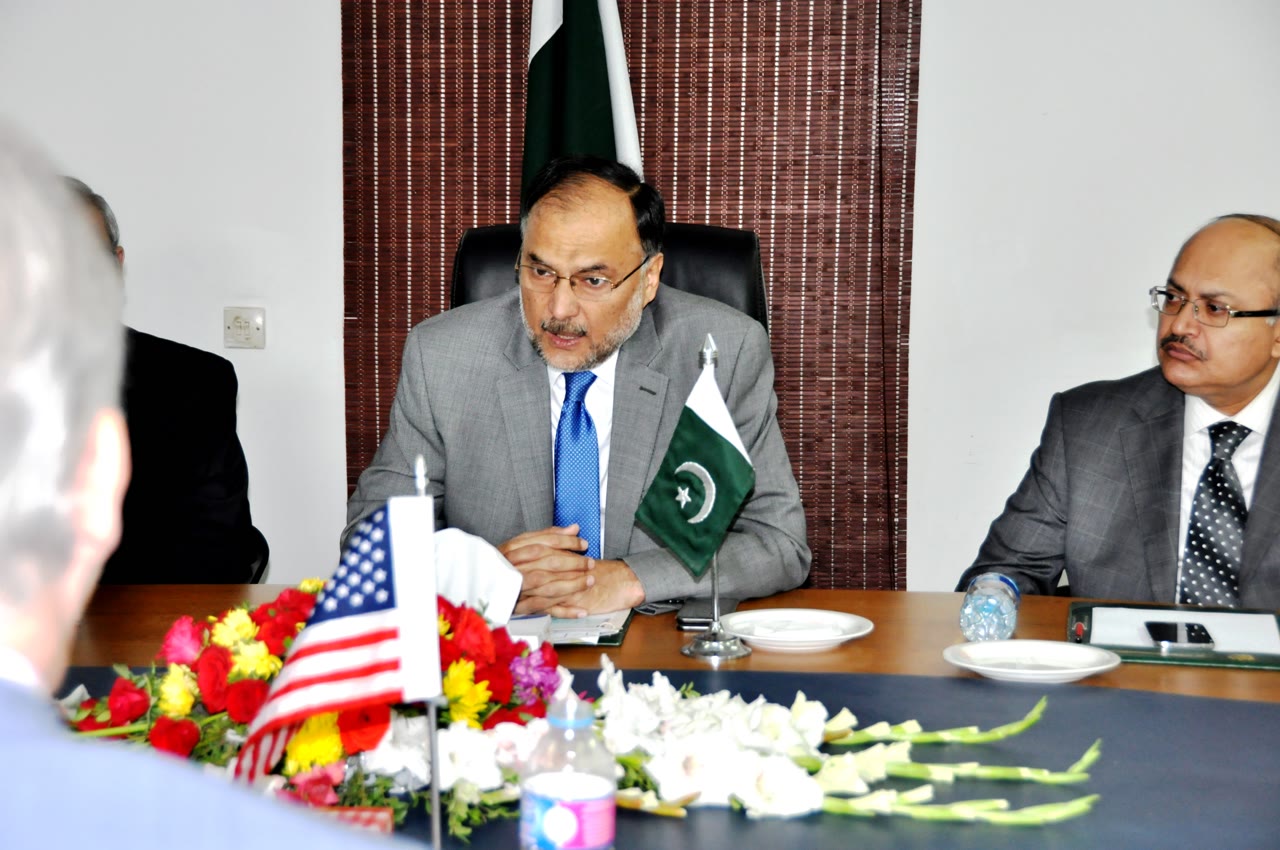
Pakistan’s planning minister, Ahsan Iqbal, announced on Friday, 20 November, that the government will establish 10 National Catapults to convert university research into commercial products, with the Indigenous Research and Development Agency, IRADA, named to lead the first centre in semiconductors and advanced electronics. The state news agency APP reported the announcement after Iqbal’s visit to IRADA, and The News and Profit, the business publication of Pakistan Today, carried accounts of the plan on Saturday, 21 November.
The centres are intended to give universities, start-ups and manufacturers access to shared testing laboratories, prototyping equipment and pilot production lines. The government frames the network as the practical arm of the Science, Technology and Engineering for Development programme, known as STED, which is itself a component of the Uraan Pakistan initiative.
It sets out industries, a stage of the development pipeline and a first operator. It does not yet provide the money, law or sites that would turn the design into working facilities.
Ten sectors, one narrow stretch of the pipeline
The 10 proposed catapults cover semiconductors and advanced electronics; high-value manufacturing and Industry 4.0; the digital economy and artificial intelligence; agricultural and food technology; health technology and medical devices; clean energy and climate technology; mines, minerals and materials; defence technology and dual-use systems; space technology; and chemicals and composites, APP reported.
The centres are meant to concentrate on Technology Readiness Levels 4 to 7, the range between a technology validated in a laboratory and a prototype demonstrated in an operational setting, according to APP and Profit. That is a deliberately narrow slice of the innovation chain. It excludes the earliest blue-sky research, which universities and grant agencies are expected to fund, and stops short of full commercial production, which companies are expected to finance once a product has been de-risked.
The proposed services follow from that choice. A university team could refine a prototype alongside industry engineers; a manufacturer could test a process before committing capital to a full production line; an investor could examine a technology under operating conditions. The centres would also help commercialise intellectual property, identify workforce needs and prepare products for international standards and certification, Profit reported.
The model is borrowed. APP said the network draws on the United Kingdom’s Catapult Network, Germany’s Fraunhofer Institutes, Manufacturing USA and Singapore’s A*STAR. Pakistan’s version would bring together universities, research bodies, manufacturers, investors and government agencies.
Three tiers, and a fund without a figure
The catapults are only one part of the framework described by The News. The Planning Commission’s proposal also envisages an Innovation Commission of Pakistan to set strategy, a Pakistan Innovation Authority to coordinate policy, and the catapult network to handle commercialisation. The centres would operate as professionally governed, independent entities, with a financing structure that combines government grants, collaborative research and private investment, gradually reducing reliance on state grants.
The framework also proposes a National Venture Development Fund to support technology entrepreneurs from early research through product development and commercial expansion. It floats procurement reforms to give emerging technology firms more access to public-sector markets, and closer collaboration between civilian research institutions and defence-related technology capabilities.
None of those bodies has been created. The News reported the framework’s existence through Planning Commission sources but did not publish the document, and no draft law, cabinet decision or budget line for the commission, the authority or the fund has been made public. The announcement therefore establishes an intended architecture, not an operating one.
Why the first catapult is semiconductors
IRADA will become the first state-owned enterprise formally designated to lead a catapult, and it will take the semiconductor and advanced electronics portfolio. The agency’s new role is the clearest institutional commitment in the announcement: it gives the network a starting operator rather than leaving the first centre as a proposal.
The choice also signals where the government sees the most strategic value. Semiconductors and advanced electronics sit upstream of computing, communications and defence systems, and they are the part of the technology supply chain over which governments elsewhere are exercising increasing control. The government has not said what the IRADA-led centre will actually contain, whether it will offer chip design, packaging, testing or another set of services, or how it will obtain equipment that is often export-controlled.
The immediate test is commercial. A catapult can lower the cost and risk of trying a new product, but it cannot create demand or replace the capital a company needs to scale. The plan’s performance measures reflect that gap: APP reported the network will be judged by technologies reaching commercial production, firms gaining access to new markets and skilled jobs created.
What the plan is meant to fix
The government’s case rests on a familiar diagnosis: Pakistani researchers produce inventions that remain in laboratories because the country lacks the facilities to test, prototype and produce them at pilot scale. The News reported that officials describe a gap in which companies cannot establish a technology’s commercial reliability, production costs or compliance with industry standards, and therefore do not invest.
That is a different problem from the one addressed by Pakistan’s better-known technology push. The country’s IT exports reached a record $453 million in October, driven by services sold abroad rather than hardware manufactured at home, and the new Daanish IT Park in Islamabad is designed to house firms rather than to test their products. The catapults would sit between those models: physical facilities intended to help companies make things, not only to sell services or rent office space.
Whether demand exists is unresolved: the plan assumes universities have inventions worth scaling, firms want to test them in Pakistan rather than abroad, and investors will fund the survivors. No market study or list of candidate projects was published.
The risks the Planning Commission itself names
Planning Commission sources told The News that the initiative’s success would depend on sustained funding, professional management, meaningful private-sector participation, institutional independence and the ability to deliver tangible commercial results. Those caveats matter because each corresponds to a way similar schemes have stalled: a centre built with donor or development money but no operating budget; a governing board that cannot hire or fire; a facility that serves government priorities rather than paying customers; or a pipeline of prototypes with no follow-on finance.
The three-part financing model is meant to address the first and third risks by shifting costs towards industry and commercial revenue over time. But the plan does not say what share of costs must come from private sources, when that shift would begin, or what happens to a centre that fails to attract customers. The proposed venture fund could fill part of the financing gap, but without a capitalisation it is a mandate rather than a source of money.
There is also a governance question. The framework places strategy, coordination and delivery in three separate bodies, a structure that can clarify accountability or multiply it. The relationship between the Innovation Commission, the Innovation Authority and the catapults, and who appoints and removes their boards, has not been disclosed.
What would show the plan is real
The next observable steps are administrative. A cabinet approval, a Planning Commission document or a budget allocation for the first centre would show that the network has moved beyond an announcement. So would draft legislation for the commission and authority, a named site for the IRADA-led catapult, or a published call for university and industry proposals.
Until some of those appear, what has changed is limited. Pakistan has a design for 10 industry-focused centres, a first operator and a list of sectors. It does not yet have a funded facility, a legal framework or a date on which a researcher can test a product. KhabarWire’s report on the country’s record IT exports sets out the services-side strength the plan is meant to complement, while the Daanish IT Park inauguration shows how the government has approached technology infrastructure in the same period.