What happened
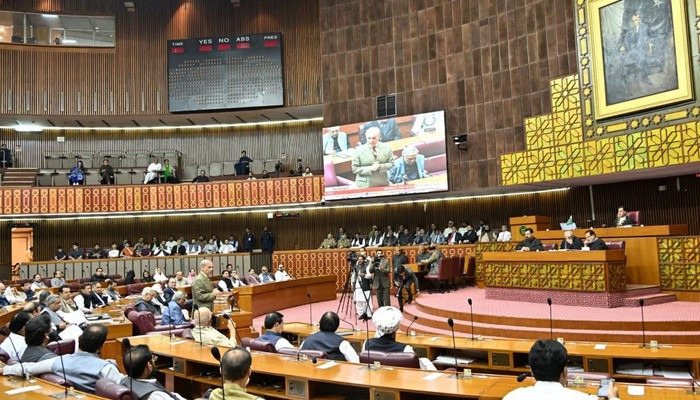
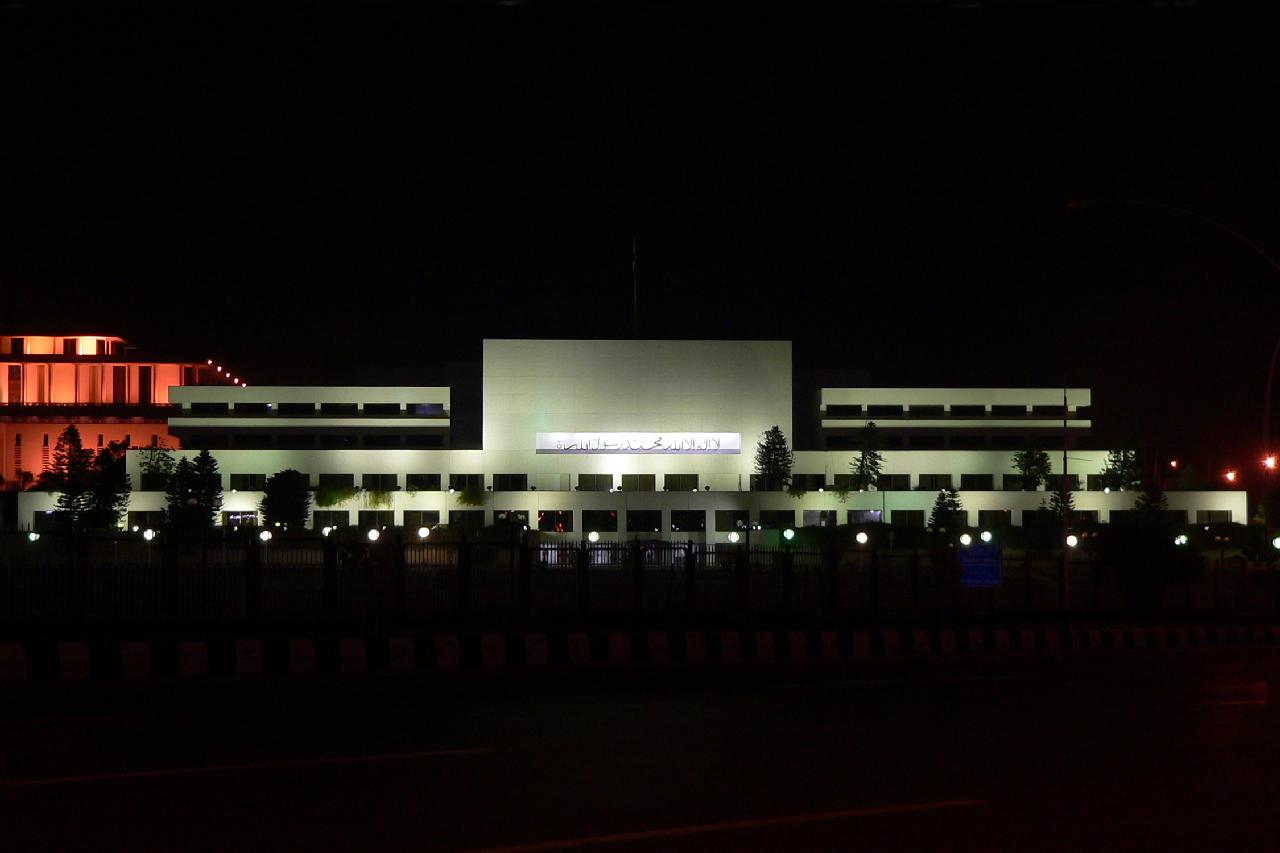
The National Assembly passed the Finance Bill 2026-27 on Tuesday, 23 June 2026, giving legal effect to the federal budget for the fiscal year beginning 1 July 2026 after the opposition staged a walkout.
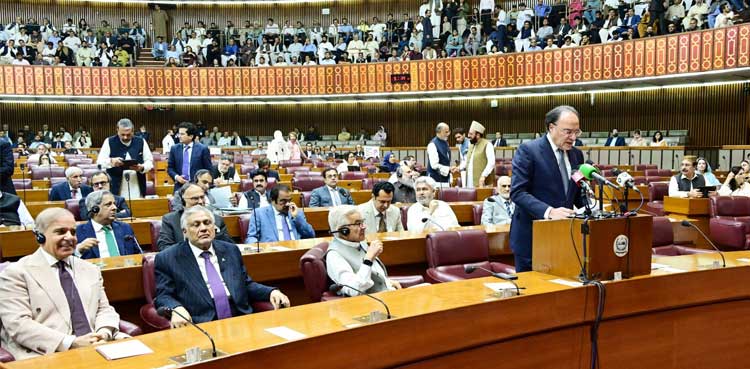
Finance Minister Muhammad Aurangzeb moved the bill, including amendments recommended by the National Assembly Standing Committee on Finance. All seven amendments moved by opposition members were rejected by majority vote before the bill was approved. The budget had been presented in parliament on 12 June with a total outlay of Rs18.77 trillion, as covered in KhabarWire’s report on the 12 June presentation.
The government increased pay and pensions by 7 per cent for the next fiscal year and proposed a 10 per cent rise in the minimum monthly wage. The budget projects economic growth of 4 per cent, inflation of 8.2 per cent, a fiscal deficit of 3.6 per cent of GDP and a primary surplus of 2 per cent of GDP.
Interest payments account for the largest single share at about Rs8.1 trillion. Defence is allocated Rs3 trillion, subsidies Rs1.091 trillion, running of the civil government Rs1.071 trillion, pensions Rs1.2 trillion and the Benazir Income Support Programme Rs838 billion. Rs1.276 trillion is earmarked for development and net lending, with Rs1,000 billion for the federal Public Sector Development Programme. The Federal Board of Revenue has a tax collection target of Rs15.3 trillion and non-tax collection of Rs5.37 trillion, while the provinces’ share in federal receipts is Rs8.8 trillion.
Salaried taxpayers were offered relief through lower rates in four slabs: the rate falls from 23 per cent to 20 per cent for income between Rs2.2 million and Rs3.2 million; from 30 per cent to 25 per cent for Rs3.2 million to Rs4.1 million; from 35 per cent to 29 per cent for Rs4.1 million to Rs5.6 million; and from 35 per cent to 32 per cent for Rs5.6 million to Rs7 million.
What changed in the bill
Several measures were altered between the introduction of the bill and its passage. The proposed 20 per cent Federal Excise Duty on mineral water, aerated water, hydration drinks and electrolyte beverages with sugar content below 5g/100ml was dropped.
A sales tax exemption on the import or lease of aircraft and aircraft parts, originally limited to PIA, was extended to all airlines operating in the country from 1 July 2027. Excise duty on imported electric cars and SUVs was linked to their dollar value: no duty for completely built-up vehicles valued up to $75,000, 30 per cent for those between $75,000 and $110,000, and 40 per cent above $110,000.
The Device Identification, Registration and Blocking System tax on imported phones may now be paid in instalments, provided all instalments are cleared within the financial year of import. Persons with turnover up to Rs200 million may opt out of the fixed tax regime subject to a final and irrevocable certificate filed before their tax year 2027 returns.
The amended bill sets a minimum value addition tax of 1 per cent on imported coal supplied exclusively and directly to independent power producers. Income tax exemptions were provided for income derived by private equity and venture capital funds registered under the Private Funds Regulations, 2015, subject to distribution conditions. For steel melters, re-rollers and composite units, tax will be collected on the basis of electricity consumed per unit.
Some clauses relating to the Climate Support Levy in the original bill were dropped through amendments in the Petroleum Products (Petroleum Levy and Climate Support Levy) Ordinance.
Opposition reaction
The opposition walked out after the treasury approved the budget. PTI rejected the Finance Bill, calling the budget “anti-people” and accusing the government of masking worsening economic conditions with claims of stability.
During the session, Speaker Ayaz Sadiq responded to concerns raised by opposition leader Mehmood Achakzai, saying that statements made outside the House about raising a private force, supporting a foreign country against Pakistan or attacking state institutions would not be allowed on the floor, and that blocking such remarks did not violate the Constitution.
Prime Minister Shehbaz Sharif told the House that the government wanted development in all four provinces and expressed hope that the Islamabad Memorandum of Understanding signed by the United States and Iran would evolve into a lasting agreement.
Sources & reporting notes
This is a summary of published reporting, not independent reporting. Details are as carried by the cited sources, which were reviewed on 2026-06-24.
- The Nation — "Finance Bill sails through NA to greenlight Rs18.77tr budget, opposition walks out"24 June 2026 · Budget outlay, allocations, tax targets, income tax slab changes and the Prime Minister's remarks.
- Dawn — "BUDGET 2026-27: Finance Bill sails through NA"24 June 2026 · Amendments adopted since 12 June, including the mineral water FED, airline sales tax exemption, EV excise duty and fixed tax regime.
- ARY News — "NA passes Finance Bill 2026-27, rejects opposition amendments"23 June 2026 · Clause-by-clause consideration and passage of the bill.
- Business Recorder — "PTI rejects Finance Bill"24 June 2026 · PTI's rejection of the budget and its description of the budget as anti-people.