Reporting snapshot · 23 September 2026. An International Monetary Fund (IMF) staff mission has arrived in Pakistan and begun technical discussions with the State Bank of Pakistan (SBP) in Karachi for the fourth review of the $7 billion Extended Fund Facility (EFF), alongside the third review of the Resilience and Sustainability Facility (RSF) and an Article IV consultation. This account is a synthesis of reporting by Profit by Pakistan Today, The Express Tribune and Dawn; the IMF had not issued its own statement on the mission's opening day when this article was prepared.
What happened
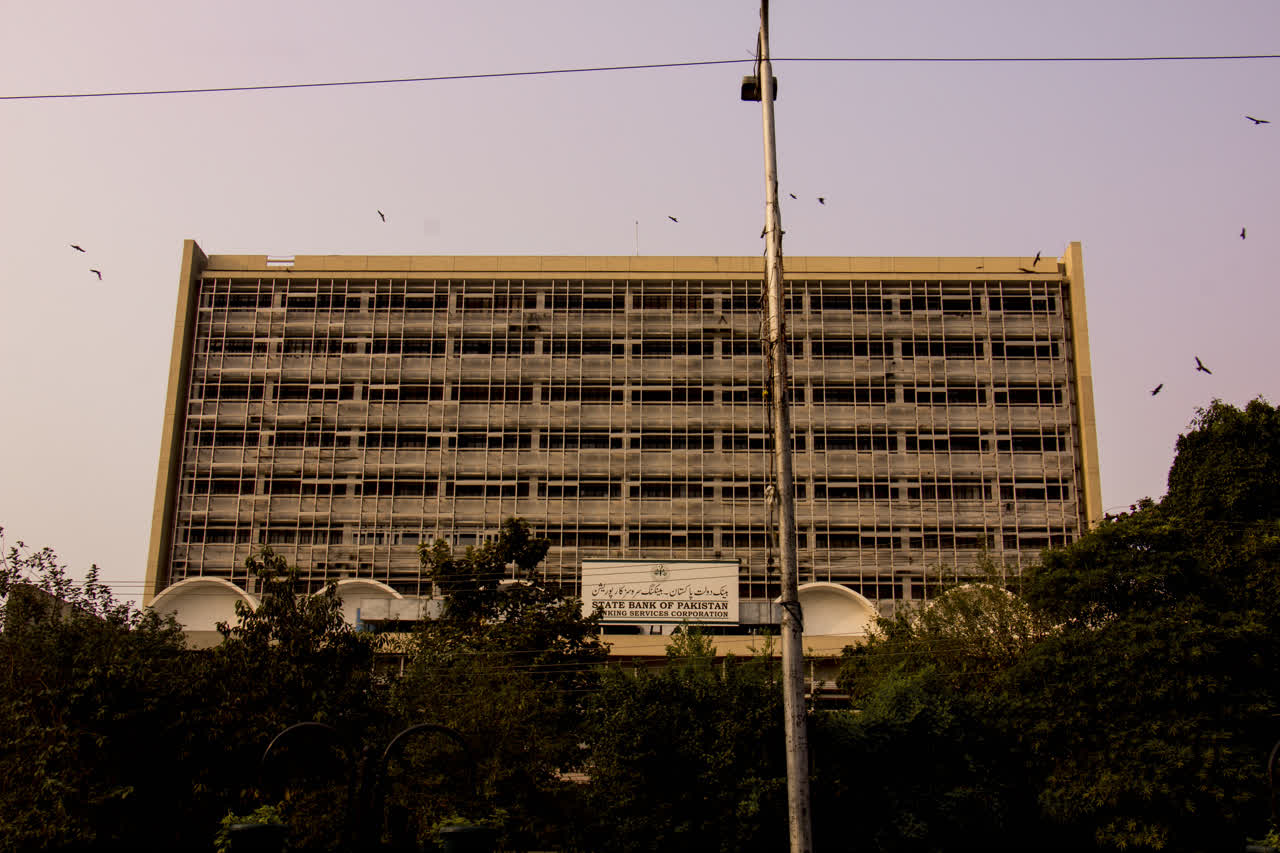
The IMF review mission arrived in Pakistan on Wednesday, 23 September, and began its visit with technical-level discussions with State Bank of Pakistan officials in Karachi, according to Profit by Pakistan Today. The talks open the fourth review under Pakistan’s $7 billion Extended Fund Facility — the 37-month programme entered in September 2024 — together with the third review under the $1.4 billion Resilience and Sustainability Facility and an Article IV consultation, the Fund’s regular health check of a member economy.
Initial discussions with the central bank will focus on the current account, monetary policy and the exchange rate, with SBP officials briefing the delegation on the country’s economic performance, the reporting said. The mission is expected to remain in Karachi this week before moving to Islamabad on 28 September for negotiations with the Ministry of Finance, the Federal Board of Revenue (FBR) and other ministries. Profit noted that the Islamabad leg of the talks is expected to go ahead provided the situation in the federal capital remains normal, as the government’s preparations for a scheduled opposition march in Islamabad continue.
The Express Tribune reported that the mission “landed in Karachi for the fourth review of the $7 billion loan programme, which is expected to continue till October 7.” Dawn had earlier reported that the staff mission, led by Iva Petrova, would conduct the fourth EFF review and the third RSF review over an almost two-week visit ending in the first week of October.
Why it matters
The review assesses Pakistan’s performance against the programme’s targets for the period ending 30 June 2026. A successful conclusion makes Pakistan eligible for a further disbursement of about $1 billion under the EFF and about $200 million under the RSF, which the government would expect to receive after the IMF Executive Board approves the review — a step Dawn has said could come by late November or early December. Pakistan has already received about $4.8 billion under the two arrangements, Profit reported.
The talks take place against a stronger external position than in earlier reviews. The State Bank’s foreign exchange reserves reached a record high of $21.4 billion in mid-September, helped by the proceeds of Pakistan’s $3 billion Eurobond return to the international market, while the current account deficit narrowed sharply in July and August. Pakistan also returned to a KhabarWire-reported B3 credit rating upgrade by Moody’s in August, and earlier KhabarWire reporting on the fourth review preview and the Planning Ministry’s bid for a seat in the negotiation team set out the agenda and the institutional friction that now surrounds it.
The Finance Ministry’s rebuttal
The opening of the talks coincided with a detailed statement from the Finance Ministry rejecting the characterisation of the programme as a purely fiscal exercise — a direct response to Planning Minister Ahsan Iqbal, who a day earlier had formally asked Prime Minister Shehbaz Sharif to include the Planning Ministry in the core negotiation team and described the programme as focused on “fiscal numbers.”
According to The Express Tribune, the ministry said the “IMF programme is demonstrably not confined to numbers or fiscal targets,” arguing it is “a whole-of-government programme, not a Finance Division programme.” It drew a distinction between the Finance Division’s responsibility for overall programme coordination and the agreement of benchmarks that fall to other federal ministries and provincial governments. The ministry also disputed that the petroleum levy had been made the “central point” of the programme, saying the fiscal strategy is “substantially broader and revolves around FBR revenue mobilisation, expansion of the tax base, provincial taxation and expenditure rationalisation.” It did not say whether it would accept a Planning Commission representative in the negotiation team.
What is still uncertain
The immediate uncertainties are the pace and venue of the talks. Whether the mission can move from Karachi to Islamabad on 28 September as scheduled depends on the security situation in the federal capital, and the mission’s formal meetings with the finance minister, Muhammad Aurangzeb, are tied to his return from the United States, where he has been attending the UN General Assembly session.
Substantively, the two sides must still agree on Pakistan’s performance against the end-June 2026 targets, including revenue collection and structural benchmarks covering state-owned enterprises and energy-sector reform, before a staff-level agreement can be reached. The exact disbursement figures also vary slightly between outlets — Profit reported about $1 billion under the EFF and $200 million under the RSF, matching Dawn’s earlier figures — and the final amounts will only be fixed once the review is completed and approved. Whether the Planning Ministry’s request is accepted, and what role it might play in later rounds, remains an open institutional question that the Finance Ministry’s statement did not resolve.
Sources & reporting notes
This is a synthesis of published material, not eyewitness reporting. Sources were reviewed on 23 September 2026. The account of the mission's arrival and schedule rests on Profit by Pakistan Today; the Finance Ministry statement and review timeline are drawn from The Express Tribune; programme background, mission leadership and disbursement figures are from Dawn.
- Profit by Pakistan Today — IMF mission begins review of Pakistan's $7 billion EFF programme23 September 2026 · Primary report of the mission's arrival in Karachi, the start of SBP technical discussions, the 28 September Islamabad leg, the review scope and the disbursement figures.
- The Express Tribune — Finance ministry dismisses fiscal numbers-only claim23 September 2026 · Independent confirmation that the mission landed in Karachi, the review timeline through 7 October, and the Finance Ministry's rebuttal of the "fiscal numbers-only" characterisation.
- Dawn — IMF mission due on Sept 23 for biannual review of Pakistan's economic performance10 September 2026 · Independent background on the mission's leadership under Iva Petrova, the EFF and RSF review structure, the Article IV consultation and the expected disbursement timing.