Reporting snapshot · 10 November 2026 (Asia/Karachi). The Islamabad High Court had not published a written order for Tuesday's hearing when this report was filed, so the account below rests on same-day reporting by the Express Tribune and Geo News, with background from Pakistan Today. The bench's directives and the ten-day adjournment are reported as given; the order's text is not yet available, and whether the one-hour meeting takes place within two days depends on the Islamabad Advocate General's office and Adiala Jail authorities carrying it out.
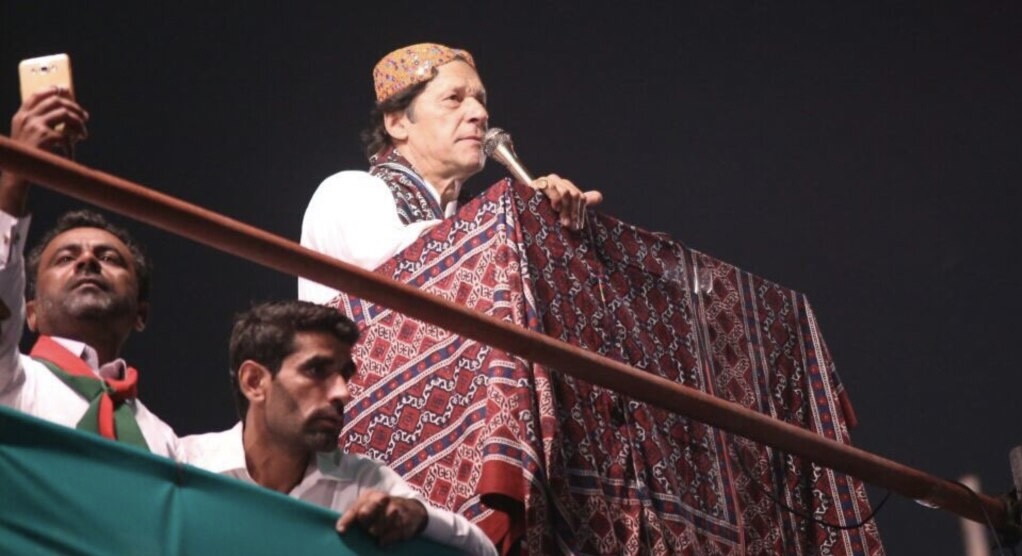
On 10 November 2026, a division bench of the Islamabad High Court — Chief Justice Sardar Muhammad Sarfraz Dogar and Justice Muhammad Asif — directed that lawyers be allowed to meet Pakistan Tehreek-e-Insaf founder Imran Khan and his wife, Bushra Bibi, for one hour at Adiala Jail in Rawalpindi, and told the defence to begin arguing their appeals against the convictions in the £190 million Al-Qadir Trust case at the next hearing. The Express Tribune reported from Islamabad that the bench ordered the meeting within two days, adjourned the appeals for ten days, and directed that the paper books in the cases be prepared before arguments begin. Geo News reported the same directives, adding that the Islamabad Advocate General, Naveed Malik, told the bench the meetings could be arranged if counsel gave an assurance that arguments in the appeals would start at the next hearing.
The order links access to a procedural milestone: counsel are told to begin arguing the appeals, not simply to sit with their clients. The substantive appeal remains pending in the IHC’s own list. KhabarWire’s account of the Federal Constitutional Court’s ruling on 14 October records where the appeal now stands: the suspension of Bushra Bibi’s sentence was refused, the substantive question was sent back to the high court, and the bench said the appeal should be disposed of expeditiously. The Parliament and Courts tracker follows the wider institutional record.
Why the appeals were adjourned again
Latif Khosa told the bench that an earlier order allowing him to meet Imran had not been implemented. The chief justice replied that the order had been for Salman Safdar to meet the PTI founder, not for Khosa, according to the Express Tribune’s account. Khosa said an order existed but no meeting had taken place, and that his undertaking to argue the appeals was conditional on being allowed to meet Imran. The chief justice said it had already been settled that Khosa would argue, and asked the Advocate General whether arrangements could be made within one or two days. “I want to remove this obstacle and proceed with the matter,” the court said, quoting the chief justice. Khosa asked for at least an hour, and the bench directed the Advocate General to arrange the meeting within two days.
Safdar, appearing for Imran, said his earlier consultation had produced instructions but was not sufficient, and that he had met Imran after seven months and Bushra after 11 months. He asked the court for the paper books and time to prepare, saying the documents had not yet been provided to the defence. Geo News reported that the chief justice granted time for preparation and urged Khosa to begin arguments in the case at the next hearing.
The pair last had a legal consultation on 2 November, when Safdar met them at Adiala Jail after months without direct access. He said the roughly 40-minute session was not enough to cover all the cases and legal matters on his list, Pakistan Today reported.
The health claims the defence raised
Safdar told the court that Bushra Bibi was wearing dark glasses and that her eyesight had deteriorated. Jail authorities, he said, had told him her next operation was scheduled for 15 November, and he did not know who was treating her or where. “I am not asking for bail; a medical board should be formed,” Safdar said, according to the Express Tribune. He said that even if she was not entitled to bail, she could be granted temporary bail for four to six weeks to receive treatment, and asked the court to obtain complete medical reports from Adiala Jail. He said doctors had performed emergency surgery, and warned: “If I argue the appeal and my client becomes blind in jail, I will regret it.”
For Imran, Safdar said his eyesight had improved but his blood pressure remained uncontrolled, rising above 190 and carrying a risk of brain haemorrhage. Geo News reported the same account.
The Islamabad Advocate General, Naveed Malik, told the bench that medical treatment is a fundamental right and that the government was not neglecting its responsibilities, saying “all medical facilities are being provided” and presenting a record of the treatment given to Bushra Bibi. He noted that the matter concerned not one prisoner but around 10,000 inmates, and referred to records the Federal Constitutional Court had summoned from the Supreme Court in cases involving three prisoners. The chief justice observed that applications concerning Imran’s health were pending before the Federal Constitutional Court; Safdar told the bench that no case concerning Bushra was pending there. A National Accountability Bureau prosecutor asked Safdar to submit an undertaking about the proceedings.
Where the case stands
The £190m case, also known as the Al-Qadir Trust case, concerns allegations that Imran and others in 2019 adjusted Rs50 billion — about £190 million at the time — sent by Britain’s National Crime Agency to the Pakistani government during his tenure as prime minister. Geo News sets out the background: the money related to a property tycoon’s assets seized by the NCA, and the NCA said the amount was to be passed to the Government of Pakistan as part of its settlement with the tycoon, “a civil matter, and does not represent a finding of guilt”. The National Accountability Bureau filed a reference in December 2023, and charges were framed against Imran and Bushra on 27 February 2024, alleging that a settlement with the NCA was reached and approved by Imran on 3 December 2019 without disclosing the details of the confidential agreement.
An accountability court in Islamabad sentenced Imran to 14 years’ imprisonment with a fine of Rs1 million, and Bushra to seven years with a fine of Rs500,000, Geo News reported. Both are also serving longer sentences in the Toshakhana-II case, Pakistan Today reported: 17 years each, handed down on 20 December 2025 over the retention of a Bulgari jewellery set gifted by the Saudi crown prince.
Access to the couple has been contested for months. The court directed in June that a meeting with counsel be arranged within seven days to complete legal formalities and allow the appeals to be prosecuted, and on 2 September told Adiala Jail authorities to ensure meaningful human interaction, family access, exercise and reading material, observing that lawful incarceration did not authorise avoidable deprivation of human dignity, Pakistan Today reported. Weekly family meetings have been refused since December 2025, and the Supreme Court ordered weekly meetings between Imran and his family in August, when his sister Noreen Niazi met him after a gap of around nine months. The high court has ruled on those conditions before: on 1 September it barred the jail from keeping the couple in solitary confinement and ordered family meetings and other facilities restored.
What the bench has not yet settled
Several elements remain open. The court’s written order was not available when this report was filed, so the precise terms of the directive — including whether both lawyers may meet their clients together, which the chief justice appeared to doubt — are not confirmed by a published record. No report said the meeting has been arranged, and the Advocate General’s office has not confirmed a date. It is also unconfirmed whether the paper books have been supplied to the defence; Safdar told the court they had not been provided.
No medical board has been ordered, and no ruling has been made on temporary bail for Bushra Bibi or on the operation counsel said jail authorities had scheduled for 15 November. The bench’s direction that arguments begin at the next hearing is an instruction rather than a deadline, and the main appeal remains pending: an order urging expeditious disposal in October set no timetable. This is a dated snapshot of a hearing that has not finished.