Reporting snapshot · 20 October 2026 (Asia/Karachi). The MoU and the symposium took place at IBA Karachi's Main Campus on Monday, 19 October 2026. The article synthesises Geo News, IBA Karachi's own announcement reproduced by Pakistan Today, and The Express Tribune's separate 20 October roundup of the symposium panel; it does not include independent reporting from inside the session. Quotations attributed to individual speakers below are taken from the published coverage and the IBA handout that Geo News and Pakistan Today both cite. Implementation timelines, faculty training scope and any further partner universities are not yet public.
What happened
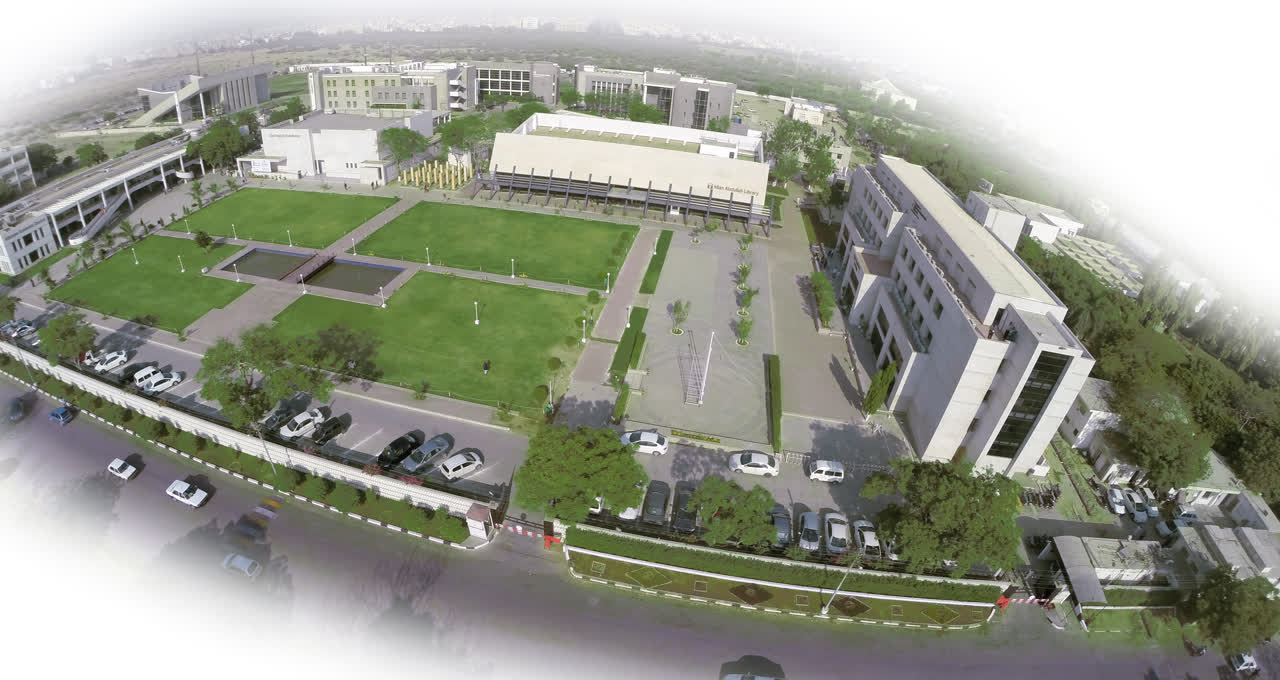
The Institute of Business Administration (IBA) Karachi, the Aga Khan University (AKU) and Habib University signed a memorandum of understanding on 19 October 2026 to coordinate their work on artificial-intelligence-driven teaching and learning, Geo News reported that day. The signing was the centrepiece of the Annual Teaching and Learning Symposium 2026, which IBA Karachi hosted on its Main Campus and themed “AI in Pedagogy”.
According to Geo News, the MoU was signed by IBA Karachi Executive Director Dr S Akbar Zaidi, AKU President Dr Sulaiman Shahabuddin and Habib University President Wasif Rizvi. The agreement restates a shared commitment to academic collaboration and innovation in teaching and learning, and IBA Karachi said the partnership is intended to give the universities a coordinated platform on AI in higher education rather than three separate pilots.
The symposium ran alongside the signing. IBA Karachi’s Office of Academic Quality and Excellence Director and Conference Chair Dr Sana Tauseef opened the day by underlining the importance of inter-institutional collaboration in addressing AI’s impact on education. AKU Institute for Educational Development Dean Dr Farid Panjwani told the audience the symposium marked a significant milestone in advancing teaching and learning through collective efforts, Geo News reported. A leadership panel, titled “Teaching for Today and Tomorrow: What Should Universities Stop, Start, and Continue in the AI Era”, was moderated by Dr Zaidi and featured Dr Shahabuddin, Rizvi, Durbeen CEO Salma Aslam and Beaconhouse National University Vice Chancellor Dr Moeed W Yusuf.
The keynote address, titled “Critical Thinking and Agency in the Age of AI: Time to Rethink Higher Education?”, was delivered by University of Oslo Professor Dr Fazilat Siddiq, who highlighted the importance of critical thinking, learner agency and the technological, pedagogical and content knowledge needed where generative tools are widely available, Geo News reported.
Why it matters
The MoU matters less for any single new tool it announces than for what it signals: three of Karachi’s most prominent private universities have agreed to align their approach to AI in teaching and learning in a city where higher education is otherwise fragmented. IBA Karachi is the largest business school in the city, AKU runs the Aga Khan University’s Institute for Educational Development that trains teachers across Pakistan, and Habib University is a liberal-arts university built around interdisciplinary, project-based learning. A joint commitment pushes the conversation past one-off AI pilots run by individual departments and into a city-scale conversation about assessment, faculty development and academic integrity.
Pakistan’s tertiary sector has been running a parallel track on AI in classrooms for months: the Punjab government rolled out an artificial-intelligence curriculum across provincial schools in late September (KhabarWire’s report on 25 September 2026), and USF and the Ministry of IT hosted the APT symposium on satellite internet and gigabit connectivity in Islamabad four days earlier (KhabarWire’s report on 16 October 2026). The Karachi agreement is one more step in the same progression, but from a different starting point: university faculty and curriculum committees rather than school classrooms or telecoms infrastructure.
The timing also matters. The 19 October ceremony came hours after Prime Minister Shehbaz Sharif’s separate signing of a memorandum with ByteDance-owned Gauth AI at the Ministry of Federal Education and Professional Training, under which the AI study platform will provide 4,000 paid subscriptions — including 1,000 reserved for Daanish Schools teachers — in the second major AI-in-education deal of the day, according to Pakistan Today’s report on the two events. The country’s higher-education and federal-school tracks are now both moving in the same direction, but through independent deals rather than a single coordinated programme.
What the MoU is expected to cover
IBA Karachi’s announcement, reproduced by Geo News, frames the MoU as a commitment to joint academic collaboration and innovation in teaching and learning rather than a procurement deal for any single AI product. The Express Tribune’s roundup of the panel session, in its 20 October 2026 education pages, reports the same emphasis: a coordination framework for course design, faculty training and student-facing academic-integrity guidance, rather than a shared technical platform (The Express Tribune’s 20 October 2026 roundup).
The launch of Gauth in Pakistan on the same day, with ByteDance describing the platform as serving more than 200 million users worldwide and offering “step-by-step explanations, personalised AI tutoring and interactive study tools”, gives a sense of the consumer-facing AI tutor the three universities may have to integrate or compete with, Pakistan Today reported on 19 October 2026. The MoU does not commit the three institutions to any single product, but it commits them to sharing the load on policy: how much AI-assisted drafting a first-year assignment will tolerate, how AI tools will be disclosed in research submissions, and how student and faculty training on prompt engineering and verification will be organised.
The symposium closed with remarks from AKU Quality, Teaching and Learning Vice Provost Dr Jane Rarieya and Habib University Vice President for Academic Affairs Dr Mohammad Shahid Shaikh, who “reaffirmed the importance of academic collaboration in advancing higher education”, Geo News reported. Neither IBA, AKU nor Habib have published joint implementation timelines, faculty training cohorts or any plan to widen the MoU to additional universities.
What is still uncertain
Several questions remain open. The published coverage does not name a joint coordinator, working secretariat or steering committee, and does not say whether the three universities will share any AI infrastructure or simply align their academic policies. Geo News and Pakistan Today identify the people in the room and the topic on the table but do not disclose budgets, evaluation metrics or a public timeline.
It is also unclear how the MoU will sit alongside the federal government’s parallel moves. PM Shehbaz’s Gauth AI deal is a procurement-style arrangement managed by the Ministry of Federal Education and the Ministry of IT, while the IBA/AKU/Habib MoU is a university-led academic framework. Whether the Higher Education Commission, which regulates degree-granting universities, will be brought in is not addressed in the published coverage. The symposium’s other working sessions — an EdTech Innovation Showcase, a Visual Voices segment and a student performance — were reported only in summary, Geo News noted, so the substantive priorities under the MoU remain to be set out.
Sources & reporting notes
This is a synthesis of the 19 October 2026 IBA Karachi Teaching and Learning Symposium and the same day's parallel PM-Gauth AI announcement in Islamabad, plus the 20 October Express Tribune roundup of the Karachi session. Sources were reviewed on 20 October 2026.
- Geo News — "IBA Karachi, AKU, Habib University join hands to advance AI-driven teaching, learning"19 October 2026 · The full IBA Karachi handout: signatories, panel membership, Dr Fazilat Siddiq's keynote, AKU's Dr Jane Rarieya and Habib's Dr Mohammad Shahid Shaikh closing remarks, and the EdTech showcase.
- Pakistan Today — "PM Shehbaz announces local livestock vaccine plant, backs AI in education"19 October 2026 · The parallel federal signing of the Gauth AI memorandum with ByteDance, the 4,000 paid subscriptions including 1,000 for Daanish Schools, and Maria Kohan's statement on Gauth's 200-million-user base.
- The Express Tribune — education and Pakistan pages20 October 2026 · Roundup of the Karachi higher-education session, framing the MoU as an academic-policy collaboration rather than a procurement arrangement.
- KhabarWire — "Punjab rolls out AI curriculum across provincial schools"25 September 2026 · Background on Pakistan's parallel AI-in-education track in provincial schools, for context on how the higher-education MoU fits into a national policy direction.