Reporting snapshot · 2 September 2026. Case and death totals are provisional and will change. The outbreak is caused by Bundibugyo virus; vaccines and treatments licensed for other Ebola species should not be assumed to work against it.
What happened
The Ebola outbreak in the Democratic Republic of the Congo has crossed a stark threshold. Government figures reported on 2 September put the toll at 3,007 deaths among 6,186 confirmed cases, according to both Associated Press and Reuters, whose report was syndicated by MarketScreener. That makes this the largest and deadliest Ebola epidemic recorded in Congo.
The milestone is not a final count, and it should not be read as a precise measure of today’s transmission. Confirmed cases reflect infections that have been found and tested; deaths may be recorded later; and the people counted in each total are not necessarily at the same stage of illness. The figures nevertheless confirm the scale of a crisis that has expanded rapidly since the government formally declared the outbreak in Ituri province on 15 May.
On 1 September, before the latest total was released, the World Health Organization said the epidemic had passed 6,000 reported cases and was approaching 3,000 deaths. It was affecting 60 health zones in six provinces. WHO described it as the second-largest Ebola epidemic on record and the fastest-moving it had seen.
Why the response is still behind the virus
The most troubling numbers are not only the cumulative totals. WHO said most deaths were still occurring in communities rather than treatment centres, many people who died were not being buried safely, and many had never appeared on a list of known contacts. Together, those findings indicate that responders have not identified every chain of transmission.
Contact tracing is one of the basic tools of Ebola control: teams identify people exposed to a confirmed patient, monitor them and arrange testing and care if symptoms appear. When a person becomes ill without having been traced, the response loses time and must reconstruct connections after transmission may already have continued. A death outside a treatment centre can also mean the patient missed supportive care and that relatives or caregivers faced exposure without full protective procedures.
This work is taking place amid conflict, displacement, poverty and strained health infrastructure in eastern Congo. AP reported attacks on health workers and the constant movement of miners as additional obstacles. Reuters cited weak surveillance, insecurity and community resistance. These pressures reinforce one another: violence restricts access, mobility carries infections between communities, and mistrust can discourage early reporting or cooperation with unfamiliar response teams.
WHO’s account makes trust a practical requirement, not a public-relations extra. Communities dealing with malaria, diarrhoeal disease, hunger and violence may reasonably ask why outside attention intensifies around Ebola while everyday health needs remain unmet. An Ebola operation that does not listen to those priorities can struggle to find contacts, arrange safe burials or persuade people to seek care early.
The vaccine gap is unusually important
This outbreak is caused by the Bundibugyo species of Ebola virus. WHO says there is no vaccine or specific treatment approved for it. That distinguishes the present emergency from outbreaks caused by Zaire ebolavirus, for which licensed vaccines and antibody treatments exist.
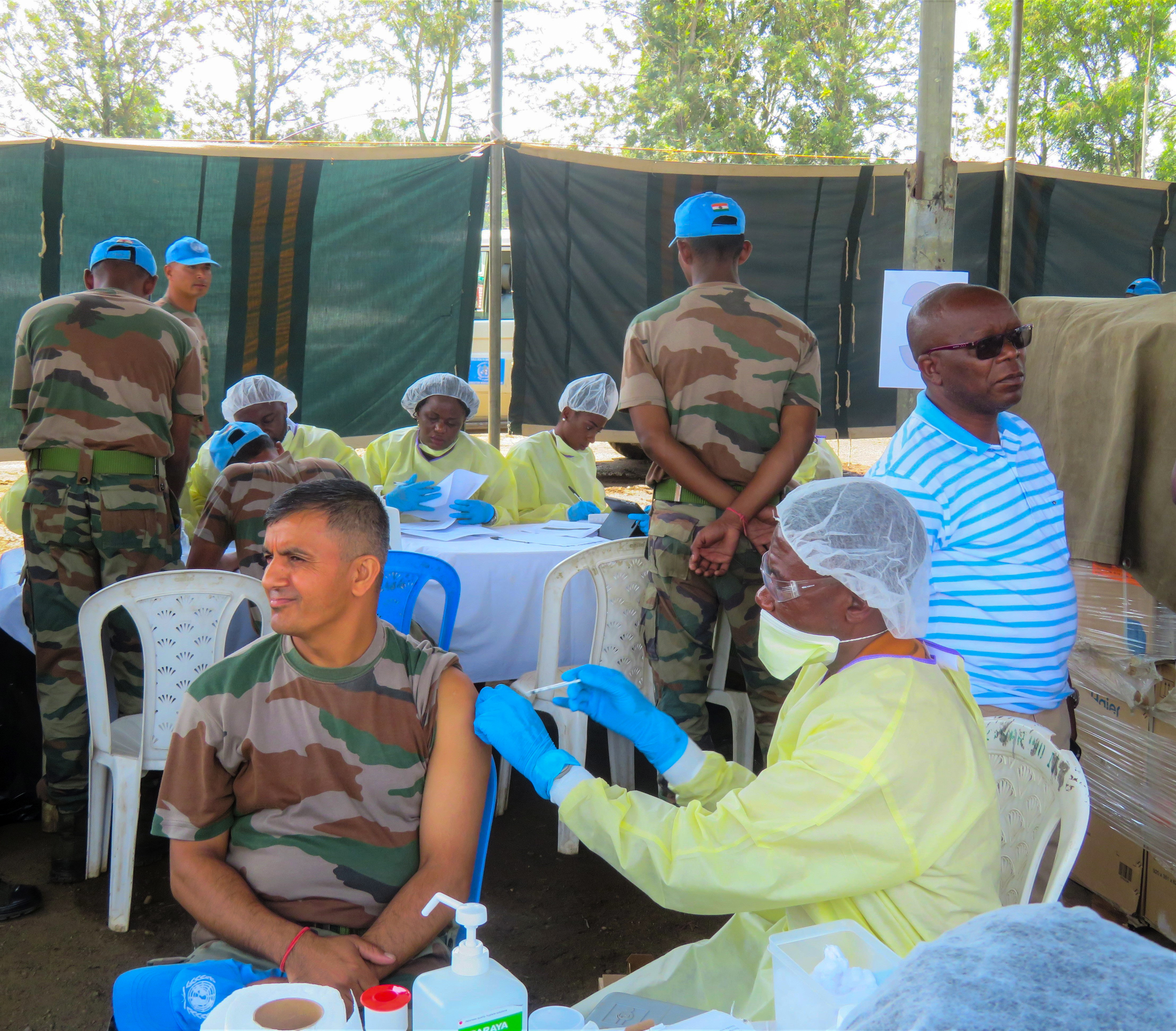
Congo has begun giving frontline workers Ervebo, a vaccine licensed against the Zaire species. Reuters reported that it is believed to offer some cross-protection against Bundibugyo, while WHO says candidate vaccines and therapeutics are being tested. Those statements do not establish that Ervebo is a proven Bundibugyo vaccine. The current use is an emergency measure under uncertainty, alongside clinical trials rather than a substitute for them.
WHO reported on 1 September that three vaccine candidates and three therapeutics were in trials. Until results show what works, the response remains unusually dependent on the older fundamentals: finding cases early, isolating and caring for patients, tracing contacts, protecting health workers and conducting safe, dignified burials. Even an effective candidate would still have to be manufactured, delivered through difficult terrain and accepted by communities.
Why 3,000 deaths changes the scale, but not the forecast
The current outbreak has surpassed Congo’s 2018–2020 epidemic, which killed 2,299 people, but it remains below the 2014–2016 West African epidemic, when more than 11,000 people died. Comparisons can clarify scale, but they cannot predict where this outbreak will end. Geography, the virus species, surveillance, treatment access and the timing of control measures differ.
The official start date is also not the same as the biological beginning. Reuters reported that some health officials and experts believe transmission may have begun as early as January, months before the May declaration. If that is correct, early infections went unrecognized; it does not by itself reveal how many cases were missed.
WHO says the government-led plan for the next six months requires US$1.3 billion. The request covers a response spread across a vast area while humanitarian funding is contracting. Money alone cannot resolve mistrust or insecurity, but shortages can limit laboratories, protective equipment, treatment beds, transport and the teams needed to follow contacts.
The next meaningful signal will not be a single milestone. It will be evidence that new cases are being linked to known chains, more patients are reaching care before they die, safe burials are becoming routine and the number of affected areas is shrinking. None of those outcomes was yet established in the latest public record. For now, the clearest conclusion is narrower: Congo’s epidemic has become a national record, and the systems required to get ahead of it have not yet caught every route by which it is spreading.
.jpg)