What happened
Pakistan marked the 28th anniversary of its 1998 nuclear tests on 28 May 2026, with the prime minister, the president and the armed forces issuing separate messages that reaffirmed the country’s nuclear deterrent and pledged to defend its sovereignty.
Youm-e-Takbeer commemorates 28 May 1998, when Pakistan conducted nuclear tests in the Chagai hills of Balochistan in response to India’s tests earlier that month, formally emerging as a declared nuclear power.
The prime minister’s message
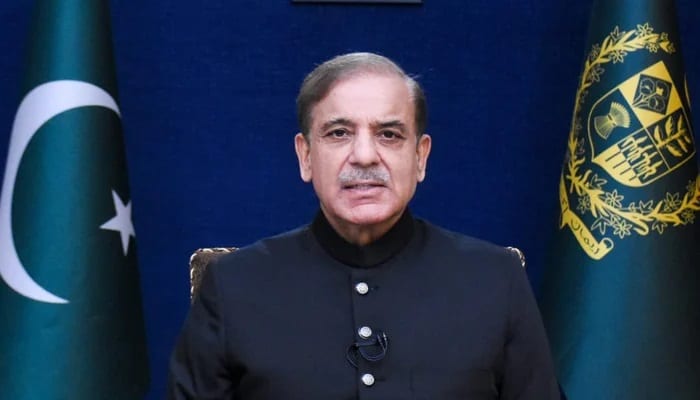
Prime Minister Muhammad Shehbaz Sharif called the day “a defining moment in Pakistan’s history when the entire nation demonstrated unwavering resolve, national unity, and extraordinary courage by emerging as a nuclear power,” according to his message carried by Geo News.
He said the 1998 tests “not only restored the strategic balance in South Asia but also sent a clear message to the world that Pakistan would never compromise on its defence and sovereignty.” He credited the “visionary leadership of Shaheed Zulfiqar Ali Bhutto, the resolute decision-making and courageous leadership of Muhammad Nawaz Sharif, and our national heroes Dr. Abdul Qadeer Khan and Dr. Samar Mubarakmand,” along with scientists, engineers, armed forces personnel and workers.
Mr Shehbaz said India carried out its tests driven by “war hysteria, extremist thinking, and expansionist ambitions,” and that Pakistan responded with “wisdom and resolve.” He said Pakistan “harbours no aggressive intentions; however, we fully reserve the right to defend our homeland.”
Referring to recent tensions, he said Pakistan demonstrated unity during “Maarka-e-Haq” and accused India of staging the “Pahalgam false flag operation.” He named “Fitna al-Khawarij and Fitna al-Hindustan” as proxy networks allegedly facilitated by the Afghan regime, and said “Operation Ghazab lil-Haq will eradicate all such hostile networks and their facilitators.”
The president’s message
President Asif Ali Zardari said Youm-e-Takbeer “revalidates our effective deterrence doctrine, which is indispensable to maintain regional peace and stability,” according to Pakistan TV. He said Pakistan “harbours no aggressive designs against anyone” and is a “responsible and peace-loving nation,” while reserving the right of self-defence under the UN Charter.
The armed forces
The Inter-Services Public Relations said the service chiefs — Chief of Army Staff and Chairman Joint Chiefs of Staff Committee Field Marshal Syed Asim Munir, Chief of the Naval Staff Admiral Naveed Ashraf, and Chief of the Air Staff Air Chief Marshal Zaheer Ahmed Baber Sidhu — extended felicitations on behalf of the armed forces. ISPR described the strategic capability as a “sacred national trust” and a “credible deterrent” ensuring peace and stability in the region, and reaffirmed the forces’ resolve to defend the country against all threats.
Why it matters
The anniversary messages restate Pakistan’s long-standing position that its nuclear capability is a defensive deterrent, while linking the day to current security concerns, including the continued Operation Ghazab lil-Haq against militant networks and the accusation that Afghanistan facilitates proxy attacks. The statements come amid heightened regional tensions and ongoing diplomatic efforts, underscoring that the nuclear deterrent remains central to Pakistan’s security doctrine.
Sources & reporting notes
This is a summary of published reporting, not independent reporting. Quotations are as carried by the cited outlets. Sources reviewed on 2026-05-28.
- Geo News — "Youm-e-Takbeer marks defining moment in Pakistan's nuclear history, says PM"28 May 2026 · Reports the prime minister's message, his tribute to the nuclear programme's architects and his remarks on Operation Ghazab lil-Haq.
- Pakistan TV — "Youm-e-Takbeer symbolizes unity, resolve and strategic stability, says Pakistan PM"28 May 2026 · Carries President Zardari's message and the ISPR statement from the service chiefs.