Reporting snapshot · 20 October 2026. This account relies on the Sindh government's public handout as reported by Dawn and on The Express Tribune's review of the commission's executive summary. The full report had not appeared on the provincial home department's public updates page when this snapshot was prepared, so the commission's detailed findings remain attributed to the Tribune's review.
What happened
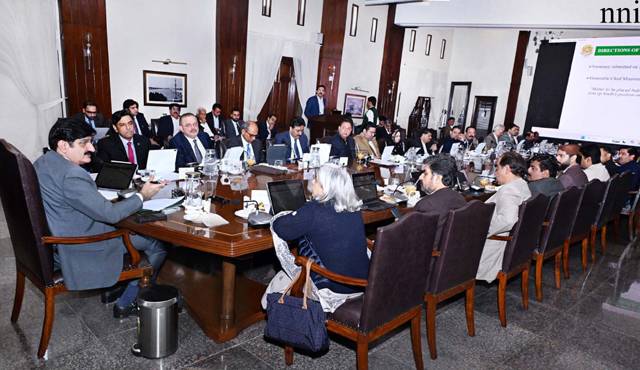
The Sindh cabinet decided on Tuesday, 20 October 2026, to make public the report of the judicial commission that investigated the death of 25-year-old Karachi businessman Mir Raza Ali and the police handling of the case. The decision was taken at a meeting chaired by Chief Minister Murad Ali Shah, according to a handout from the chief minister’s spokesperson cited by Dawn.
The report was presented to the cabinet in seven sealed envelopes. Dawn reported that it would be uploaded to the provincial home department’s website on Tuesday and that a copy would be given to the family. The chief minister also formed a four-member subcommittee to oversee implementation, comprising Home Minister Ziaul Hassan Lanjar, Local Government Minister Nasir Hussain Shah, Labour Minister Saeed Ghani and the Sindh advocate general.
The commission, a single-member inquiry headed by Sindh High Court Justice Omar Sial, submitted its report to the chief minister on 15 October, according to The Express Tribune. The newspaper said it had reviewed the executive summary. The Tribune reported that the commission found Ali was murdered, described the police investigation as an “epic failure” and recommended a joint investigation team led by DIG Irfan Baloch, with representatives of the Inter-Services Intelligence, Intelligence Bureau, Pakistan Rangers (Sindh) and the National Cyber Crime Investigation Agency.
Dawn reported that the commission examined 49 witnesses over 15 hearings. The Tribune said it recorded statements from 50 witnesses across 20 open sessions. The accounts differ.
Ali, an Institute of Business Administration graduate who ran the Wafflix dessert business, went missing from his PECHS residence in the early hours of 28 July 2026. His body was found the next morning in Gulistan-e-Johar. Police initially treated the death as a possible suicide, but the family disputed that account and said the body bore marks of torture. A second post-mortem examination after exhumation found a gunshot wound to the back and ruled out suicide, and police added murder and evidence-destruction charges to the case.
Why the findings matter
The cabinet’s decision turns a sealed inquiry into a public record at a moment when the case has become a test of whether Sindh’s institutions can investigate their own police force credibly. The commission’s reported conclusion directly contradicts the initial police theory, and its criticism goes beyond individual errors to the handling of evidence, medical testimony and public communication.
The case has already prompted protests in Karachi and repeated demands from Ali’s family and its lawyers for an independent investigation. Publishing the report gives the public the commission’s reasoning, but it does not by itself establish criminal responsibility or guarantee that the recommended follow-up will be carried out. The cabinet has created a subcommittee to oversee implementation; it has not announced a deadline for the JIT or the separate inquiry.
The commission was asked to examine not only the death but whether the investigation was conducted impartially. Its reported conclusion that key evidence was compromised, and that an active cover-up could not be conclusively ruled out, raises the stakes for the new team. KhabarWire’s August report on the investigation documented the family’s earlier objections, the exhumation and the dispute over the first autopsy.
What the commission found
According to the Tribune’s account of the executive summary, the commission concluded that the bullet trajectory, the location of the wound, the absence of blood, the condition of the body, acid burns and the anaesthetic detected in the blood all excluded suicide. “It was a murder,” the summary said.
The commission was sharply critical of the police investigation. It said officers failed in their most basic duty to establish the truth, relied on a few unconfirmed text messages and selective video footage, and built their case on a first post-mortem report that did not itself conclude suicide. It described the investigation as a “rudderless ship” and said senior officers showed tunnel vision and doubled down on the initial suicide theory. Dozens of officers, authorised and unauthorised, handled evidence without documenting it, the summary said, and the force ignored the commission’s recommendation to appoint a focal person for public briefings.
The report also examined the controversy over the special medical board. An eight-member board headed by Karachi Police Surgeon Dr Summaiya Syed was notified on 6 August after a court order. In the early hours of 7 August, the Sindh health directorate replaced it with a five-member board drawing on doctors from Hyderabad and Jamshoro. The family rejected the changed board, and the original panel was restored on 8 August after public pressure and a legal notice. The commission called the manoeuvring a “highly irregular, inexplicable, legally flawed overreach” directed from the upper levels of the health secretariat, the Tribune reported.
On the 9 August meeting at the Chief Minister’s House, the commission found no evidence that it was convened to pressure the doctor who conducted the first autopsy, and said no adverse inference could be drawn from the briefing itself. It added that it would have been prudent to invite the police surgeon as well.
The commission acknowledged that it lacked investigative powers and could not conclusively determine whether an active cover-up occurred. It said some actions were difficult to justify and raised the possibility that one took place at some stage. That limitation is central to what happens next: the commission has produced findings and recommendations, not a verdict.
What happens next
The commission recommended a JIT under DIG Irfan Baloch that would integrate the ISI, IB, Rangers (Sindh) and NCCIA, arguing that a severe breakdown in public trust meant even an accurate conclusion by the police alone was unlikely to be accepted. It also recommended that police transparently acknowledge and apologise for past operational lapses and initiate formal inquiries against responsible officers.
Separately, it proposed a high-level committee, preferably led by the Federal Investigation Agency, to examine whether officials involved in the first ten days of the investigation breached Sections 201, 166(2) and 218 of the Pakistan Penal Code. The committee should pursue criminal action as well as disciplinary proceedings where it finds culpability, the summary said.
The cabinet’s subcommittee is now responsible for taking those recommendations forward. The home department was directed to publish the report, and the family was promised a copy. What remains unclear is the timetable, the formal terms of reference for the JIT and the FIA-led committee, and whether the officers criticised in the report will face proceedings while the new investigation is under way.
What is still uncertain
The most important limitation is documentary. The full report was not available on the home department’s public updates page when this article was prepared, and the specific findings described here come from the Tribune’s review of the executive summary. Dawn’s report confirms the cabinet decision and the report’s release, but does not set out the same level of detail on the findings.
The two accounts also differ on the number of witnesses and hearings, and the public record does not explain the discrepancy. The commission’s recommendations are not self-executing: the cabinet has appointed a subcommittee, but no notification forming the JIT or the FIA-led committee had been published in the sources reviewed.
Those gaps matter because the case now rests on whether the report’s findings are matched by transparent follow-up. The cabinet has taken the report out of its sealed envelopes. The next test is whether the institutions it names act on what is inside.
Sources & reporting notes
This is a synthesis of published reporting, not independent reporting. Sources were reviewed on 20 October 2026. The commission's full report had not been posted on the Sindh Home Department's public updates page when this article was prepared; its detailed findings are attributed to The Express Tribune's review of the executive summary.
- Dawn — "Sindh cabinet decides to make judicial commission's report on Mir Raza murder case public"20 October 2026 · The cabinet decision, the seven sealed envelopes, the home department publication, the family copy and the four-member subcommittee.
- The Express Tribune — "Mir Raza commission recommends JIT, FIA-led inquiry into police conduct"20 October 2026 · The commission's reported findings, its criticism of the police investigation and its JIT and FIA recommendations.
- Pakistan Today — "Mir Raza murder case: Judicial commission to submit probe report to Sindh govt today"14 October 2026 · The report's submission timetable and the investigation team's account of evidence handling.