What happened
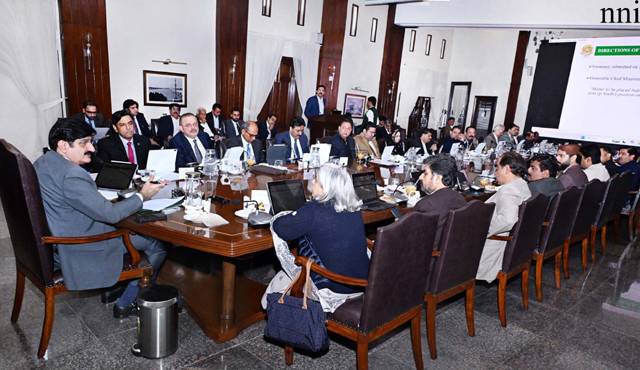
The Sindh cabinet, presided over by Chief Minister Syed Murad Ali Shah, approved a wide-ranging set of financial, administrative and policy decisions on 14 January 2026, covering education, culture, security, agriculture, climate action, infrastructure and social protection, The Nation reported.
The meeting at CM House in Karachi was attended by provincial ministers, advisers, special assistants, the chief secretary and relevant secretaries, and the cabinet ratified the minutes of its previous meeting. The chief minister said the government’s priority was “delivery, not just approvals,” stressing that public funds must translate into visible improvements in services and quality of life. “Every rupee approved by the cabinet must be utilised transparently and monitored rigorously,” he directed.
Education, heritage and culture
The cabinet approved a scheme of Rs190.211 million for construction of a second floor at the girls’ hostel of NED University of Engineering and Technology in Karachi, with the chief minister noting that expanding student accommodation was essential to support female enrolment in higher education.
For heritage conservation, it approved Rs109.5 million, half of the total cost, for the preservation and restoration of Saint Saviour’s Church in Sukkur and Saint Thomas Cathedral Church in Hyderabad, with the remaining funds to be provided in the next financial year. The chief minister said Sindh’s heritage belonged to all communities and must be preserved “with care and dignity.” The cabinet also approved Rs30 million for the Karachi Literature Festival and Rs100 million for strengthening Sindh Archives, including publication of rare manuscripts, conservation of old newspapers, digitisation of records and establishment of an oral history and archival gallery.
Security and public works
On internal security, the cabinet approved in principle Rs1.24 billion for the operationalisation of the Provincial Intelligence Fusion and Threat Assessment Centre (PIFTAC), including funding for equipment, staffing, maintenance and vehicles. It directed that procurement of vehicles be placed before the Cabinet Committee on Austerity Measures. “Security institutions must be strengthened, but with financial discipline and justification for every expense,” Murad Shah said.
The cabinet also approved fund-release mechanisms for Sustainable Development Goals schemes covering hundreds of projects across the province, and sanctioned Rs140 million for a two-week induction training programme for newly inducted officers of the Sindh Local Government Board. In public works, it approved rehabilitation of a three-kilometre link road from Begu Kaka to Agro Rahu in Matiari district with Rs33.785 million in the current financial year, along with road schemes in Sujawal and Shikarpur. The chief minister instructed the planning and finance departments to monitor timelines and quality, warning that “delays and cost overruns will not be tolerated.”
Agriculture and climate
The cabinet was briefed on the federal government’s plan to fully deregulate Pakistan’s sugar sector by 2026. Sindh, which contributes 26 per cent of national sugarcane production with 38 sugar mills across 16 districts, stressed the need for a phased transition. The chief minister directed that farmers’ interests be protected through third-party weighing, transparent payment timelines and advance notification of banned low-yield cane varieties, saying “efficiency cannot come at the cost of growers.” A ministerial committee was formed to submit recommendations at the next cabinet meeting.
The cabinet approved an increase of Rs6.1 billion in the Flood Emergency Rehabilitation fund, raising it to Rs27.6 billion, to cover farmers previously missed because of currency fluctuations. This coincides with the launch of the Rs56 billion Sindh Wheat Growers Support Programme, under which farmers will receive Rs22,000 per acre. The agriculture department was directed to resolve 8,105 pending flood-relief complaints.
In a decision the report described as landmark, the cabinet approved the establishment of the Sindh Climate Change Fund and the Sindh Climate Change Board. The fund will be financed primarily through a 12 per cent Corresponding Adjustment Fee on net revenue from carbon credit sales. The chief minister said Sindh would not compromise on its constitutional and financial rights and rejected any policy allowing redistribution of the province’s unutilised climate funds.
Infrastructure and health
The cabinet granted a one-year exemption from the Infrastructure Cess to the Shaukat Khanum Memorial Trust, recognising its status as a non-profit cancer hospital and facilitating the import of medical equipment. It ratified the release of more than Rs1.13 billion for land acquisition for the Hyderabad-Sukkur Motorway (M-6) and approved a $100 million World Bank negotiation package for the Sindh Public Resources for Inclusive Development programme. It also decided to engage an independent legal firm to review the terms of reference of the 11th National Finance Commission. Additional funding of Rs192.745 million was approved for expanding Rescue 1122 services, while health insurance coverage for provincial employees was renewed, increasing funding from Rs550 million to Rs650 million.
What is still uncertain
The report did not give implementation deadlines for most of the approvals, the total cost of the package or full details of how the new climate fund and security centre will operate. It did not say when the ministerial committee on sugar deregulation will report or how the 8,105 pending complaints will be verified.
Sources & reporting notes
This article summarises reporting published by The Nation on 14 January 2026. It is not eyewitness reporting. Figures and quotations are as reported by the source.
- The Nation — Sindh cabinet approves major reforms on education, culture, security, agriculture14 January 2026 · Report from Karachi on the Sindh cabinet's decisions, the chief minister's directives and the provincial figures cited.