Reporting snapshot · 19 September 2026. The Medical and Dental College Admission Test (MDCAT) 2026 is scheduled for Sunday, 20 September, with more than 138,000 registered candidates. The examination coincides with the start of Jamaat-e-Islami's long march against the petroleum levy; JI has pledged not to obstruct the test. Figures here reflect PMDC and provincial announcements made before the examination.
What happened
The Medical and Dental College Admission Test (MDCAT) 2026 is scheduled to be conducted across Pakistan on Sunday, 20 September, the gateway for admission to medical and dental colleges. The Pakistan Medical & Dental Council (PM&DC) has registered 138,158 candidates for the test, a figure Health Minister Syed Mustafa Kamal also cited as 138,160. The examination is being held at 34 cities and towns across the country, along with one international centre in Riyadh, Saudi Arabia.
Five universities are conducting the test for the provinces and regions: the University of Health Sciences (UHS) for Punjab, Sukkur IBA University for Sindh, Khyber Medical University for Khyber Pakhtunkhwa, Bolan University of Medical & Health Sciences for Balochistan, and Shaheed Zulfiqar Ali Bhutto Medical University for Islamabad, Azad Jammu & Kashmir, Gilgit-Baltistan and Riyadh. The exam was rescheduled from 16 August on the direction of Prime Minister Shehbaz Sharif for what the PM&DC described as the smooth, secure and transparent conduct of the test.
The paper follows a standard format of 180 multiple-choice questions with no negative marking, drawn from Biology, Chemistry, Physics, English and logical reasoning. Results determine a candidate’s aggregate and the merit lists that medical and dental colleges then draw from.
A national exam on the day a protest march begins
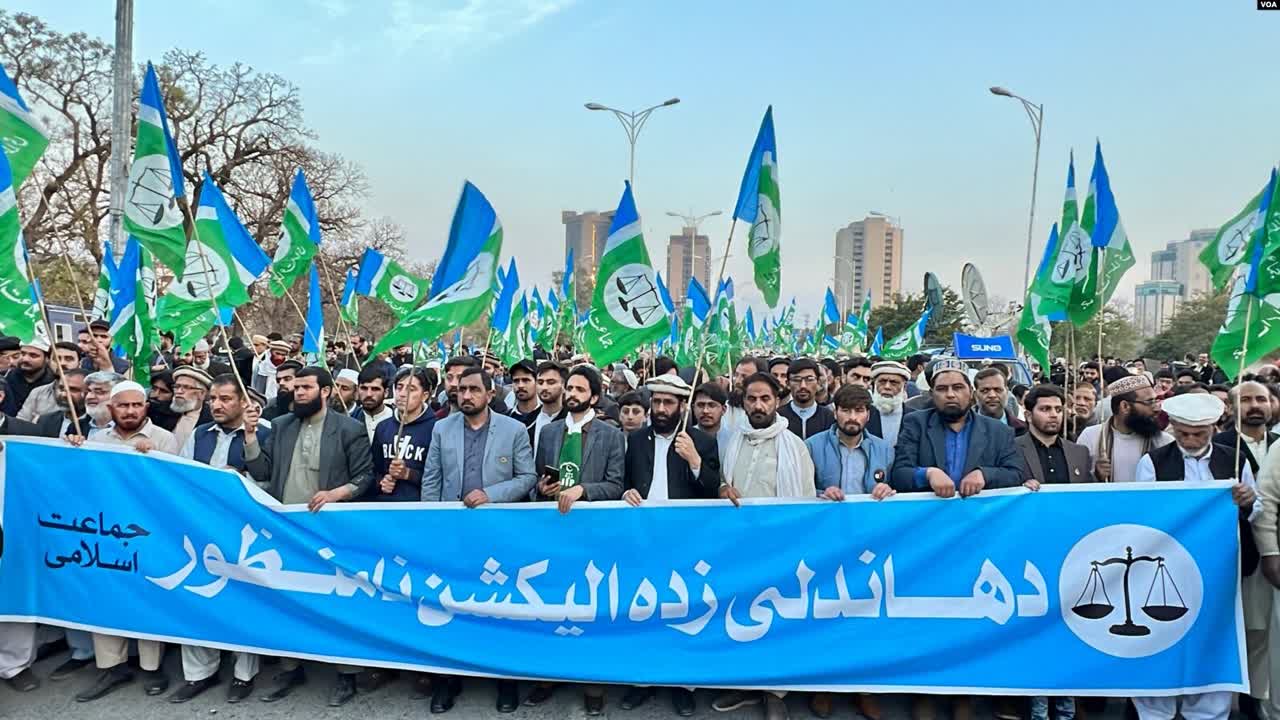
The examination is taking place on the same day that Jamaat-e-Islami’s “super long march” begins its mobilisation against the petroleum levy, raising concerns about transport and access to centres. JI chief Hafiz Naeemur Rehman sought to allay them. At a press conference in Islamabad on 18 September, he said the party wanted the MDCAT to take place and assured candidates there would be no obstruction. He said the party would not block roads — “We are coming to get relief, not to lay hands on anyone” — and that its September 20 activities would not create difficulties for the public, including students.
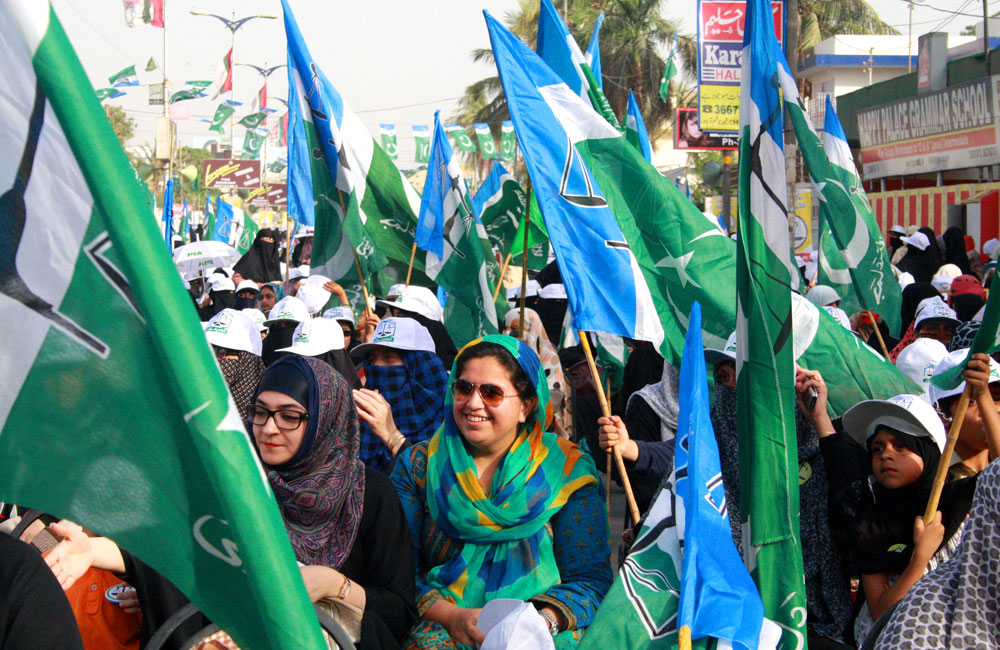
The march is planned to reach Islamabad on 23 and 24 September, with a train march leaving Karachi on the morning of 20 September under Rehman’s leadership and caravans converging on the capital. JI has held sit-ins in provincial capitals since 16 August and has rejected the government’s fuel relief package as insufficient, demanding the complete abolition of the petroleum levy. The government’s last-minute outreach, in which Planning Minister Ahsan Iqbal invited another round of talks, has not changed the party’s plan to march.
The coincidence of the two events has made exam-day logistics a matter of public concern. JI’s statements that it will not block roads or obstruct the test are assurances, not guarantees, and the practical impact on a high-stakes national examination remains to be seen.
New measures against paper leaks and impersonation
This year’s test carries new arrangements designed to prevent a repeat of the paper-leak problems that have disrupted earlier MDCAT sittings. According to the health minister, the PM&DC prepared a question bank of approximately 8,000 questions, developed by around 80 subject experts who were kept in a secure, isolated environment for about two months. Two separate question papers, each containing 180 questions, were provided to every province so the responsible authority could select a paper under the prescribed procedure. The minister said a previous leak had forced the nationwide cancellation of the examination, and that the two-paper system was intended to minimise that risk.
The PM&DC has also clarified the division of responsibility. Provinces and the designated universities — rather than the council itself — are accountable for the integrity of the examination, including the printing, storage and transportation of papers and the declaration of results. In a statement issued after a meeting with vice chancellors and provincial health authorities on 18 September, PM&DC President Prof. Dr Rizwan Taj said that in view of the scale of MDCAT 2026, the question papers may be retained by the respective universities after the examination to safeguard their confidentiality and transparency. The council said candidates’ concerns about any question could be raised through the prescribed review and objection mechanism.
The decision to have universities retain question papers after the test has itself drawn scrutiny. Candidates and university officials in Punjab, where UHS has handed papers back to candidates after the examination for years, have questioned whether taking the paper back deprives students of the ability to identify and challenge disputed questions, given that the objection mechanism relies on candidates being able to point to specific items. The PM&DC has framed the arrangement as a transparency measure rather than a unilateral change to the conduct of the exam.
Security and identity verification
Authorities have put in place extensive security arrangements, particularly in Punjab, which accounts for the largest share of candidates. The Punjab government has finalised a plan under which more than 49,000 candidates are expected to sit the test at 31 designated examination centres in 15 cities, according to the chief secretary’s office. All centres will be monitored round-the-clock through the Punjab Safe Cities Authority CCTV network, and NADRA will carry out real-time, on-the-spot biometric verification of candidates entering the examination halls to prevent impersonation. Section 144 of the Code of Criminal Procedure will be enforced around all centres.
The chief secretary has directed divisional commissioners to ensure full compliance with safety protocols, including walk-through gates and scanners at each centre, uninterrupted power supply, and fully-equipped medical camps to handle emergencies. Waiting areas with cold drinking water have been arranged for parents accompanying candidates. The measures build on guidance issued by the PM&DC, which has asked universities and provincial authorities to ensure centre preparedness, emergency response and candidate facilitation, and to make arrangements for the prompt dispersal of candidates after the examination concludes.
What is still uncertain
Several questions will only be resolved on the day. Whether any convoy or protest activity affects candidate movement, especially along the march route, cannot be known in advance. The new question-paper retention policy has not been tested in practice; how objections will work when candidates do not hold their own copy of the paper is an open question. And the exact result timeline has not been announced; based on past cycles, results have typically followed several weeks after the examination.
For the more than 138,000 candidates sitting the test, the immediate need is the same as in any year: reach the assigned centre on time, carry the required original identification and admit card, and comply with centre rules. What is different this year is the backdrop — a national political mobilisation beginning on the same day, and a reworked examination-security architecture meant to restore confidence in a test that has been disrupted before.
Sources & reporting notes
This is a synthesis of published material, not eyewitness reporting. Sources were reviewed on 19 September 2026. Candidate counts and centre figures reflect PM&DC and provincial announcements; the health minister cited 138,160 candidates while PM&DC's compiled data put the total at 138,158.
- PM&DC — President reviews final MDCAT 2026 arrangements with universities and provincial health authorities18 September 2026 · Primary official record: 138,158 registered candidates, 34 cities and towns plus Riyadh, question-paper retention by universities, and the review and objection mechanism.
- Pakistan Today — Provinces, varsities responsible for transparent MDCAT 2026: Kamal16 September 2026 · Independent account of the health minister's press conference: 138,160 candidates, 34 cities plus Riyadh, the 8,000-question bank, two papers per province, and university accountability.
- Dawn — Security at MDCAT centres17 September 2026 · Independent report of the Punjab security plan: PSCA CCTV monitoring, NADRA biometric verification, Section 144, walk-through gates, medical camps and waiting areas.
- The News International — MDCAT exams to be monitored through PSCA cameras: CS17 September 2026 · Independent report of the Punjab chief secretary's plan: more than 49,000 candidates at 31 centres in 15 cities, CCTV and biometric checks, Section 144.
- Dawn — Over 138,000 candidates to take MDCAT on Sept 2014 September 2026 · Independent report of the PM&DC's compiled data: 138,158 candidates, the rescheduling from 16 August, and the largest share registered with UHS Lahore.
- Geo News — JI's long march to reach Islamabad on Sept 23-24, says Hafiz Naeem18 September 2026 · Independent report of JI's press conference: the train march from Karachi on 20 September, no-road-block pledge, MDCAT assurance and the levy demand.