Reporting snapshot · 14 October 2026 (Asia/Karachi). This account covers the day Parliament voted on the emergency in Khyber Pakhtunkhwa. The text of the two resolutions and the division tallies had not been published when this was written, and the sequence of the votes rests on same-day and live reporting that may be revised. Detention figures and the government's allegations remain contested.
What happened
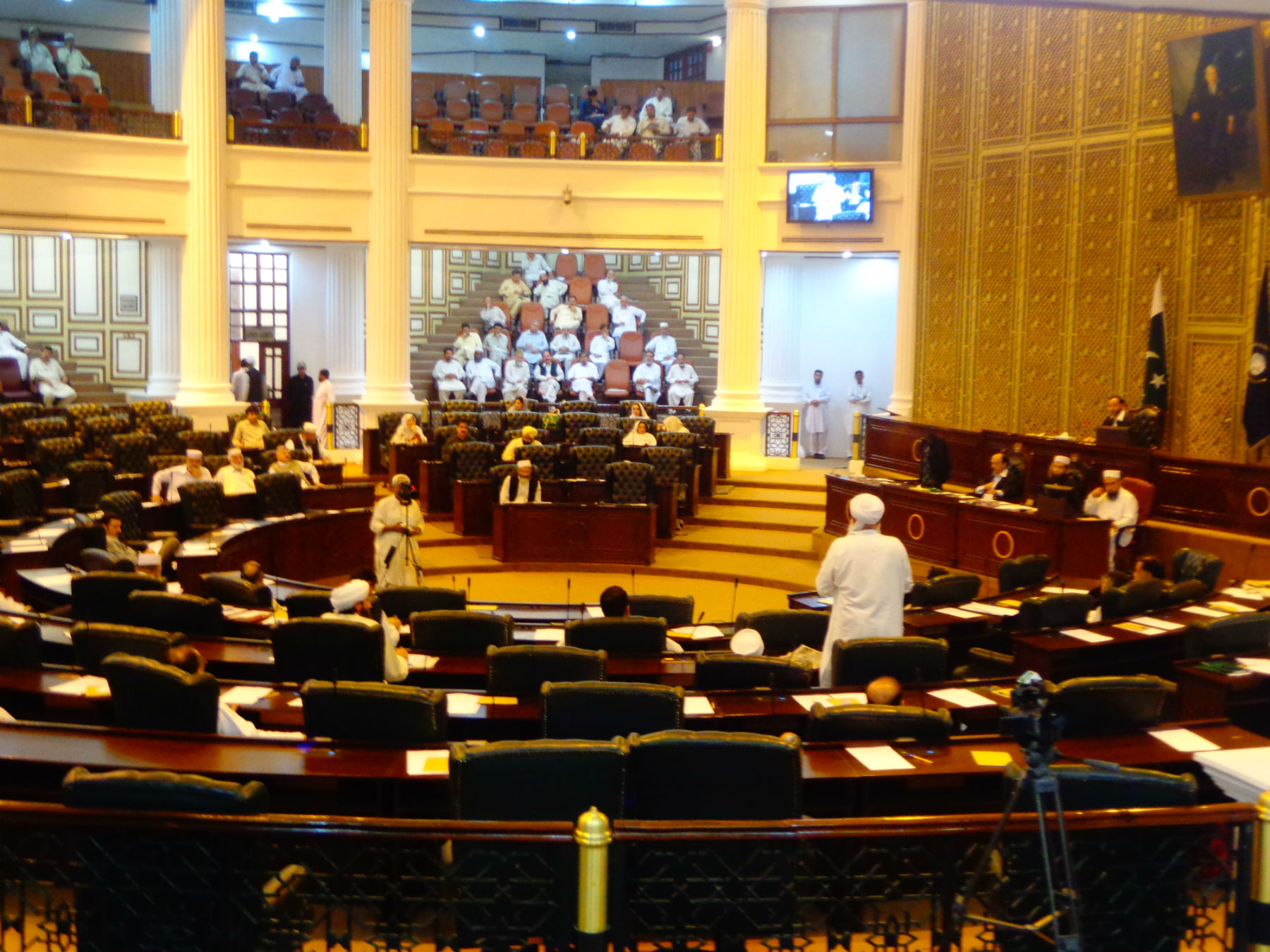
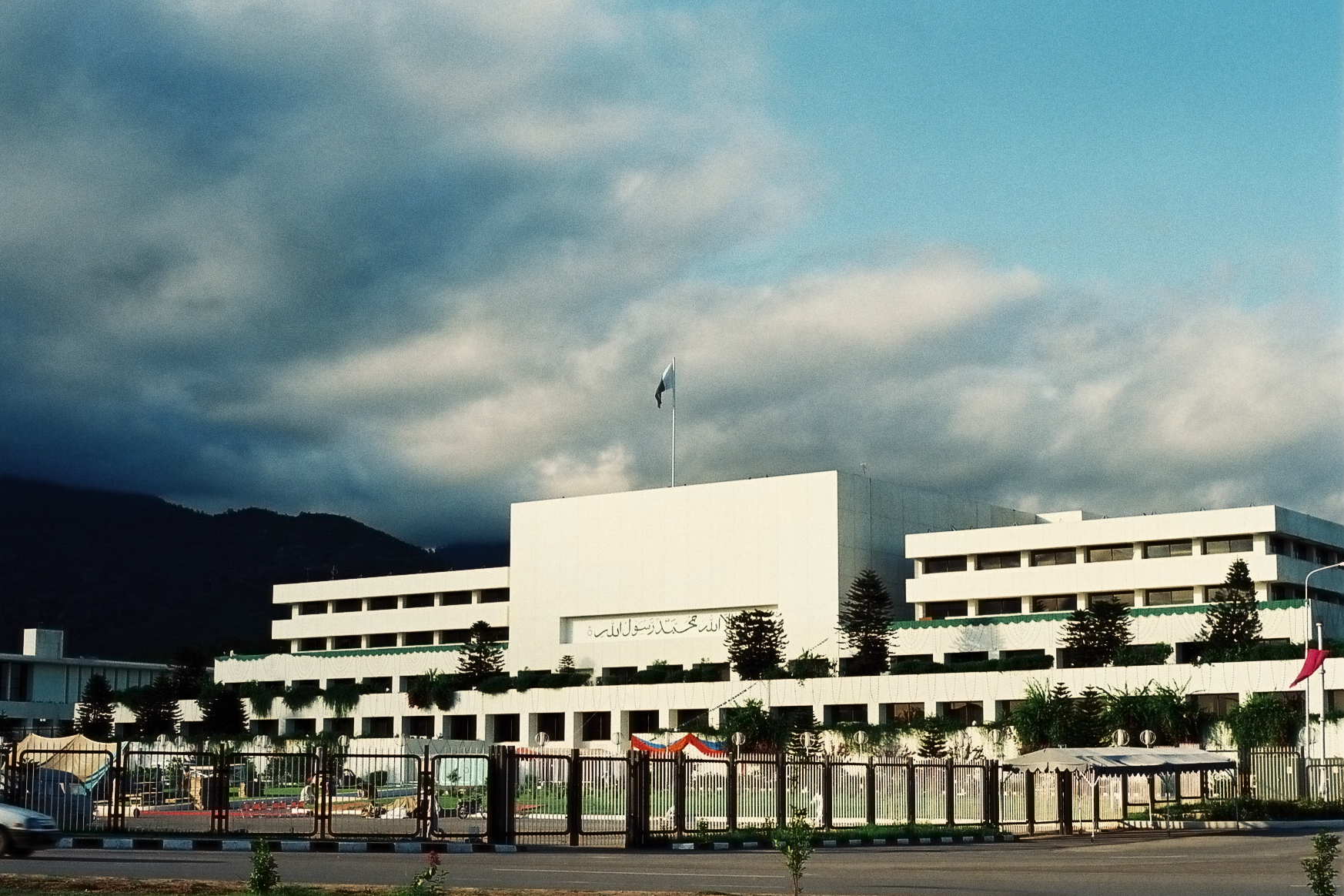
Both houses of Parliament endorsed the emergency in Khyber Pakhtunkhwa on Wednesday, passing resolutions that ratified the proclamation President Asif Ali Zardari issued on 11 October. The National Assembly approved the resolution by a majority vote after a debate of more than four hours, and the Senate followed in the evening despite a walkout by Pakistan Tehreek-e-Insaf (PTI) members, The Express Tribune reported.
Geo News recorded the National Assembly adopting the resolution in the afternoon and the Senate, chaired by Yousaf Raza Gilani, approving it later the same day. Minister for Parliamentary Affairs Tariq Fazal Chaudhry moved the resolution in both chambers. In the National Assembly, the government first carried a motion to suspend question hour over opposition objections before the debate opened. When it closed, the House passed the resolution by a majority and adjourned until 11am on Friday, according to The Express Tribune.
Law Minister Azam Nazeer Tarar told the National Assembly that the Constitution requires a presidential proclamation of emergency under Article 232 to be laid before both houses for approval within ten days of its issuance. The two votes on Wednesday met that requirement, days before the window closed.
Why the votes matter
The emergency was imposed on 11 October, a week after the PTI’s long march set off from Lakki Marwat on 4 October, once talks with the government collapsed. Under the arrangement, Governor Faisal Karim Kundi has taken over the functions of the provincial government, an 11-member advisory council assists him, and Parliament has assumed the provincial assembly’s legislative powers, as KhabarWire reported.
Wednesday’s resolutions matter because they turn a presidential proclamation that had been opposed by the province into a measure both chambers have now endorsed. The government says the step was necessary. Mr Tarar described the provincial administration’s approach to counterterrorism since it took office in October 2025 as a threat to national security, citing internal disturbances and cross-border incursions. He said the federal cabinet had deliberated for two and a half hours before recommending the measure, and argued that the number of terrorist incidents in the province over the past year exceeded those recorded between 2021 and 2024.
Governor’s rule under Article 234 runs through a separate procedure. That proclamation must be laid before a joint sitting and lapses after two months unless the joint sitting approves it, with extensions possible two months at a time, Pakistan Today explained. The emergency and governor’s rule were imposed together on 11 October.
The opposition’s case and the court challenge
The votes were passed over sustained opposition. PTI chairman Barrister Gohar Ali Khan accused the government of using terrorism as a pretext and said the measures had ended the province’s elected government; PTI members chanted slogans and walked out of the Senate. Pashtunkhwa Milli Awami Party leader Mahmood Khan Achakzai called the government “a terrorist government” and warned that governor’s rule could next be imposed in Sindh over disputes on water and minerals, urging the House to reverse the decision.
On the same day, the PTI took its challenge to the Peshawar High Court. Barrister Gohar filed a petition through lawyer Ali Zaman against the Federation of Pakistan, seeking the restoration of the provincial government, Geo News reported. He said the party had asked for an early hearing and would pursue its “constitutional and legal struggle”. PTI Secretary General Salman Akram Raja said the party was also asking the court to establish the whereabouts of Chief Minister Sohail Afridi, who was taken into custody with some cabinet members on Sunday after the emergency was imposed.
Not all the political messages were confrontational. Pakistan Peoples Party chairman Bilawal Bhutto-Zardari, whose party supports the emergency, renewed an offer of dialogue and said he would personally ask Prime Minister Shehbaz Sharif to end the measure once the opposition helped create conditions in which it was no longer needed. Defence Minister Khawaja Asif told the National Assembly that 3,900 people had been killed in the province over 14 months, in addition to 2,700 over three years, and alleged that Mr Afridi had been taking instructions from someone in Afghanistan — an allegation the PTI denies.
This is the latest turn in the standoff that includes the federal monitoring committee and the first court petition reported on 13 October.
What is still uncertain
Several things are unresolved. The text of the two resolutions and the exact division tallies have not been published, so the size of the government’s majority is not yet verifiable. The emergency notification itself has still not been released in full.
The next formal test is a joint sitting. Under Article 234 the governor’s rule proclamation must be approved by a joint sitting within two months, and the emergency declared under Article 232 also faces further scrutiny; no date for a joint sitting has been announced. In the Peshawar High Court, no hearing date has been set on the PTI petition, and it is not clear how the court will treat the government’s assertion that the constitutional conditions for the measures were met.
The detention picture also remains unclear. The PTI says Mr Afridi and other leaders are being held at undisclosed locations; the most specific figure published, 278 detained PTI members, came from police officials speaking anonymously and has not been confirmed by either side, as KhabarWire reported.
The standoff is tracked on the K-P emergency hub. What the joint sitting and the high court decide will determine whether the arrangement survives its next tests.
Sources & reporting notes
This is a synthesis of published reporting and official records, not eyewitness reporting. Because the text of the resolutions and the division results had not been published when this was written, the account of the two votes rests on same-day and live reporting by independent Pakistani outlets, and that limitation is stated above. Sources were reviewed on 14 October 2026 (Asia/Karachi).
- Primary record — National Assembly of Pakistan: session record for 14 October 2026The official National Assembly site records the 30th session sitting of Wednesday, 14 October 2026 and states that the sitting was adjourned to Friday, 16 October 2026 at 11:00 a.m.
- Independent source — The Express Tribune: "After NA, Senate approves K-P emergency resolution by majority vote amid opposition ruckus"14 October 2026 · The presentation of the resolution, the suspension of question hour, the four-hour debate, the majority votes in both houses, Law Minister Tarar's remarks, the adjournment to Friday, and the statements by Achakzai, Bilawal and Khawaja Asif.
- Independent source — Geo News: live updates on the K-P emergency and the PTI march14 October 2026 · The sequence of the National Assembly vote and the Senate vote under Chairman Yousaf Raza Gilani, the PTI walkout, and the filing of PTI's petition in the Peshawar High Court.
- Independent source — Geo News: "PTI challenges imposition of emergency, governor's rule in Khyber Pakhtunkhwa"14 October 2026 · The PTI petition filed through lawyer Ali Zaman, the relief sought, Barrister Gohar's remarks, and the six-month framing of the arrangement.
- Independent source — Pakistan Today: "'Test of Constitution': PTI challenges KP emergency, governor's rule as Centre defends move"14 October 2026 · The constitutional mechanics of Articles 232 and 234, the ten-day and two-month approval requirements, and the government's defence of the measure.