What happened on 10 January 2026
The commander of the Iraqi Air Force, Lt Gen Staff Pilot Mohanad Ghalib Mohammed Radi Al-Asadi, expressed a “keen interest” in acquiring JF-17 Thunder fighter jets and Super Mushshak trainer aircraft during a meeting in Iraq with Pakistan Air Force Air Chief Marshal Zaheer Ahmed Baber Sidhu on 10 January 2026, the military’s media wing said in a statement carried by Dawn and Arab News. The Inter-Services Public Relations (ISPR) statement said the two met at the Iraqi Air Force headquarters in Baghdad, where Air Chief Marshal Sidhu received a guard of honour on arrival.
The meeting’s centre of gravity, in the ISPR framing, was the JF-17. According to the statement, Lt Gen Al-Asadi “expressed interest in benefiting from PAF’s world-class training and expressed a keen interest in JF-17 Thunder fighter jets [and] Super Mushshak trainer aircraft”. The Iraqi air chief also commended the PAF’s “professionalism and technological advancement”, and “appreciated Pakistan for its role in regional stability”. The statement said the pair “agreed to pursue joint exercises and training initiatives to strengthen interoperability”.
Dawn’s 10 January reporting on the meeting, filed the same day, treated it as a single, self-contained announcement. The same Dawn archive for 10 January also carried the Pakistan Navy’s LY-80N surface-to-air missile test in the north Arabian Sea and the opening of the 13th Pakistan–US bilateral joint counter-terrorism exercise “Inspired Gambit 2026” at the National Counter Terrorism Centre in Pabbi, making the Iraqi expression of interest one of three defence-related developments the day produced.
Where the JF-17 fits in the post-May 2025 sales pitch
The Iraqi interest is the third publicly reported foreign expression of interest in the JF-17 inside ten days, and Dawn’s 10 January survey of Pakistan arms-export deals since the May 2025 conflict with India listed all three in chronological order. The same week earlier, the Bangladesh Air Force chief’s interest in “potential procurement” of JF-17 Thunder aircraft was disclosed after Air Chief Marshal Sidhu met his Bangladeshi counterpart in Islamabad on 6 January, and reports on 7 January said Pakistan and Saudi Arabia were in talks to convert about $2 billion of Saudi loans into a JF-17 fighter jet deal, deepening military cooperation months after the two nations signed a mutual defence pact in 2025.
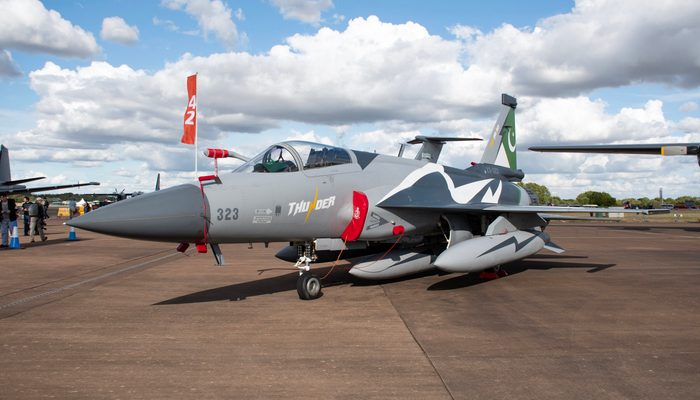
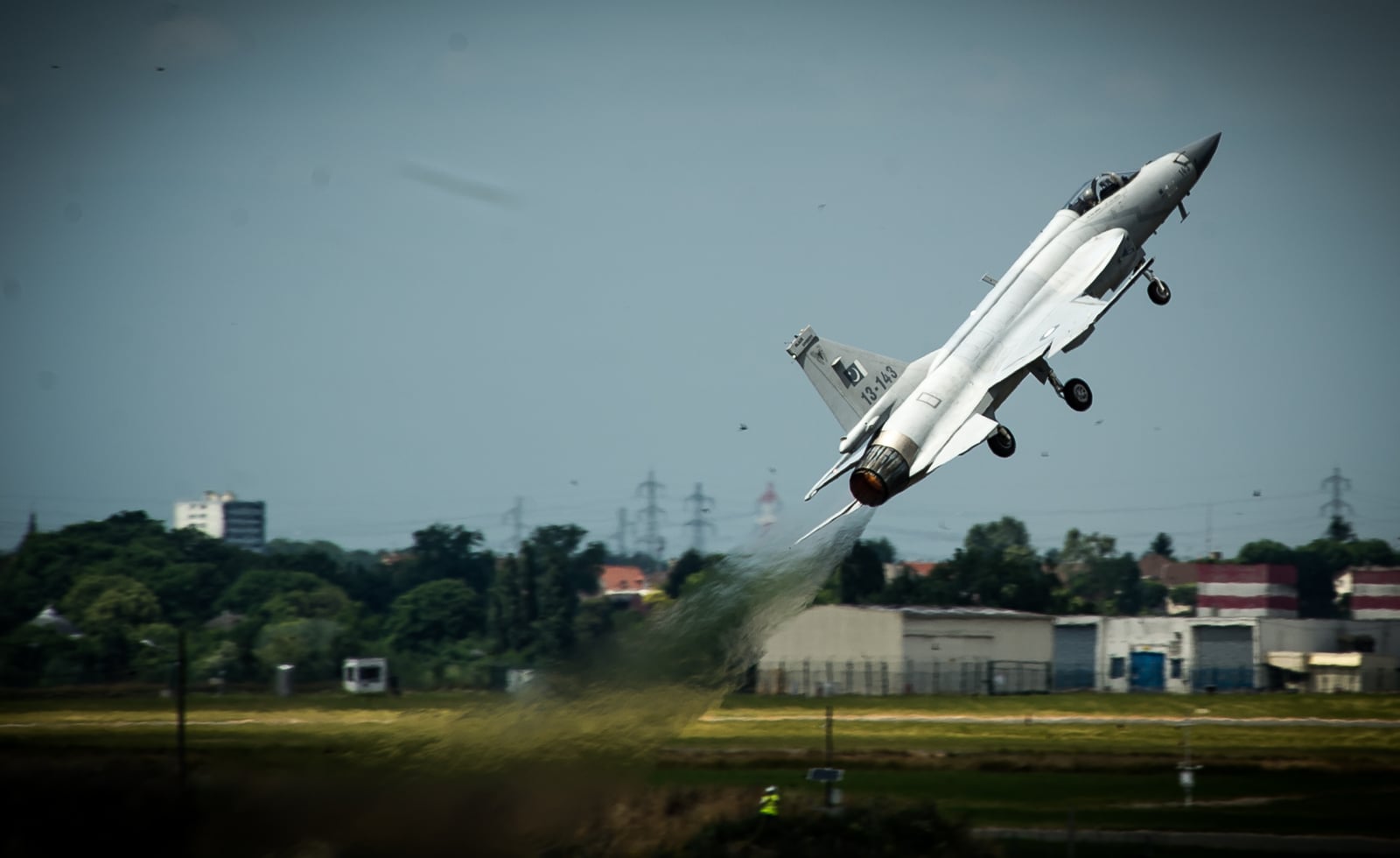
The JF-17 Thunder is a single-engine, light multi-role combat aircraft jointly developed by Pakistan’s Pakistan Aeronautical Complex (PAC) and the Chengdu Aircraft Industry Group (CAC) of China. During the four-day conflict with India in May 2025, the type was credited with destroying a Russian-origin S-400 surface-to-air missile system deployed by India at Adampur, the kind of capability statement Pakistan has used in subsequent marketing of the jet. In a 7 January interview with Geo News reported by Dawn, Defence Minister Khawaja Asif said “our aircraft have been tested, and we are receiving so many orders that Pakistan may not need the International Monetary Fund in six months”. The Iraqi interest, on the day of ACM Sidhu’s visit, is the latest datum in that sales narrative.
The Pakistan Air Force’s own framing of the visit
ISPR’s 10 January statement placed the visit inside a broader regional-engagement framework rather than a single sale. Air Chief Marshal Sidhu, the statement said, “highlighted the deep-rooted religious, cultural, and historical ties between Pakistan and Iraq” and “reaffirmed PAF’s commitment to support the Iraqi Air Force in training and capacity development”. The two chiefs “discussed enhancing bilateral military cooperation, with emphasis on joint training, capacity building and improving operational cooperation”.
The statement did not specify the size or value of any prospective Iraqi purchase, the delivery timeline, the offset arrangements, or the configuration of the JF-17s in question. Pakistan has previously marketed both the JF-17 Block II and the more advanced Block III variant of the aircraft, and the same Dawn arms-export survey that listed the Iraqi interest also recorded an earlier, separate deal with Libya, signed on 22 December 2025, for JF-17s and Super Mushshak trainers. The 10 January statement did not, however, refer back to the Libyan deal and did not name a specific JF-17 variant as the subject of the Iraqi interest.
What the visit was not
The 10 January announcement did not announce a contract, a memorandum of understanding, a price, a delivery schedule, or any Pakistani defence-industrial offsets. The Iraqi air chief’s expression of “keen interest” is a step short of a procurement decision, and the ISPR statement characterised the meeting as a high-level discussion of “joint exercises and training initiatives” alongside the equipment question. The 10 January Dawn coverage did not cite any Iraqi government spokesperson or official Iraqi readout beyond the ISPR statement, and no wire-side confirmation from Reuters, AP, AFP or BBC of the Iraqi interest was available in the day’s English-language coverage reviewed.
Dawn’s reporting on 10 January placed the Iraqi meeting in the same week as separate PAF diplomacy with Bangladesh and Saudi Arabia, but did not draw a direct line from any of those conversations to the May 2025 conflict with India in the same article. The connection between the May 2025 air combat and the surge in foreign interest is, as of 10 January, an inference Dawn’s survey of arms exports made explicitly, but one that the Iraqi air chief’s own statement did not endorse.
What is verified
The verified core of the 10 January announcement is narrow but well-sourced. The ISPR statement, as carried by Dawn, attributes the “keen interest” wording to Lt Gen Al-Asadi and names ACM Sidhu as the Pakistani counterpart; names JF-17 Thunder fighters and Super Mushshak trainer aircraft as the platforms discussed; and records the meeting venue as the Iraqi Air Force headquarters. Dawn’s separate 10 January survey of Pakistan’s arms exports post-May 2025 lists the Iraqi interest alongside the Saudi and Bangladesh conversations, and the same survey notes the Libyan deal of 22 December 2025 as the only previously signed conventional-arms export contract in the post-May 2025 window.
What remained open on 10 January
Several questions were not answered by the day’s coverage. The ISPR statement did not disclose which variant of the JF-17 the Iraqi side was interested in, the indicative number of aircraft under discussion, the indicative price or financing terms, or whether any Super Mushshak trainer element was being discussed separately or as part of a single package. The statement did not say whether a follow-on meeting was scheduled, which Iraqi ministry would lead any procurement, or whether the Iraqi interest was contingent on a United States foreign-military-financing approval, which has been a feature of some past Iraqi defence purchases of Western types. The 10 January Dawn reporting did not include any independent Iraqi-source comment, and Reuters, AP, AFP and BBC coverage of the meeting was not in the day’s English-language reporting reviewed.
Why the Iraqi interest matters for Pakistan
The 10 January announcement is the third data point inside a week in a sales narrative Pakistan is building around the JF-17, and is the first that comes from a non-traditional PAF customer in the Middle East outside the Gulf. The Iraqi Air Force’s current fighter inventory is broadly Western and Russian, and a JF-17 order from Baghdad would be the first confirmed Iraqi interest in a Chinese-Pakistani combat type, with the attendant questions about US third-party transfer approval and any Pakistani financing terms.
For the PAF itself, the meeting is one of a series of bilateral visits Air Chief Marshal Sidhu has used since taking command to deepen regional air-force cooperation, including the Bangladesh air chief’s visit to Islamabad on 6 January. The Iraqi interest does not, on 10 January, change the PAF’s force structure, but it does extend the post-May 2025 sales pitch to a country the PAF has not previously marketed the JF-17 to in public, and it gives the defence minister’s 7 January line about Pakistan not needing the IMF a third corroborating datum inside the same week.