What happened
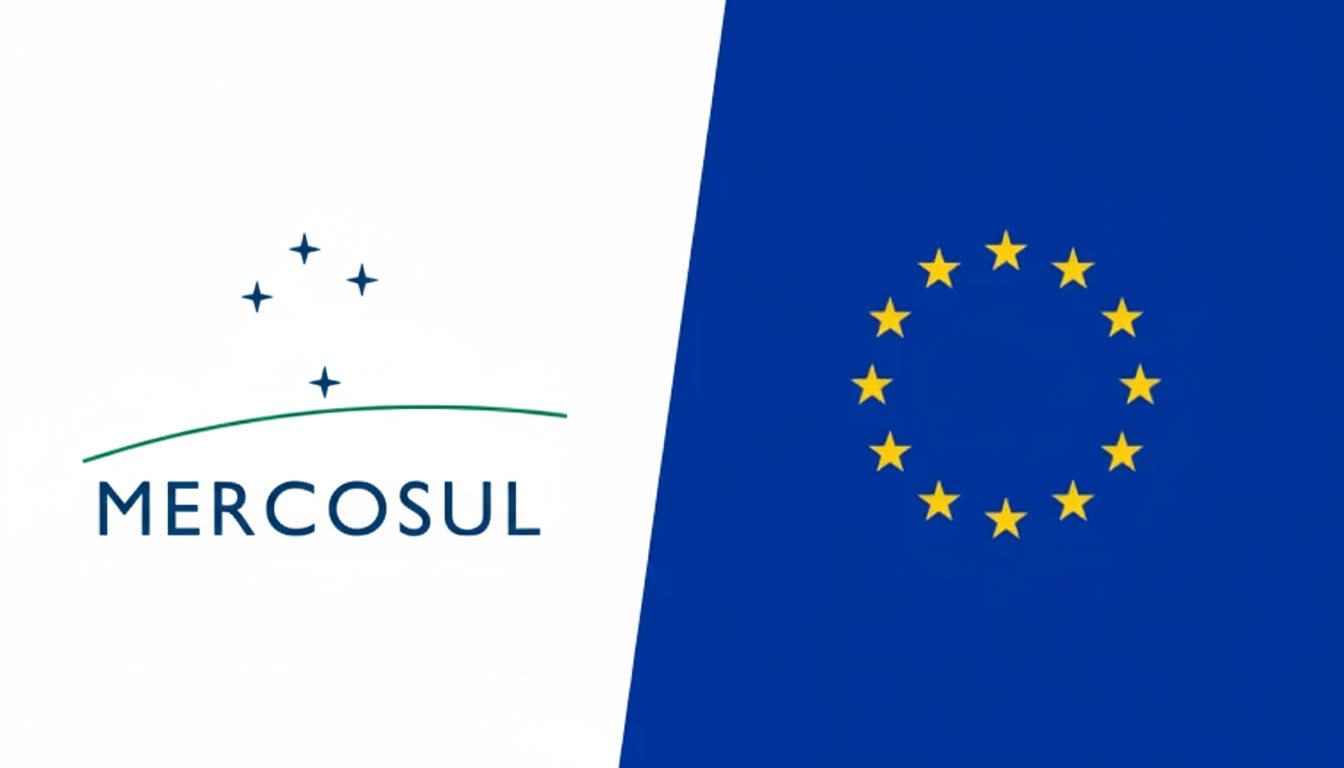
The Council of the European Union on Friday 9 January 2026 adopted two decisions authorising the signature of the EU-Mercosur Partnership Agreement (EMPA) and a separate Interim Trade Agreement (iTA) with the South American bloc Mercosur, made up of Argentina, Brazil, Paraguay and Uruguay. The Council’s own press release, issued at 17:45 Brussels time, said the move marked “an important milestone in the EU’s long-standing relationship with Mercosur partners” and would create “the world’s biggest free trade zone, covering a market of over 700 million consumers.”
A qualified majority of EU member states backed the decision at a Coreper ambassadors’ meeting. An EU diplomat and Poland’s agriculture minister, cited by Reuters, said 21 countries voted in favour, with Austria, France, Hungary, Ireland and Poland against and Belgium abstaining; approval required at least 15 countries representing 65 percent of the bloc’s population. The European Commission had argued the deal would help offset business lost to United States tariffs and reduce reliance on China by securing access to critical minerals.
Brazilian President Luiz Inacio Lula da Silva, quoted by Reuters and the BBC, called the EU clearance “a historic day for multilateralism” and said the agreement sent “a signal in favour of international trade as a driver of economic growth, with benefits for both blocs.” European Commission President Ursula von der Leyen said the pact would “bring meaningful benefits to consumers and businesses, on both sides.” Argentine foreign ministry officials told Reuters the formal signing would take place on 17 January in Asunción, Paraguay.
What the agreement covers
The Council’s press release sets out a two-track architecture. The EMPA bundles political dialogue, cooperation and a trade and investment pillar under a single framework, covering sustainable development, environment and climate action, digital transformation, human rights, mobility, counter-terrorism and crisis management. Parts of the political and cooperation chapters will apply provisionally once the EU signs, pending completion of ratification.
The interim trade agreement is the operative economic instrument. It removes import tariffs on more than 90 percent of goods between the two blocs, opens Mercosur government procurement to EU companies, and includes provisions for investment facilitation and the removal of barriers to cross-border services trade, particularly in digital and financial services. The European Commission estimates EU businesses will save about €4 billion ($4.7 billion) a year in duties, according to the BBC.
Safeguards sit at the centre of the political compromise. The Council’s decision empowers the Commission to apply bilateral safeguard measures on sensitive agricultural imports and to impose enhanced monitoring on tariff-rate-quota products until a permanent Mercosur safeguards regulation is adopted by the Council and the European Parliament; a provisional political agreement on that regulation was reached on 17 December 2025. The interim trade agreement falls within the EU’s exclusive competence and does not require ratification by individual member states.
The political fight
France led the opposition, framing the deal as an assault on its farmers. French politicians across the political spectrum had argued that cheaper Mercosur beef, poultry and sugar would undercut domestic producers. The opposition extended to Austria, Hungary, Ireland and Poland, while Belgium declined to vote in favour. Farmers responded in the streets. Reuters reported protests blocking highways in France and Belgium and tractor marches in Poland on the day of the vote; the BBC quoted Judy Peeters of a Belgian young farmers’ group saying there was “a lot of pain” and “a lot of anger.”
Germany, Spain and Italy backed the agreement. German Chancellor Friedrich Merz called the vote a “milestone” and said “25 years of negotiations is too long.” EU trade commissioner Maros Sefcovic had earlier described the pact as “the biggest free trade agreement we have negotiated.” Both the European Parliament and, for the full partnership agreement, all EU member states must still complete ratification before the EMPA can enter into force in full.
The Reuters account identifies two strategic motives behind the push for approval. The European Commission and several member states, including Germany and Spain, argued the deal would help offset losses from US tariffs imposed under President Donald Trump and would diversify supply chains by opening access to South American deposits of gold, copper and critical minerals used in renewable-energy and battery technologies. The BBC framed the same calculus against the backdrop of the Trump administration’s tariff regime and the recent US military intervention in Venezuela, saying the agreement carried “a very strong geopolitical signal” in defence of “rule-based trade.”
What remains uncertain
Several steps are still ahead of the agreement’s full force. The formal signing ceremony is scheduled for 17 January in Asunción, but the interim trade agreement’s economic provisions still require European Parliament consent, and the full partnership agreement must be ratified by all 27 EU member states as well as the four Mercosur partners before it enters into force in full. Cecilia Malmström, a former European trade commissioner, told the BBC that parts of the agreement could be suspended if Mercosur countries fail to meet commitments on environmental protection, including halting deforestation.
The political battle inside the EU is also not over. France has signalled it will press for the strictest possible use of the bilateral safeguards, and Austrian, Hungarian, Irish and Polish votes against the deal suggest ratification fights in national parliaments will continue.
Why it matters for Pakistan
For Pakistan, the EU is its single largest export market, and access runs primarily through the GSP+ preferential scheme, which allows duty-free entry for most Pakistani goods until the end of 2027. The Mercosur agreement does not touch that arrangement directly, but it reshapes the competitive landscape the GSP+ programme operates in. Mercosur countries will gain preferential access for agricultural commodities such as beef, poultry, sugar, soybean products and ethanol — categories in which they are the world’s lowest-cost exporters — into the same European market where Pakistan’s textile and apparel shipments compete on price.
EU negotiators have also linked the deal to securing critical-minerals supply chains, a question that is becoming increasingly salient for Pakistan as it moves to develop the Reko Diq copper-gold project and explores rare-earth and lithium prospects in Balochistan and elsewhere. While the Mercosur pact directs European demand toward Latin American sources, the wider strategic framing of “de-risking” supply away from China is a structural shift Pakistani mineral exports could eventually plug into.
In Brussels, the geopolitical backdrop matters as much as the line items. Reuters and the BBC both place the vote in the context of the Trump-era tariff regime and the January 2026 US intervention in Venezuela, with EU governments portraying the Mercosur pact as a defence of rules-based trade. Pakistan, which has been navigating its own tariff pressures from Washington since 2025, sits inside that same shifting trade order.