Reporting snapshot · 17 October 2026 (Asia/Karachi). The address covered in this article was delivered on 17 October 2026 at the Pakistan Military Academy, Kakul, by Commander National Strategic Command (CNSC) General Syed Aamer Raza. The account draws on the Geo News read-out of ISPR's press release and on the state-run Associated Press of Pakistan's separate account of the parade. No ISPR text of the address was published in full in the sources reviewed; the lines quoted here are those carried by both outlets. The full list of friendly-country cadets, parade awards and order of ceremony have been published separately by ISPR.
What happened
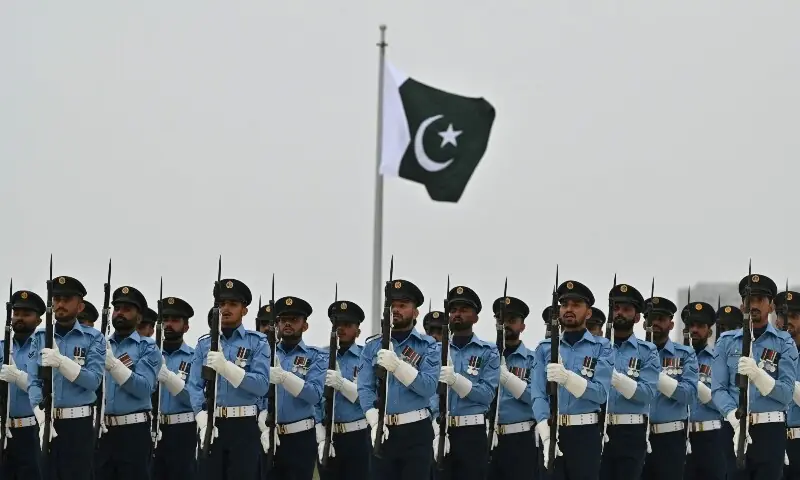
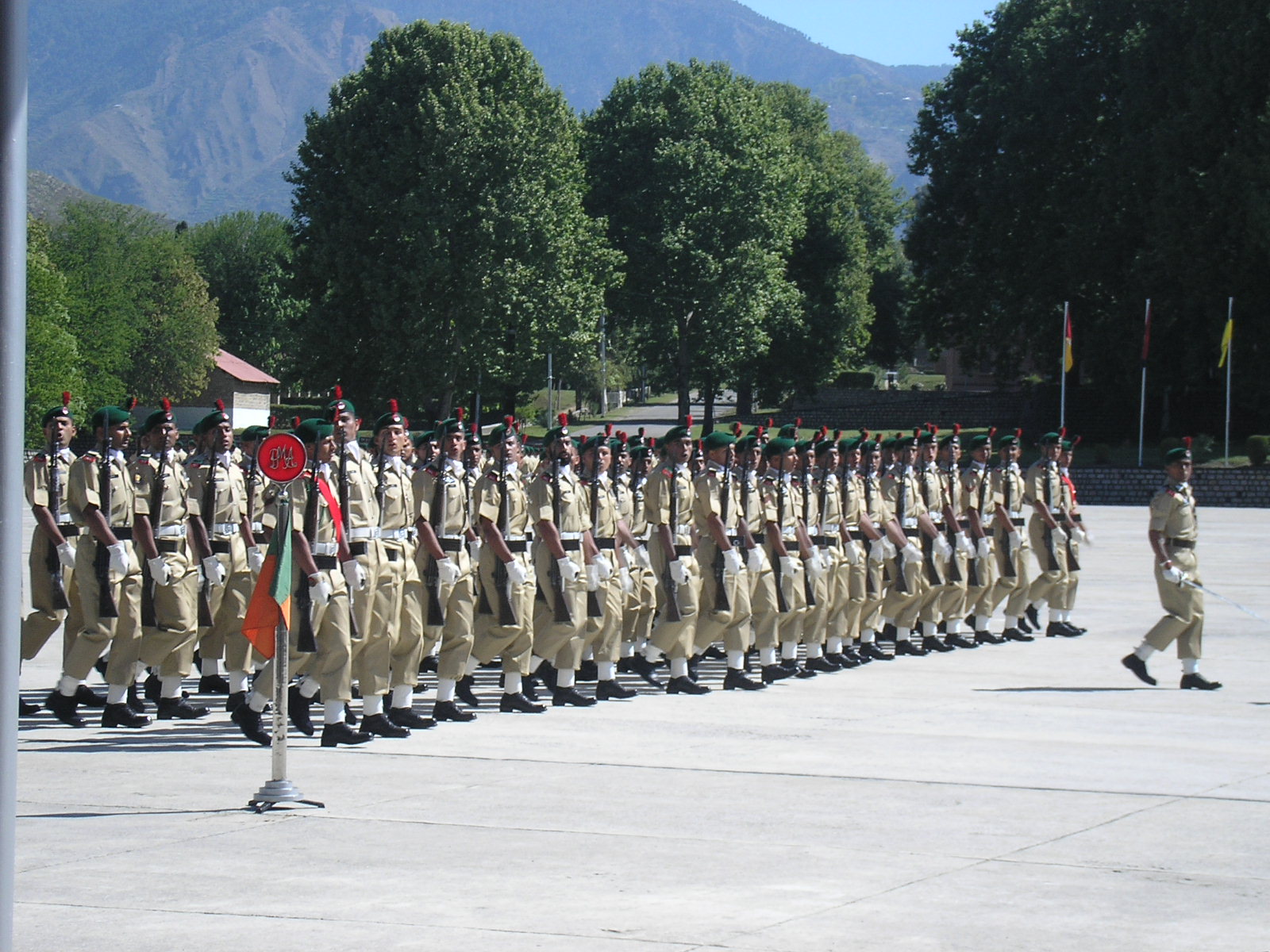
The 154th Pakistan Military Academy (PMA) Long Course, the 39th Technical Graduate Course, the 73rd Integrated Course and the 28th Lady Cadet Course graduated on Saturday at PMA Kakul, Abbottabad district, with Commander National Strategic Command (CNSC) General Syed Aamer Raza reviewing the parade as chief guest. The Inter-Services Public Relations (ISPR) said cadets from Bangladesh, Iraq, the Maldives, Palestine, Qatar, Sri Lanka, Tajikistan and Yemen also passed out, as Geo News and the state-run Associated Press of Pakistan reported on 17 October.
In his address, Gen Raza delivered the strongest public warning yet from the National Strategic Command, the tri-service body that oversees Pakistan’s strategic forces, that any cross-border aggression would be met with a response “far beyond the imagination or calculation of the initiator”. “Safeguarding the territorial integrity of our motherland is absolute and unyielding,” he said, according to the Geo News read-out. “We will neither tolerate cross-border aggression nor any violation of our sovereign borders.”
Gen Raza framed the warning in nuclear language. “There is no space for conflict or war in a nuclearised environment, and any miscalculation will be met with a response far beyond the imagination or calculation of the initiator,” he told the parade. He also said Pakistan “will not allow any miscalculation on part of the adversary,” and that the country’s stance “remains resolute and unambiguous”.
The CNSC cited the May 2025 Pakistan-India conflict and India’s “Operation Sindoor” by name. He said Pakistan’s adversaries had sought to drive a wedge between the armed forces and the people through disinformation and “narrative warfare”, and that after the failure of Operation Sindoor they had tried “to fracture the country’s social cohesion and state infrastructure through the escalation of proxy terrorism and sub-conventional warfare”. The same point — that hostile elements were seeking to exploit internal vulnerabilities across Pakistan — was carried separately by Geo News, citing ISPR.
The speech also touched on the Middle East conflict and what Gen Raza called Pakistan’s “decisive role in restoring regional stability, exemplified by the landmark Islamabad Accord”. He said recent shifts in geopolitics, against the backdrop of the Middle East conflict, had “once again underscored Pakistan’s pivotal strategic importance on the international stage”, describing the Islamabad Accord as evidence of Pakistan’s “enduring commitment to peace and diplomatic de-escalation”.
Why it matters
The choice of speaker and venue is the first signal. The National Strategic Command, headquartered in Rawalpindi, brings together the army, navy and air force elements responsible for Pakistan’s nuclear deterrent. Reviews by a serving CNSC are unusual on parade grounds; most PMA Kakul reviews are taken by the Chief of Army Staff or, periodically, by the Prime Minister. By sending the CNSC as chief guest to the academy’s most-watched parade of the year, the military is using the occasion to communicate deterrence to a wider audience than the graduating cadets themselves.
The language of the address goes further. The “no space for conflict or war in a nuclearised environment” formulation, paired with a warning that “any miscalculation will be met with a response far beyond the imagination or calculation of the initiator”, echoes the full-spectrum deterrence doctrine Pakistan’s military has been refining since the early 2020s. By placing that line alongside an explicit reference to Operation Sindoor, the CNSC ties the nuclear warning to the most recent India-Pakistan exchange and signals that the threshold being communicated is the one that follows the May 2025 fighting, not the one that preceded it.
The pairing with the Makkah pact and Middle East messaging is more pointed. The same day, the Foreign Office used its weekly briefing in Islamabad to walk a careful line between Saudi Arabia and Iran, reaffirming the Makkah pact without endorsing Riyadh’s specific Iran-Houthi accusation. The CNSC’s invocation of the “Islamabad Accord” sits alongside that posture, presenting the same Middle East diplomacy as evidence of strategic restraint while making clear that restraint is not acquiescence. Together the two read-outs describe a government that wants to keep the diplomatic channel open on one front while keeping the strategic threshold unambiguous on another.
The parade’s audience also matters. The 28th Lady Cadet Course graduated alongside the three male courses, and cadets from eight friendly countries passed out under the review. In choosing the passing-out parade as the venue, the CNSC was speaking to a cohort that will form the operational backbone of the Pakistan Army, Air Force and Navy over the next three decades, and through them to the senior leadership of partner armies in the Gulf and beyond.
What is still uncertain
The address is described in both read-outs as a parade speech, not as a strategic doctrine statement, and ISPR did not publish the full text in the sources reviewed. The most consequential claims — the framing of the “response far beyond the imagination or calculation of the initiator”, the choice to invoke Operation Sindoor in a parade context, and the description of the Islamabad Accord as a model of Pakistani diplomacy — are reported from the ISPR press release rather than a verified transcript, and the precise wording should be treated as paraphrased until ISPR issues a fuller text.
The address did not name a country. “The adversary” is not identified in either read-out; the explicit references are to cross-border aggression, narrative warfare, Operation Sindoor and the post-May-2025 sub-conventional environment. That phrasing is consistent with long-standing Pakistani military practice of speaking about “the adversary” without naming India, but it leaves open whether the deterrence message is directed at India, another nuclear-armed neighbour, or a wider set of actors including the proxy networks Gen Raza named separately.
The speech also did not operationalise any specific element of the country’s nuclear posture. Pakistan’s doctrine is full-spectrum by design, but the CNSC did not announce a change in alert status, deployment pattern or weapons readiness. The “no space for conflict” formulation is a reaffirmation rather than a shift, and the address should be read as an attempt to shape the narrative around the May 2025 conflict rather than as a change in force posture.
The parade’s cadet roll and award list — the Sword of Honour, the President’s Gold Medal and the Commandant’s Canes — were published separately by ISPR. The awardees and the eight partner countries are confirmed in both read-outs, but the official biographies of the graduating cadets were not verified.
What happens next
Three near-term tests follow. The first is whether India’s official reaction treats the speech as a substantive shift in posture or as a continuation of the post-May-2025 deterrence messaging. The second is whether ISPR publishes the full text; a transcript would settle the paraphrasing questions. The third is whether the Makkah pact briefings and the strategic messaging continue to track each other, or whether the parallel posture breaks down as the Middle East crisis continues to pull Pakistan’s Gulf and South Asian commitments apart.
Sources & reporting notes
This is a synthesis of published material, not eyewitness reporting. Sources were reviewed on 17 October 2026.
- Primary source — "Pakistan will not tolerate any 'cross-border aggression', vows CNSC Gen Aamer Raza," Geo News, 17 October 202617 October 2026 · Carries the ISPR press release with the quoted lines on cross-border aggression, the nuclearised-environment warning, the citation of Operation Sindoor and the May 2025 conflict, the "landmark Islamabad Accord" formulation and the award list.
- Independent source — "Cadets of four military courses pass out at Pakistan Military Academy Kakul," Associated Press of Pakistan, 17 October 202617 October 2026 · State-run APP wire confirming the four graduating courses, the friendly-country participation (Bangladesh, Iraq, Maldives, Palestine, Qatar, Sri Lanka, Tajikistan, Yemen), the chief guest and the parade award list.
- Second independent source — "Pakistan Military Academy," Wikipedia, accessed 17 October 2026Updated through October 2026 · Background on PMA Kakul's location in Abbottabad district, Khyber Pakhtunkhwa, its establishment in November 1947, the structure of the PMA Long Course, Technical Cadet Course, Integrated Course and Lady Cadet Course, and the academy's accreditation with NUST.