Reporting snapshot · 17 October 2026. This account rests on police and provincial officials quoted by Dawn, The Express Tribune and Pajhwok Afghan News. No group had claimed responsibility, and the reports reviewed did not carry a formal statement from the military's Inter-Services Public Relations. The number of abductees, the route and the exact place of the interception may be revised as officials release more detail.
What happened
Twenty police recruits were abducted in Balochistan on Friday evening after armed men stopped the passenger van taking them home on weekly leave, officials said on Saturday. The recruits were travelling from the Kalat Police Training Centre towards Nushki when the vehicle was intercepted, according to police and provincial officials quoted by Dawn and The Express Tribune.
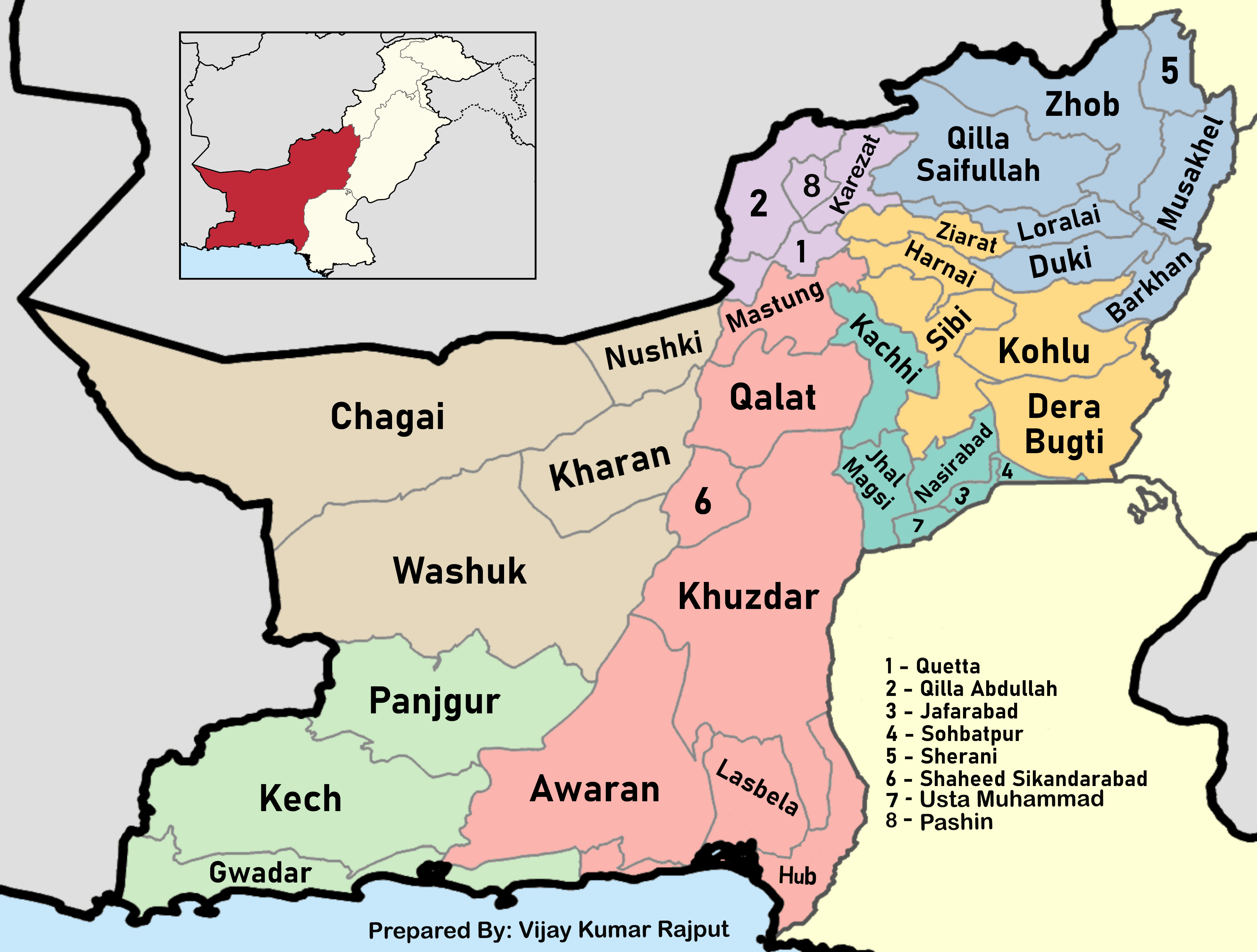
The recruits were from Balochistan’s Rakhshan Division. Officials told The Express Tribune that eight were from Kharan district, five from Nushki, four from Chagai and three from Washuk. They described the men as former Levies personnel who joined the police after the two forces were merged. They were undergoing training at the Kalat centre and had set off for their weekly leave in a private van.
According to the officials’ account, the van took the shorter Sarband route, which links Kalat and Mastung with Nushki. Armed men surrounded the vehicle inside Kalat district and took the recruits towards the Gargina-Kardgap area of Mastung district before moving them to an undisclosed location. The gunmen later released the van’s driver and three other civilian passengers some distance away, the officials said.
Pajhwok Afghan News, quoting the Express Urdu newspaper, reported that the interception happened in the Gorgina area on Friday night and that the recruits were first taken to Mastung and then to an unknown location. It said police were trying to establish where the men were being held and that no group had claimed responsibility.
The Express Tribune said efforts to recover the abducted personnel had been launched. Dawn reported that the recruits belonged to the Levies Force and were from the Rakhshan division, a detail that places the incident within Balochistan’s long-running effort to integrate Levies personnel into the regular police.
Why it matters
The abduction exposes a familiar weakness in Balochistan’s security architecture: the movement of police personnel between districts, often in ordinary passenger vehicles, remains vulnerable to armed groups that operate across the province’s road network.
Kalat and Mastung sit in central Balochistan, where the roads connecting Quetta, Khuzdar, Nushki and the Iranian border carry both civilian traffic and security personnel. The area has seen repeated attacks on police checkpoints, convoys and passenger vehicles. In September, the military said security forces rescued 23 abductees and killed five militants after foiling an attempt to set up an abduction check post on the N-25 highway near Kalat.
The wider trend is not encouraging. The Express Tribune, citing data from the Armed Conflict Location & Event Data project (ACLED), reported that attacks in Pakistan rose nearly fourfold to 2,425 in 2025 from 658 in 2022, while attacks attributed to the Tehreek-e-Taliban Pakistan increased more than sevenfold over the same period, to 838 from 118. Those figures cover the country as a whole, not Balochistan alone, but they frame the environment in which police recruits were travelling without an official convoy.
The timing also matters for the province’s policing model. Balochistan has been absorbing former Levies personnel into the police force, and the recruits in this case were part of that pipeline. An abduction of this size removes 20 trained or partly trained personnel from duty at once and puts pressure on a force that is already stretched across a vast, sparsely populated province.
For families in Kharan, Nushki, Chagai and Washuk, the immediate concern is the condition and whereabouts of the abducted men. For officials, the incident raises questions about how recruits are moved between training centres and home districts, and whether police and Levies personnel should travel in protected convoys on routes where armed groups have repeatedly intercepted vehicles.
What is verified and what is not
Several core facts are consistent across the reporting reviewed. Officials say 20 police recruits were abducted; that they were training at the Kalat Police Training Centre; that they were travelling towards Nushki for leave; that the vehicle was stopped on Friday; and that a search is under way.
Other details are less settled. The Express Tribune places the interception inside Kalat district, after which the recruits were moved into Mastung. Dawn described the van as travelling along the Quetta-Karachi highway. Pajhwok, citing Express Urdu, placed the incident in the Gorgina area and said the men were taken first to Mastung. The differences may reflect the speed of early reporting, the overlapping district boundaries and the route’s local names rather than separate incidents, but they have not been reconciled in a single official statement.
There is also no confirmed account of who carried out the abduction. No group had claimed responsibility in the reports reviewed. Officials quoted by The Express Tribune spoke on condition of anonymity, and the reports did not identify a named suspect, a demand or a motive. That leaves open whether the abduction was carried out by a Baloch separatist group, a criminal network or another armed outfit, and whether the recruits were targeted because of their police training or because they were travelling on a route known for kidnappings.
The condition of the abducted men is unknown. Officials have not said whether they have been contacted, whether any ransom demand has been made or whether security forces have located them. The reports also do not give a precise timeline beyond Friday evening, and they do not say how long the van had been travelling before it was stopped.
What happens next
The immediate test is whether police and security forces can locate the recruits quickly. Balochistan’s security operations have often relied on intelligence-led searches after abductions, and the province’s roads are difficult to monitor continuously. A prolonged search would deepen concern among the families and could increase pressure on the provincial government to explain how the recruits were allowed to travel.
A second test is whether officials publish a fuller account. The reports reviewed rely heavily on unnamed police and provincial officials. A formal statement from the Balochistan government or the military’s media wing would help establish the sequence of events, the exact location of the interception and the status of the search.
For now, the incident is a reminder that the security challenge in Balochistan is not confined to high-profile attacks on checkpoints and convoys. It also reaches the routine movement of recruits going home on leave, and the ordinary passenger vans that share the same roads.
Sources & reporting notes
This is a synthesis of published material, not eyewitness reporting. Sources were reviewed on 17 October 2026.
- Dawn — Armed men abduct 20 under-training police personnel in Mastung: officials17 October 2026 · Confirms the number of recruits, their training at the Kalat Police Training Centre, their Levies background and travel by passenger van.
- The Express Tribune — Armed men abduct 20 trainee police personnel travelling from Kalat to Nushki: officials17 October 2026 · Source for the route, the release of the driver and three civilians, the recruits' home districts, the search and the recent ACLED figures.
- Pajhwok Afghan News — 20 Pakistani police officers abducted in Balochistan17 October 2026 · Reports the Friday-night timing, the movement to Mastung and the absence of any claim of responsibility.