Reporting snapshot · 4 November 2026 (Asia/Karachi). The casualty figures and the description of the dead come from the military's statement, and no independent account of either operation has been published. The military has not named the dead, tied them to specific organisations beyond its own labels, or reported any civilian casualties.
What the military announced
Pakistan’s security forces killed 17 militants in two intelligence-based operations in Balochistan on 1 November, the military said on 3 November, and a soldier was killed in the exchange of fire in Kharan district. The Inter-Services Public Relations (ISPR) said the operations were conducted on reports of militants’ presence in Kachhi and Kharan, Geo News reported. The Express Tribune carried the same statement, and Xinhua reported the toll.
In Kachhi, the military said, forces acted on reports that militants were trying to establish a roadblock in the Sanni area and killed ten of them, recovering weapons and ammunition. In Kharan, a separate operation against a hideout led to an intense exchange of fire in which seven more were killed, with weapons and ammunition also recovered, the statement said.
ISPR named the soldier killed in Kharan as Sepoy Hikmatullah, 25, a resident of Karak district in Khyber Pakhtunkhwa. It said sanitisation operations were under way to find any other militants in the area.
The statement described the dead as members of “Fitna al-Hindustan” and “Fitna al-Khawarij”, the terms the state uses for Baloch militant groups it says are backed by India and for militants affiliated with the banned Tehreek-i-Taliban Pakistan. The Express Tribune noted that the federal government designated all militant groups operating in Balochistan as Fitna al-Hindustan last year, accusing India of sponsoring a proxy war through them.
President Asif Ali Zardari, Prime Minister Shehbaz Sharif and Interior Minister Mohsin Naqvi praised the security forces and paid tribute to Sepoy Hikmatullah, the Tribune reported.
Why the Kachhi raid stands out
A roadblock is a particular kind of militant action. It requires fighters to hold a stretch of road long enough to stop traffic, search vehicles or take captives before security forces can respond. The military says it broke up the attempt before it was established, which is why the Kachhi operation appears in the statement as a prevented action rather than a battle at a fixed position.
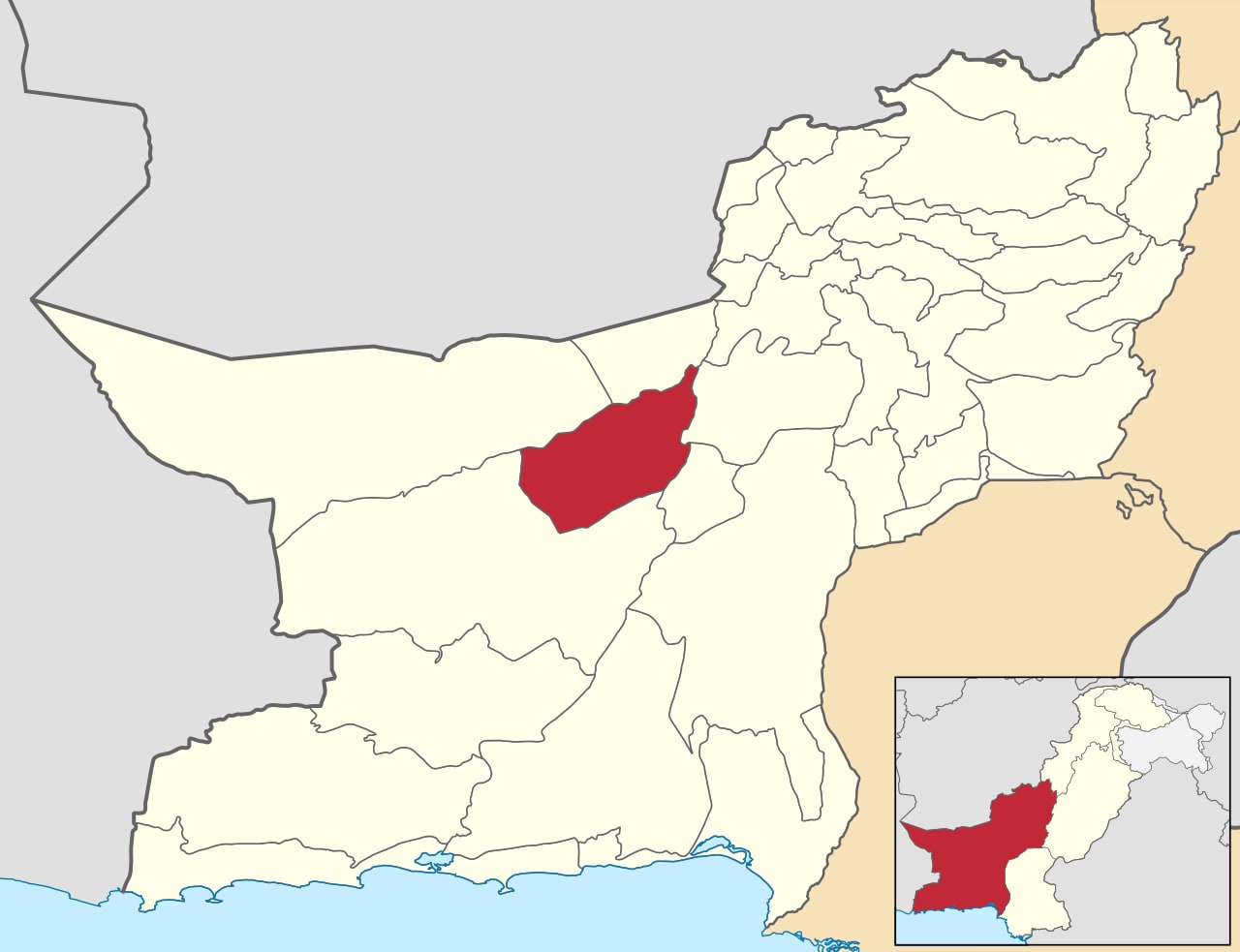
Kachhi lies in eastern Balochistan and Kharan in the west, so the two operations were far apart. They therefore appear to be separate actions announced together rather than one sweep, although ISPR did not give exact locations or timings, or say how the two were linked.
The announcement also follows the military’s usual pattern for such raids: a short statement, a named soldier when one is killed, a count of the dead, and a reference to the Azm-e-Istehkam campaign approved by the Federal Apex Committee on the National Action Plan. It did not say how the dead were identified, whether they were wanted in specific cases, or what will happen to the recovered weapons.
A campaign in a quieter month
The raids come as official and independent data point in different directions. The Pakistan Institute for Conflict and Security Studies recorded 143 militant attacks across the country in October, down from 226 in September, and Balochistan’s count fell from 132 to 71, the Tribune reported. The same month brought a sharp rise in kidnappings, particularly in Balochistan, a trend KhabarWire examined in its report on the October figures.
The province has also seen attacks on security infrastructure in the past two weeks. On 30 October, security sources said five drones aimed at a check-post in Kharan were destroyed before reaching their target, as KhabarWire reported. On 19 October, a Pakistan Army major was killed by an improvised explosive device in Gwadar’s Shadi Kaur area, and four militants were killed in a separate operation in Kalat, the military said at the time.
Those incidents do not establish that the Kachhi and Kharan raids were connected to them. They do show that the campaign the military describes as continuing at “full pace” is being fought across several districts at once, and that the fall in recorded attacks has not removed the risk to soldiers and police.
What remains unverified
The central limit is that the only account of the operations is the military’s. The statement did not identify the 17 dead, say which groups they belonged to beyond the state’s labels, or give casualty figures for each district beyond the split of ten in Kachhi and seven in Kharan. It did not say whether any civilians were hurt, what the roadblock attempt was meant to achieve, or why an operation carried out on 1 November was announced two days later.
The “Indian proxy” description is a government designation rather than a finding published with the statement. Pakistan has accused India of supporting Baloch militants for years, but the statement did not set out the intelligence behind the claim, and no independent investigation has verified the affiliations of those killed. The assertion that sanitisation operations are continuing also cannot be checked from outside.
There is, finally, the question of what the raids achieved beyond the casualty count. Killing 17 fighters in two districts may disrupt a local network, but it does not by itself show whether recruitment, financing or planning has been affected. The military has not said whether the dead included commanders, bomb-makers or junior fighters, or whether the operations were linked to a specific attack plot.
What happens next
The next observable steps are likely to be further ISPR statements about the same areas, funerals and burials in Karak and elsewhere, and the monthly security data for November, which will show whether the quiet October carries into the rest of the year.
For now, the operations are a matter of official record: 17 dead in two districts, a soldier killed in Kharan, and a set of affiliations that the state asserts. The identities of those killed, the evidence for the Indian-sponsorship claim, and the effect on the wider Balochistan campaign remain open.