What happened
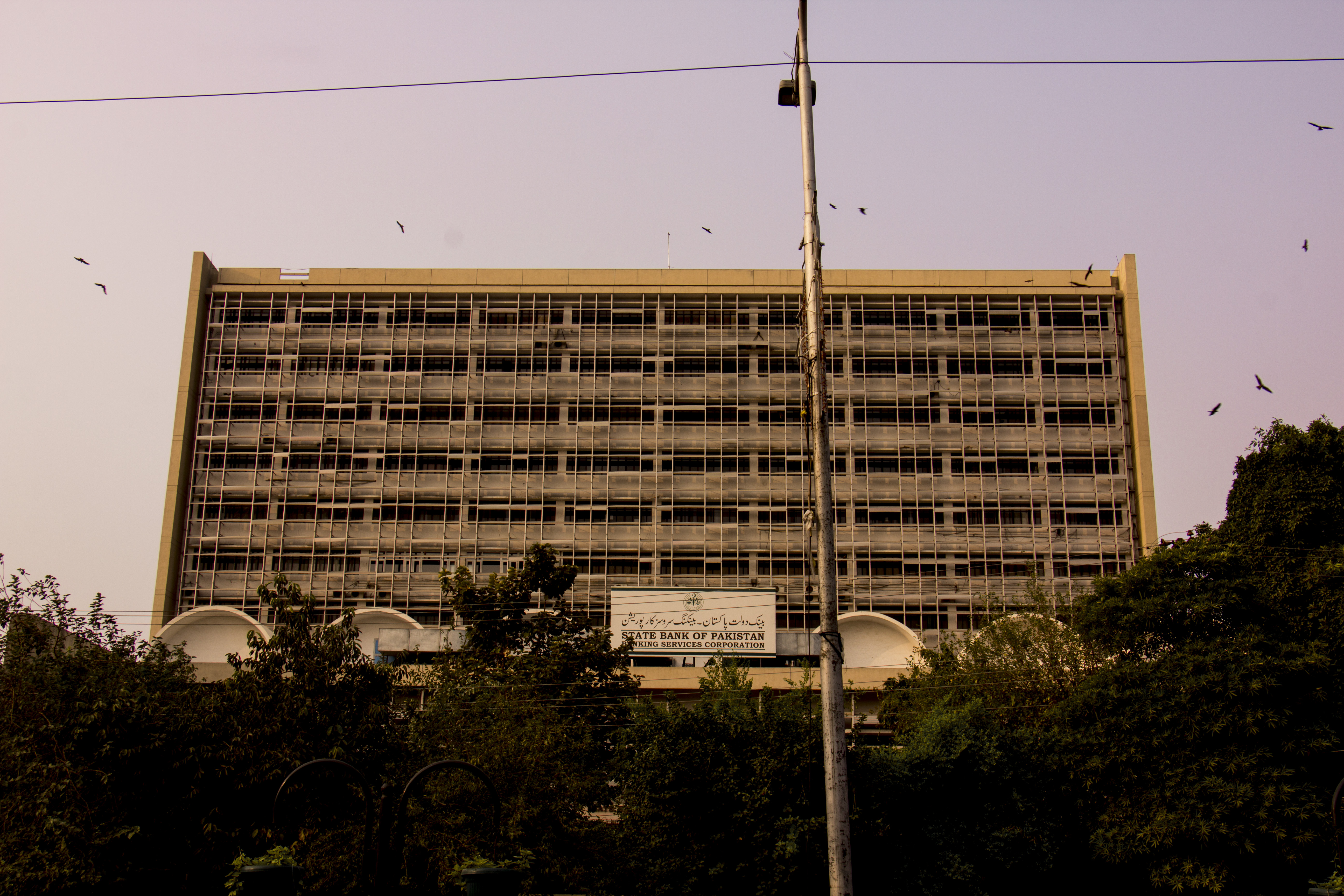
S&P Global Market Intelligence projected a strengthening of Pakistan’s macroeconomic outlook in the current and next fiscal years, endorsing the State Bank of Pakistan’s (SBP) projections, Dawn reported on 28 January 2026.
The assessment was made in comments on the SBP’s monetary policy decision that kept the benchmark interest rate unchanged at 10.5 per cent on Monday. S&P Global Market Intelligence is distinct from S&P Global Ratings, which assigns sovereign credit ratings.
Growth outlook
S&P projected real GDP to expand 3.5 per cent in FY26 before strengthening to 4.4 per cent in FY27. That is broadly in line with the SBP, which projected real GDP growth in the range of 3.75 to 4.75 per cent in 2025-26, reflecting stronger-than-anticipated momentum in commodity-producing sectors and spillovers to services. The central bank expects that momentum to extend into FY27, aided by earlier monetary easing and ongoing macroeconomic stability.
Both are more optimistic than the International Monetary Fund, which last week projected 3.2 per cent growth, down from its previous estimate of 3.6 per cent.
External position and inflation
On the external front, the SBP projected the current account deficit to remain within 0 to 1 per cent of GDP in FY26. With continued remittance inflows and planned official financing, foreign exchange reserves were projected to surpass $18 billion by end-June 2026 and rise further in FY27, approaching the benchmark of three months of import cover.
S&P projected a current account deficit of 0.5 per cent and 1.3 per cent of GDP in calendar years 2026 and 2027 respectively, adding that “risks weigh on the downside, owing to elevated global tariff uncertainty, volatile commodity prices, and geopolitical fragmentation”.
On prices, the SBP expected inflation to stabilise within its 5 to 7 per cent target range over the next two years, after temporarily exceeding the upper bound for a few months during calendar year 2026. S&P projected inflation of 5.1 per cent in 2026 before a slight rise to 5.6 per cent in 2027, warning that risks to the inflation outlook are tilted to the upside and linked to global commodity volatility, domestic wheat prices, possible adjustments in administered energy tariffs, and a stronger-than-assumed pickup in domestic demand.
Why it matters
The projections matter for the FY26 budget arithmetic and for the path of interest rates. If growth and inflation evolve as S&P and the SBP expect, the central bank has room to hold or gradually ease policy while preserving a positive real rate. But the two agencies disagree on the causes of the risk balance: S&P flags external tariff and commodity uncertainty, while the SBP points to domestic fiscal discipline and the timing of official inflows. The IMF’s lower growth estimate leaves open the possibility of a more cautious reading when its next review is completed.
Sources & reporting notes
This is a synthesis of published material, not eyewitness reporting. Sources were reviewed on 28 January 2026.
- Dawn — Pakistan's macroeconomic outlook to strengthen: S&PPublished 28 January 2026 · Contemporaneous report: confirms S&P Global Market Intelligence's FY26 real GDP projection of 3.5pc and FY27 projection of 4.4pc, the 0.5pc and 1.3pc current account deficit projections for calendar 2026 and 2027, inflation projections of 5.1pc and 5.6pc, the SBP's 10.5pc policy-rate hold, the SBP's 3.75–4.75pc growth range and $18bn reserves projection, and the IMF's 3.2pc growth estimate.