Reporting snapshot · 26 September 2026. An anti-terrorism court in Karachi acquitted the remaining seven accused in the Naqeebullah Mehsud murder case on Saturday, citing lack of evidence. The ruling means all 25 people nominated over the 2018 killing have now been acquitted. A detailed written order was still awaited, and the family's appeal against the earlier acquittal of former SSP Malir Rao Anwar and 17 others remained before the Sindh High Court.
What happened
An anti-terrorism court (ATC) in Karachi acquitted the last seven accused in the Naqeebullah Mehsud murder case on 26 September 2026, citing lack of evidence. The court cleared former station house officer Amanullah Marwat, Shoaib Shooter, Guda Hussain, Sadaqat Hussain, Riaz Ahmed, Raja Shamim and Mohsin Abbas, Geo News reported.
The seven had been absconding during the earlier trial of the main accused. According to the prosecution, they surrendered before the court after the verdict was announced. The defence counsel said that not a single witness had testified before the court that the encounter in which Mehsud died was staged.
The acquittals complete the list of accused. Former Malir senior superintendent of police Rao Anwar and 18 other police officers and personnel had already been acquitted in earlier hearings, most recently in January 2023. With Saturday’s ruling, all 25 people nominated in the case have now been cleared.
The 2018 killing that sparked nationwide protests
Mehsud, a 27-year-old native of Waziristan also known as Naseemullah, was among four men killed on 13 January 2018 in what police initially described as a shootout with militants in Karachi’s Malir district, on the orders of then-Malir SSP Rao Anwar in what was later determined to be a fake encounter.
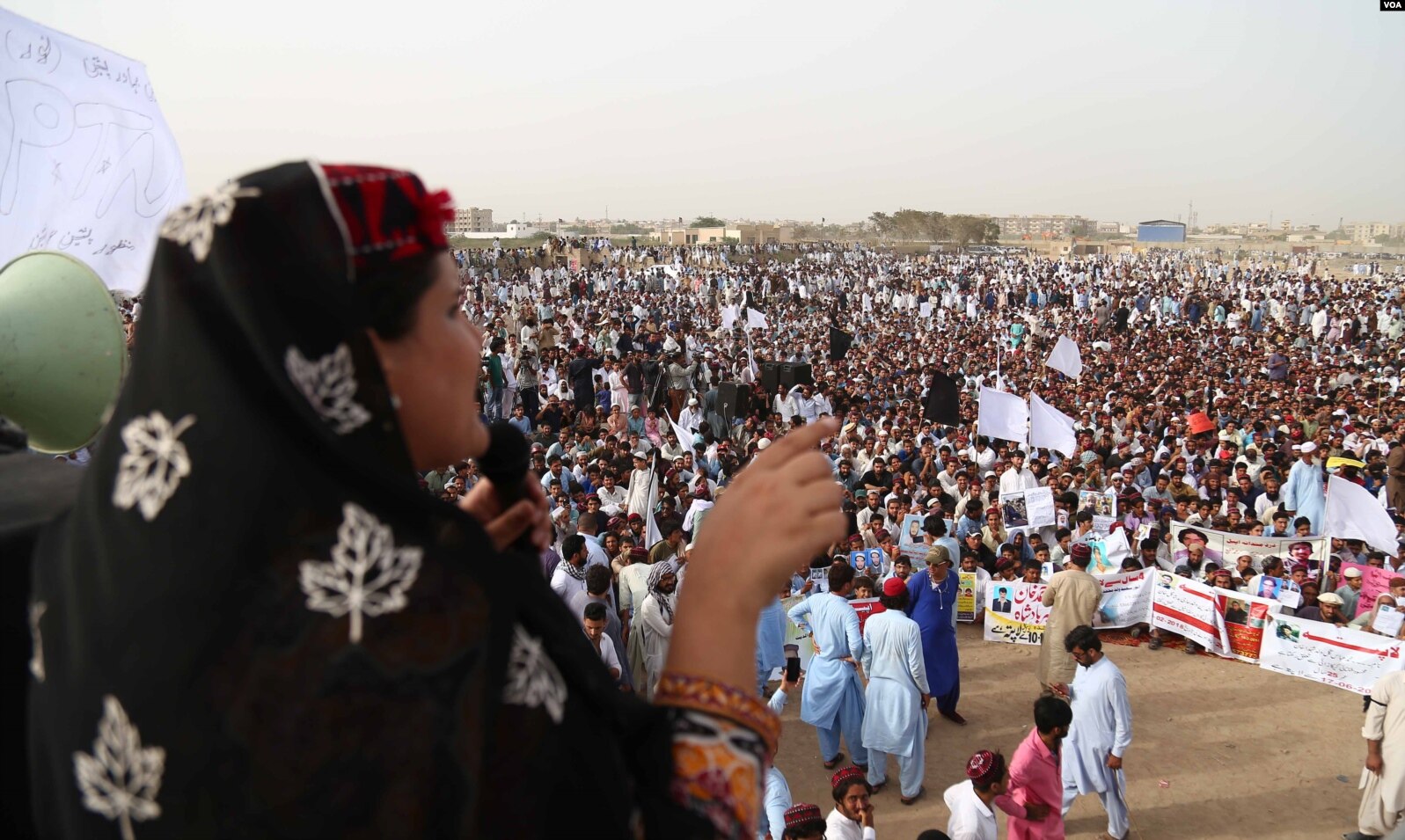
The killing drew nationwide protests. Mehsud was a shopkeeper and aspiring model from South Waziristan; a subsequent inquiry found he had no history of militancy. The case also centred on Anwar, who headed the police team involved in the killings and had a reputation for carrying out controversial encounters. The Pashtun Tahafuz Movement, a rights movement that emerged from the protests that followed the killing, made the case a central part of its campaign against the treatment of ethnic Pashtuns.
Then-army chief General (retd) Qamar Javed Bajwa met Mehsud’s father and assured him of justice. The Supreme Court took notice of the killing, and after Anwar’s protective bail was rejected, police were ordered to take him into custody. A joint investigation team formed to probe the case held Anwar responsible for the extrajudicial killing.
An FIR was registered against Anwar and his associates. An ATC indicted Anwar and other suspects in March 2019, with the accused denying the charges at the time. Anwar had gone into hiding after the probe committee was formed but later surrendered and was released on bail.
The 2023 acquittal and the family’s appeal
In January 2023, an anti-terrorism court acquitted all 18 accused who were then before it, including Rao Anwar, ruling that the prosecution had failed to establish the charges. The court, announcing the verdict after reserving it, said the prosecution could not prove its case and that the accused were entitled to the benefit of the doubt.
The acquittal prompted the Mehsud family to challenge the decision. In February 2023, Alam Sher, a younger brother of Naqeebullah Mehsud, filed an appeal before the Sindh High Court against the acquittal of Rao Anwar and his subordinates, according to Dawn. Jibran Nasir, a lawyer who has represented the family, said at the time that the appeal would be pursued.
Saturday’s acquittal of the seven remaining accused leaves the legal picture incomplete. The appeal against the 2023 acquittals remains before the Sindh High Court, and it was not clear by the time of writing whether the latest ruling would also be challenged. The ATC’s detailed written order, which would set out its reasoning on the evidence against the seven policemen, had not yet been issued.
Why this matters
The conclusion of the trial phase of the Naqeebullah Mehsud case is significant for at least two reasons. It closes a judicial process that began with a killing that triggered a national debate about extrajudicial killings by police and about the treatment of ethnic Pashtuns in Pakistan. It also leaves, at least at the trial level, no one convicted for a death that a police inquiry and a joint investigation team had concluded was a staged encounter.
The case has long been a test of whether accountability in such killings can be secured through the courts. The 2023 acquittal of Anwar and 17 others was widely criticised by human-rights lawyers and civil-society groups, who argued that the prosecution’s failure to present a stronger case had let the accused benefit from weak evidence. The family’s appeal to the Sindh High Court means the legal fight is not necessarily over, and how that court rules will determine whether any accountability is ultimately achieved.
What is still uncertain
The most important uncertainty is the fate of the family’s appeal before the Sindh High Court, which was filed against the 2023 acquittals and remains pending. It is not yet known whether the ATC’s written judgment on the seven acquitted on Saturday will be appealed, and whether the high court will consider the two acquittal rounds together.
Also unresolved is the question of what the acquittals mean for broader accountability over police encounters in Pakistan. While the Naqeebullah case was one of the most high-profile examples of an alleged staged encounter, successive governments have not introduced a formal mechanism to review the thousands of deaths attributed to police shootouts over the years, and rights groups have repeatedly called for such a mechanism.
Sources & reporting notes
This is a synthesis of published material, not eyewitness reporting. Sources were reviewed on 26 September 2026.
- Geo News — Naqeebullah murder case: SHO among seven policemen acquitted due to 'lack of evidence'26 September 2026 · Reports the ATC verdict, the names of the seven acquitted, the surrender of the former absconders, the defence counsel's statement that no witness testified the encounter was staged, and confirmation that all 25 accused have been cleared.
- The News International — Seven policemen, including SHO, acquitted in Naqeebullah murder case26 September 2026 · Independent confirmation of the acquittal of the remaining seven accused and the total of 25 cleared in the case.
- Dawn — Acquittal of Rao Anwar in Naqeeb murder case challenged in SHC21 February 2023 · Documents the family's appeal against the January 2023 acquittal of Rao Anwar and his subordinates before the Sindh High Court.
- The Express Tribune — Rao Anwar acquitted in Naqeebullah murder case23 January 2023 · Background on the January 2023 ATC verdict acquitting Anwar and 17 others, the prosecution's failure to prove the case, and the accused's statements after the verdict.
- Al Jazeera English — Pakistani court acquits police in Naqeebullah Mehsud murder case23 January 2023 · International context on the 2023 acquittal, the 2018 killing, the protests it triggered, and the quashing of terrorism charges against the four men killed in 2019.