What happened
Public transport operators in Karachi kept buses, minibuses and coaches largely off the roads for a third day on Saturday after talks with traffic police failed to break a deadlock over electronic challans and what they describe as heavy fines.
Haji Tawab Khan, president of the Karachi Transport Ittehad (KTI), said the strike would continue because the transporters’ demands had not been met and no meeting had been arranged with government officials despite repeated requests. He said the DIG Traffic told the operators that withdrawing the e-challans was not within his authority, though he assured them that challans identified as unjustified would be reviewed.
KTI vice-president Muhammad Ilyas said there had been no progress on the operators’ key demands. These include fines generated through high-resolution cameras at traffic signals and body-worn cameras used by traffic police, which the operators say have become hard to absorb; the biometric verification required to transfer vehicle ownership; and the mandatory third-party insurance requirement, under which vehicle owners pay about Rs12,000.
The wheel-jam strike has been observed since Thursday. Much of the city’s bus network stayed parked at depots, and bus stops saw long queues as commuters turned to rickshaws, ride-hailing services and private vehicles.
Why it matters
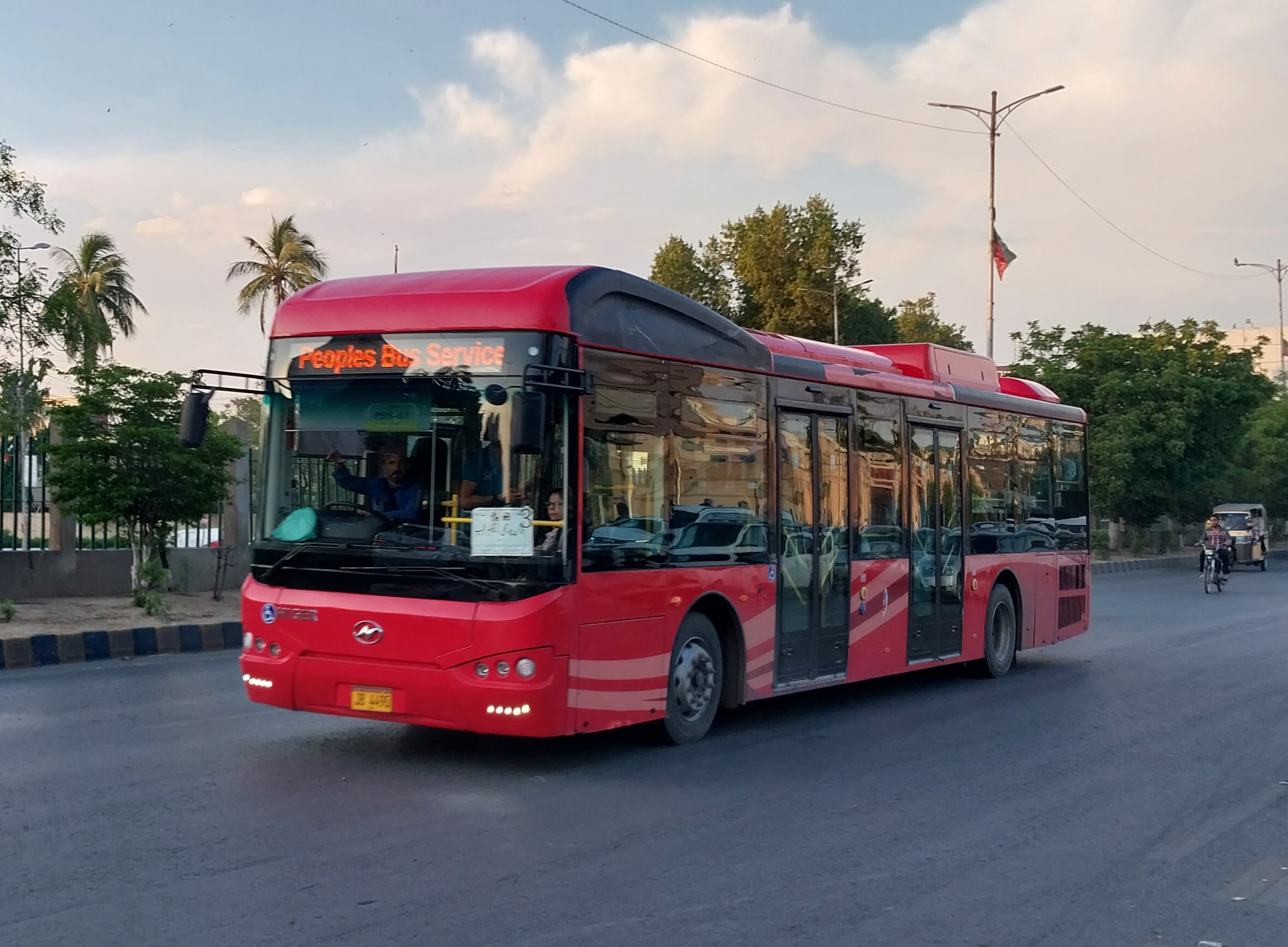
Karachi’s public transport operators say around 8,000 buses, minibuses and coaches normally serve the city, and their withdrawal has disrupted travel to offices, factories, educational institutions and commercial areas. Government-run services such as the People’s Bus Service and the BRT Green Line, as well as rickshaws and ride-hailing vehicles, continued to operate.
Sindh Local Government Minister Nasir Shah told the media a day earlier that provincial Transport Minister Sharjeel Memon had taken notice of the strike and that the issue would be resolved soon.
What is still uncertain
No fresh meeting between the transporters and the provincial government had been scheduled when the strike entered its third day, and the operators had not indicated when they would call it off. The financial cost of the stoppage to drivers and to the city had not been estimated.
Sources & reporting notes
This is a summary of published reporting, not independent reporting. Details are as carried by the cited sources, which were reviewed on 2026-06-20.
- Pakistan Today — "Karachi transport strike to continue after talks with police fail"20 June 2026 · The third day of the strike, the failed talks with the DIG Traffic, the operators' demands and the disruption to commuters.
- Dawn — "Talks between transporters, police break down as Karachi strike enters third day"20 June 2026 · KTI statements on the talks, the e-challan and insurance demands, and the Sindh government's response.

_Karachi.jpg)