Reporting snapshot · 16 October 2026 (Asia/Karachi). The Election Commission of Pakistan rejected the Punjab government's request to push local government elections from the previously agreed December 2026 to January 2027 window to a three-phase schedule in April 2027, citing a Section 219(3) agreement concluded on 20 August. The commission also ordered its office to begin preparing schedules for cantonment-board elections and gave the Punjab government a week to nominate returning officers. The dates of the ECP meeting and the figures for any draft electoral rolls or delimitation work have not been published, so the commission's revised timetable and the form of any phased voting remain provisional.
What happened
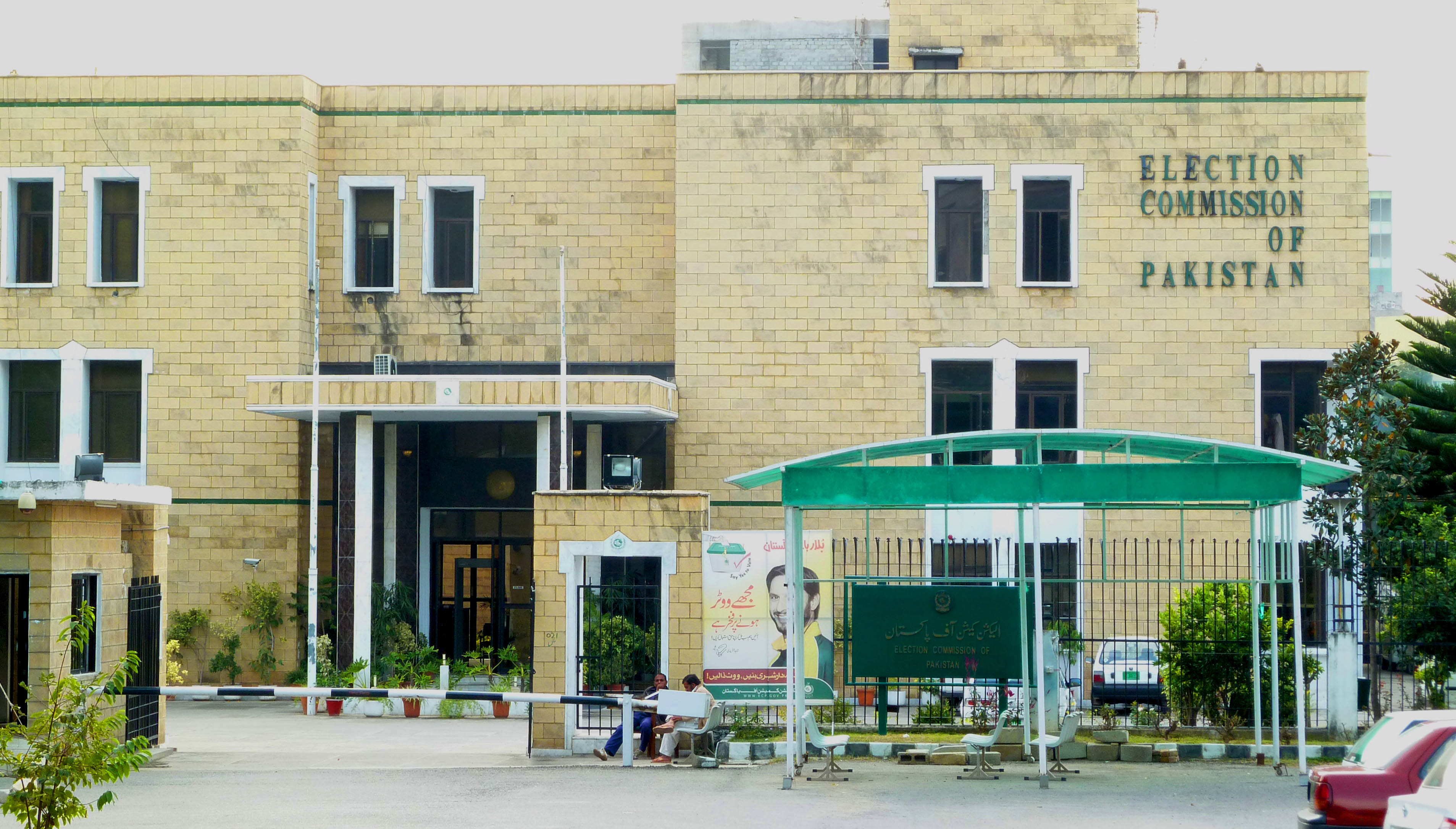
The Election Commission of Pakistan (ECP) on Thursday, 15 October 2026, rejected a written request from the Punjab government to postpone local government elections in the province until April 2027, and directed its secretariat to begin drawing up an election schedule for the commission’s approval, The Express Tribune reported. The decision was taken at a meeting in Lahore chaired by Chief Election Commissioner Sikandar Sultan Raja and attended by ECP members Nisar Ahmed Durrani, Babar Hassan Bharwana and Justice (retd) Ikramullah Khan, the commission’s secretary and other senior officials, Pakistan Today reported.
Punjab had replied on 14 October to an ECP letter of 2 October, asking the commission to accept a three-phase schedule running through April 2027. The provincial government cited dense fog and severe winter conditions in December, followed by the start of Ramazan in February, as the reasons for seeking a revised date, according to the Tribune and Pakistan Today reports of the meeting. The ECP termed the response “unsatisfactory,” noting that consultations with the provincial government under Section 219(3) of the Elections Act, 2017 had been completed on 20 August, and that the Punjab government had during those consultations agreed to local government elections being held between 15 December 2026 and 15 January 2027.
The commission said it would proceed with the polls in fulfilment of its constitutional and legal responsibilities. It directed its office to submit a draft Punjab local-government election programme immediately for the commission’s approval, the Tribune reported. CEC Raja also expressed disappointment that Punjab had not yet provided lists of officers for appointment as district returning officers, returning officers and assistant returning officers, and ordered those lists to be submitted within a week.
Why the decision matters
The ruling is the second time this year that the ECP has publicly overruled a provincial government on the timetable for local government polls. In August, the commission and the province had already agreed that the votes would take place in the 15 December 2026 to 15 January 2027 window under Section 219(3), which requires the ECP to consult the provincial government on the timing of local polls. By reasserting that window now, the ECP is signalling that it treats the August agreement as binding, and that any new timetable must come from a fresh round of consultation rather than a unilateral provincial letter, Pakistan Today reported.
The move also tightens the political pressure on Chief Minister Maryam Nawaz’s Punjab government, which had framed a delay as unavoidable because of winter fog and the lead-up to Ramazan. By listing concrete next steps — a draft schedule for the commission and a week-long deadline for returning-officer lists — the ECP has signalled that administrative preparation, not politics, will determine the date. Reporting on Punjab local polls published earlier in October had framed the funding question as the main obstacle to holding the votes; the ECP’s rejection shifts attention back to whether the provincial administration can deliver the basic inputs, such as returning-officer lists, on time, as set out in the earlier KhabarWire coverage of the ECC’s Rs18.5 billion funding approval.
The decision is the latest in a series of run-ins between provincial administrations and the ECP over the timing of local government polls in Punjab, where local government terms have repeatedly lapsed without elections being held. The ECP’s October meeting did not set a precise new date; instead it framed the 15 December to 15 January window as the working assumption and directed the secretariat to prepare a schedule against it.
What the ECP said about cantonment boards
The commission used the same meeting to clear a backlog on cantonment-board elections, which have also been delayed for years. Officials told the meeting that a consultative meeting had been held on 15 April with the additional secretary of the Ministry of Defence and the director general of the Military Lands and Cantonments Department, at which the ECP had asked the defence secretary to forward a summary to the federal government so that the commission could formally be asked to conduct the polls under Section 19(D) of the Cantonments Act, 1924, the Tribune reported.
The commission was told that several reminder letters had been sent, without result, and that CEC Raja had also written to the prime minister and was waiting for a reply. The ECP decided to proceed with cantonment elections in line with its constitutional and legal obligations, and directed its office to submit a draft cantonment-board election programme for approval.
Linking the two decisions allows the ECP to frame both the Punjab local-government and cantonment-board votes as part of a single cleared backlog, with draft schedules going to the commission simultaneously. The commission did not set a date for either set of elections.
What is still uncertain
Three things remain unresolved. First, the ECP has not published the actual draft election programme for Punjab or for cantonment boards; until it does, the working assumption is that polls will take place in the 15 December to 15 January window agreed on 20 August. Second, the Punjab government has not indicated whether it will accept the ECP’s ruling, ask for a review, or escalate the dispute to the federal government or the courts, as it has done in earlier local-government election disputes. Third, the cantonment-board timetable depends on a summary that the Ministry of Defence has yet to forward; the ECP’s instruction that its office prepare a draft schedule despite the missing summary is a workaround, not a substitute for the statutory request under Section 19(D).
The reporting also has a dating limitation. The ECP meeting on 15 October was first reported by the Tribune and Pakistan Today from the commission’s readout and the official X account of the Election Commission of Pakistan, according to the Tribune. The commission’s own press section was not accessible when this article was prepared, so the wording of the ECP’s formal press statement has not been independently read in full.
Sources & reporting notes
This is a synthesis of published reporting, not eyewitness reporting. Sources were reviewed on 16 October 2026 (Asia/Karachi). The ECP meeting took place on 15 October 2026.
- The Express Tribune — "ECP snubs Punjab govt's plea to delay LG polls, seeks immediate poll schedules"Published 15 October 2026 · Primary report of the 15 October ECP meeting, the Section 219(3) reasoning, the Punjab government letter of 14 October, the order for draft schedules, and the cantonment-board decision.
- Pakistan Today — "ECP rejects Punjab's bid to delay local government elections"Published 15 October 2026 · Independent report from a second recognised Pakistani outlet confirming the meeting participants, the Section 219(3) conclusion date of 20 August, and the rejection of the April 2027 phased proposal.
- The Express Tribune — "ECP agrees to hold Punjab local polls between Dec 15 and Jan 15"Published earlier in 2026 · Background on the original Section 219(3) consultation in which the 15 December 2026 to 15 January 2027 window was agreed.