Reporting snapshot · 9 October 2026 (Asia/Karachi). The Economic Coordination Committee approved roughly Rs18.5 billion for local-government election activities on 8 October 2026 but authorised the immediate release of only Rs2 billion, even though the Election Commission of Pakistan had asked for the full allocation. The figures are drawn from the Finance Division's official readout and from the commission's summaries as reported; no timetable for the remaining tranches has been published. This is a dated synthesis of published records, not eyewitness reporting.
What the ECC decided
The Economic Coordination Committee (ECC) of the cabinet, chaired by Finance Minister Muhammad Aurangzeb, met at the Finance Division on Thursday, 8 October 2026 and took up 17 agenda items covering access to finance, infrastructure, institutional reform and sectoral measures, according to the official readout issued by the Press Information Department.
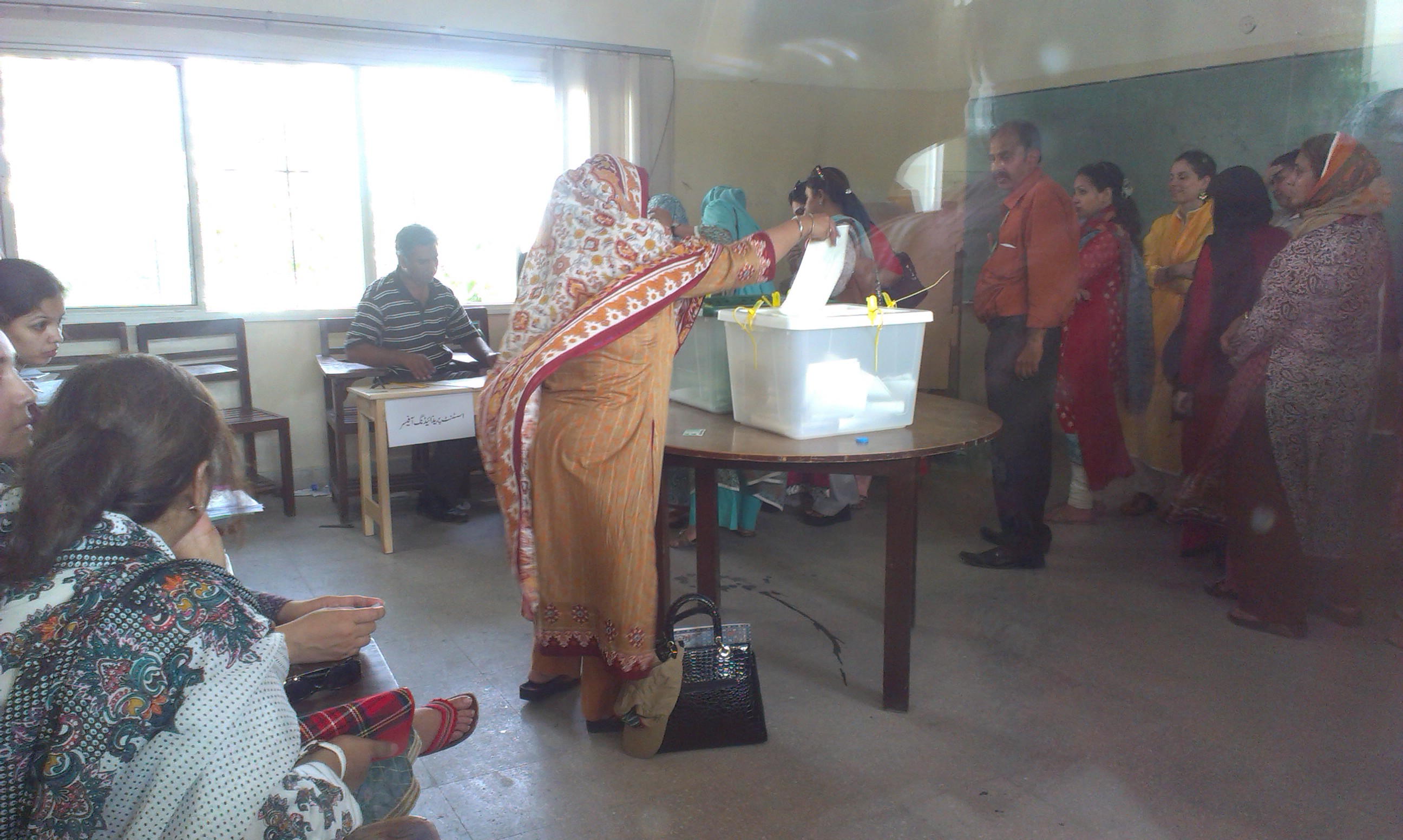
On the Election Commission of Pakistan’s (ECP) requests, the committee approved a technical supplementary grant of Rs596.18 million to reallocate and revalidate surrendered funds for local-government elections in the Islamabad Capital Territory, local-government by-elections in Sindh and Balochistan, and delimitation work in Punjab. It then considered a separate ECP summary seeking Rs17.873 billion to procure non-sensitive materials for local-government elections in Punjab, Khyber Pakhtunkhwa, the Islamabad Capital Territory and cantonment boards nationwide. Against that second request the ECC approved an immediate release of Rs2 billion through a technical supplementary grant, the same readout confirms.
Combined, that amounts to about Rs18.5 billion approved for election-related activity but only Rs2 billion released up front, the Express Tribune reported. The distinction between an approval and a disbursement is the crux of the decision: the full allocation was endorsed on paper, but only a fraction was made available immediately.
Why the ECP asked for the full amount
The commission told the committee that it needed roughly Rs12 billion to hold local-government elections in Punjab in December 2026 and a further Rs4 billion within the following week to keep preparations on track, Profit by Pakistan Today reported. The ECP argued that poll preparations require substantial expenditure well before voting day.
That is not a routine cash-flow complaint. A large share of the money is earmarked for the non-sensitive materials used to run a poll — the forms, stationery, seals and other consumables that must be printed and distributed to thousands of polling stations in the weeks before a vote. Delimitation, the redrawing of ward and constituency boundaries that must be completed and notified before any local poll, is another front-loaded cost. If the money arrives only in tranches, the commission’s procurement calendar inevitably compresses.
The ECC chairman opted to release the funds in instalments. According to the Express Tribune, ECP representatives pressed for the entire amount, while finance ministry officials maintained that releasing the money in phases did not reduce the approved allocation and would not affect spending.
The constitutional question underneath
The decision has revived a long-running argument about how far the federal government can shape the ECP’s finances. The Express Tribune noted that the Constitution restricts the federal government’s right to reduce a demand from the commission, and Profit by Pakistan Today framed the phased release as a test of the ECP’s financial autonomy.
The finance ministry’s position is procedural rather than substantive: it says the ECC merely phased the disbursement of an amount it had already approved. Whether that is a distinction the commission accepts is not clear from the published record. The ECP has separately been pressing for legal and administrative groundwork for local-government elections across the provinces and the capital, a process that has been running for months and has fed into the wider political negotiation between the government and the opposition.
The episode also sits inside a broader squeeze on federal spending. The government is implementing an austerity policy that bars most new procurement, while trying to keep its fiscal programme with the International Monetary Fund on track after the 8 October staff-level agreement. Election funding competes with both.
The wider spending package
The local-government decision was one item in a much larger slate. The Express Tribune put the ECC’s approvals at nearly Rs57 billion in supplementary grants in the fourth month of the current fiscal year.
Among the approved items in the Finance Division readout:
- Rs11.329 billion for the Utility Stores Corporation to meet its immediate funding needs and complete its closure process.
- Rs10 billion for the Ministry of Railways as budgetary cover for the Thar Coal Rail Connectivity Project, tied to the use of indigenous Thar coal for power generation and industry.
- Rs8 billion for the Public Private Partnership Authority to develop infrastructure projects.
- Rs4 billion for Pakistan Revenue Automation (Pvt) Limited to support the restructuring and roll-out of the Federal Board of Revenue’s transformation plan.
- Rs2 billion for the Small and Medium Enterprises Development Authority under its approved business plan.
- Rs1.666 billion for the prime minister’s initiative to train 1,000 agricultural professionals in China.
- Rs934.481 million for the Pakistan Sports Endowment Fund Scheme, 2025.
- Rs300 million for the Capital Development Authority for repair and maintenance of the Prime Minister’s Office and the Prime Minister’s Staff Colony — a grant the Express Tribune contrasted with the government’s own ban on purchases under its austerity policy.
- Rs150 million for Pakistan’s participation in the 31st Conference of the Parties (COP31) in Antalya, Türkiye.
The committee also approved a framework developed by the State Bank of Pakistan to bring Agency Financial Institutions into the government’s existing risk-coverage schemes for small enterprises and small farmers, an addendum expanding the Credit Guarantee Trust Fund’s affordable-housing facility, and a plan to invest Export Development Fund resources in government securities. It approved Minimum Indicative Prices for the 2026 tobacco crop and a revision of cess rates for 2026-27, and amended an existing notification to add customs duty on imported tyres, aimed at protecting domestic manufacturers — a measure that also covers motorcycle parts, according to the Express Tribune’s account of the meeting. A proposal to recover PASSCO’s outstanding provincial receivables through at-source deductions was deferred for further consultation.
What is still uncertain
Three things are not settled. First, the disbursement schedule: the ECC approved the first Rs2 billion tranche but has not published when the remainder will follow, even as the commission says it needs billions more within days for Punjab’s December polls. Second, the outcome for the election calendar: if the money keeps arriving in phases, it is not yet clear whether the Punjab local-government polls stay on their announced timeline. Third, the constitutional dispute itself: the finance ministry’s “phasing, not reduction” argument has not been tested, and the commission has not said publicly whether it accepts that framing.
The wider fiscal context adds a further caveat: the ECC’s decisions are readouts of cabinet-committee approvals, not evidence that the money has been spent, and independent details of individual line items beyond the official statement rest on the accounts published by the Express Tribune and Profit by Pakistan Today.
Sources & reporting notes
This is a synthesis of the official readout and independent reporting on the 8 October 2026 ECC meeting, not eyewitness reporting. Quotations and attributions are drawn from the cited sources. The individual approvals were cross-checked between the Finance Division's readout and two independent business news organisations. Figures are reported as published; the ~Rs18.5 billion aggregate combines the two separate ECP summaries and is an arithmetic total of the official line items. Sources were reviewed on 9 October 2026.
- Press Information Department (Government of Pakistan) — PR No. 100: ECC Approves Key Financing and Sectoral Development Measures8 October 2026 · Primary official record of the ECC meeting, the 17 agenda items, the Rs596.18 million ECP reallocation, the Rs17.873 billion procurement request, the Rs2 billion immediate release, the customs-duty amendment on tyres, the tobacco-price decision and the other technical supplementary grants.
- Express Tribune — ECC clears only Rs2b for local polls9 October 2026 · Independent account of the phased election-funding decision, the constitutional question over the ECP's demand, the Rs18.5 billion aggregate, the Rs57 billion supplementary-grant total, the PM Office grant amid austerity, the tyre and motorcycle-part duties and the deferred PASSCO proposal.
- Profit by Pakistan Today — Govt approves Rs18.5 billion for local govt elections, releases only Rs2 billion9 October 2026 · Independent confirmation of the ECP's Rs12 billion December requirement, the further Rs4 billion sought the following week, the phased-disbursement decision and the debate over the commission's financial autonomy.