Reporting snapshot · 7 October 2026 (Asia/Karachi). This is a synthesis of published reporting on Argentina's 3-0 friendly win over Benin at the Monumental on 6 October 2026. Argentina played a farewell international for Lionel Messi, who had announced in late August that he would end a 21-year, 208-cap career with the national team. The accounts cited agree on the result, the scorers, and the principal tributes; they differ on minor details of choreography, which are noted where relevant. Sources were reviewed on 7 October 2026.
What happened
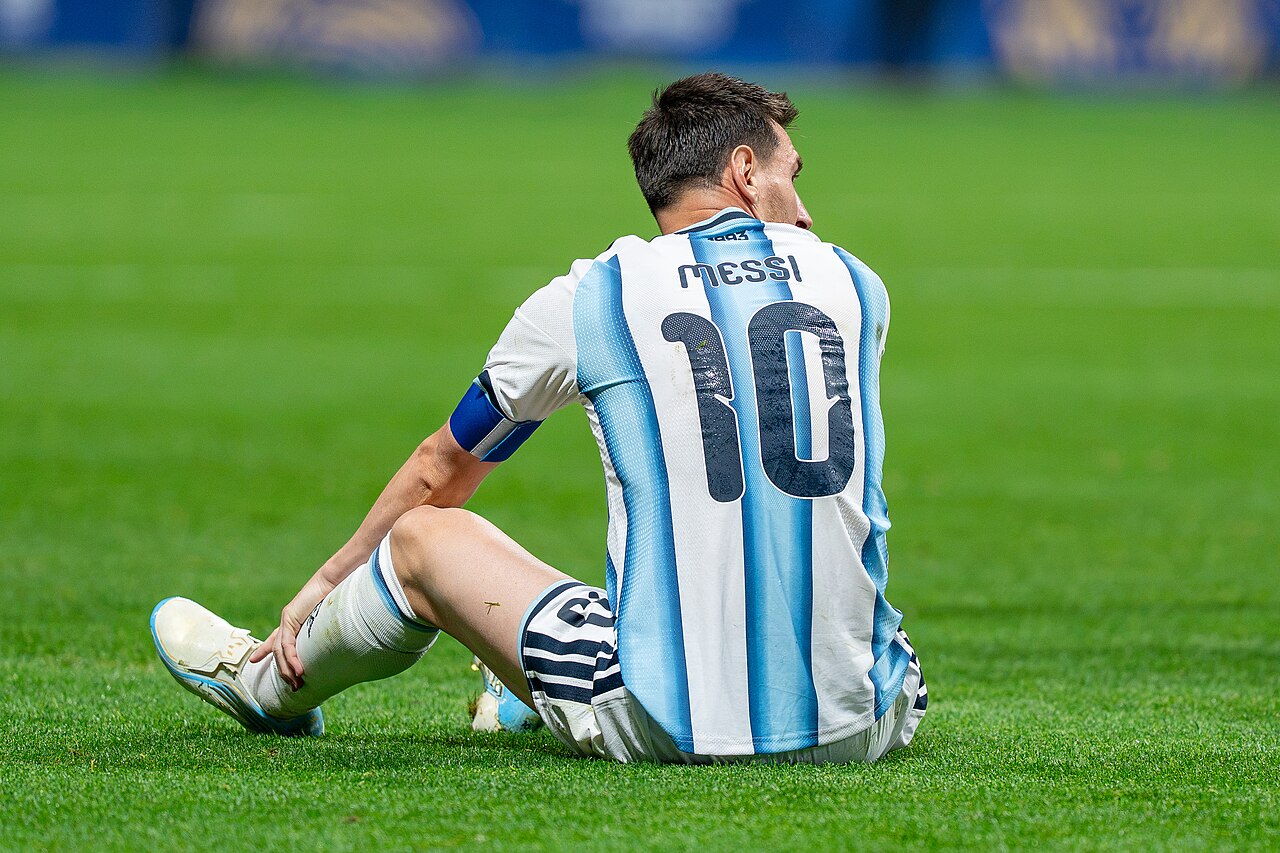
Lionel Messi brought a 21-year international career to an end at the Monumental Stadium in Buenos Aires on Tuesday, 6 October 2026, scoring one goal and setting up two more in Argentina’s 3-0 friendly win over Benin in front of more than 85,000 supporters. The occasion was billed as “The Last Tango” — a reference to the Argentine tango tradition and to the final dance of a player widely regarded as the greatest in football history.
The first half finished goalless. After the break, Messi provided the pass from which defender Nicolas Otamendi — himself playing his final international after 17 years and four World Cups alongside Messi — tapped Argentina ahead. Messi slipped a ball into the path of Nico Paz, one of the young attackers seen as a contender for Argentina’s iconic number 10 shirt, to make it 2-0. In the 71st minute, Messi converted a penalty for 3-0, his 126th international goal in a record-extending 208th cap. The strike drew another rendition of the “Messi, Messi” chant that has echoed around the country since his debut in 2005.
The match was halted in the 10th minute — a tribute to Messi’s shirt number — for a minute-long ovation from the home crowd. Before kick-off, a giant Argentina jersey bearing the word “Gracias” (Thank You) and the number 10 had been laid across the pitch, and a huge banner of the same design was unfurled at the National Flag Memorial in Rosario, Messi’s hometown. Landmarks across Buenos Aires were lit in Argentina’s sky-blue-and-white, and fireworks lit up the night sky as the teams took the field.
Why it matters
The numbers alone place Messi at the summit of his sport. He retires as Argentina’s most-capped player with 208 appearances and its all-time leading international goalscorer with 126 — both national records. He is an eight-time Ballon d’Or winner. Across more than two decades, Argentina lifted the 2022 World Cup in Qatar, the Copa América in 2021 and 2024, and were runners-up at the 2014 World Cup in Brazil and the 2026 World Cup in North America. The body of work reframed a career that began in 2005 with a hastily arranged substitution against Hungary and was, for years, weighed down by comparisons to Diego Maradona and by a string of painful finals defeats. The 2022 triumph in Lusail ended a 36-year wait for a third world title and, in Messi’s own words, “completed” his time with the national team.
The farewell also closes the post-Maradona debate about who carries Argentina’s football identity. For a generation of fans — including many in South Asia, where the world’s most-capped player has long been a fixture of late-night broadcasts and informal street leagues — the retirement marks the end of an era in which a single player could plausibly be billed as the team’s talisman and the sport’s standard-bearer at the same time. Pakistan’s recent return to a senior FIFA tournament at the ASEAN Cup in late September, where the side drew 2-2 with the Philippines in Bandung, was a small illustration of how far most national football programmes remain from depending on a generational star; Argentina’s national conversation has, in different ways, revolved around one for two decades.
What is still uncertain
Several questions will outlast the farewell night. First, whether Messi, who remains under contract at Inter Miami until 2028, will continue his club career — he told AFP after the 2026 World Cup final loss to Spain in July that “I have nothing left to give” and that he was open to retirement, and he told reporters on Tuesday he would love “to keep coming my whole life” but acknowledged the national team would be the harder absence. Second, how Argentina will recalibrate around a younger generation of attackers — Paz, Julián Álvarez and others — without the focal point they have built around since 2008. Third, what the calendar of national-team occasions will look like: the match against Benin was a friendly, and Argentina’s qualifying cycle for the 2030 World Cup begins in earnest in 2027.
The age of the national-team icon is not finished at home. Argentina will not see another player like him in their colours soon; in Argentina, no successor has yet carried the same weight in the public conversation as Messi did in 2014, 2022 or 2026.
The tributes, in their own words
Messi, asked on the field what he was feeling, told reporters: “There are a lot of emotions, a lot of things going through my head. The first thing I think about is my old man. It was a huge source of pride for me to wear this shirt all this time, more than 20 years. Not coming any more is going to hurt a lot. I swear, I’d love to keep coming my whole life, because playing for Argentina is the most beautiful thing that can happen to you.” His father, Jorge Messi, died in August 2026, two months before the farewell.
At the final whistle, teammates, opponents, and the referee gathered around Messi for embraces before a drone show lit up the night sky with his image. The Argentine singer Soledad Pastorutti — known as “La Sole” — then sang her signature song “Brindis” as part of the tribute. Before the match, the University of Buenos Aires had awarded Messi an honorary doctorate at a ceremony at the Argentine Football Association (AFA) headquarters; Messi told reporters: “To be able to say that I am an honorary doctor!” — a tongue-in-cheek reference to his well-known regret at not having studied further.
Cecilia Adriano, 52, a fan quoted by AFP outside the stadium, captured the mood: “I believe Messi gave everything, absolutely everything, so it doesn’t bother me at all that he’s leaving. He has more than earned it, let him enjoy himself, let him rest.”
Sources & reporting notes
This is a synthesis of published material, not eyewitness reporting. Sources were reviewed on 7 October 2026.
- Al Jazeera English — "Lionel Messi's last game for Argentina ends in triumph and tears"Published 7 October 2026 (Reuters wire) · Primary international reporting on the 6 October Monumental farewell, including the 126th international goal, the 21-year career arc, the Otamendi and Nico Paz assists, the giant jersey, and Messi's post-match comments.
- France 24 — "Messi bids farewell to Argentina fans in emotional international finale"Published 7 October 2026 (with AFP) · Independent confirmation of the 3-0 scoreline, the minute-10 ovation, the honorary doctorate from the University of Buenos Aires, the World Cup 2026 final context, and the "The Last Tango" billing.
- Geo News — front-page sports wire summaryUpdated 7 October 2026 · Independent Pakistani outlet confirmation that Argentina beat Benin 3-0 and that Messi scored his 126th international goal in front of 85,000 fans; supports the attendance figure and the timeline.
- The Express Tribune — sports wire summary (AFP-sourced)Updated 7 October 2026 · Independent Pakistan outlet confirmation of the 3-0 result, the 39-year-old age, and the post-match "saddest day of my career" framing from Messi, sourced from AFP.