What happened
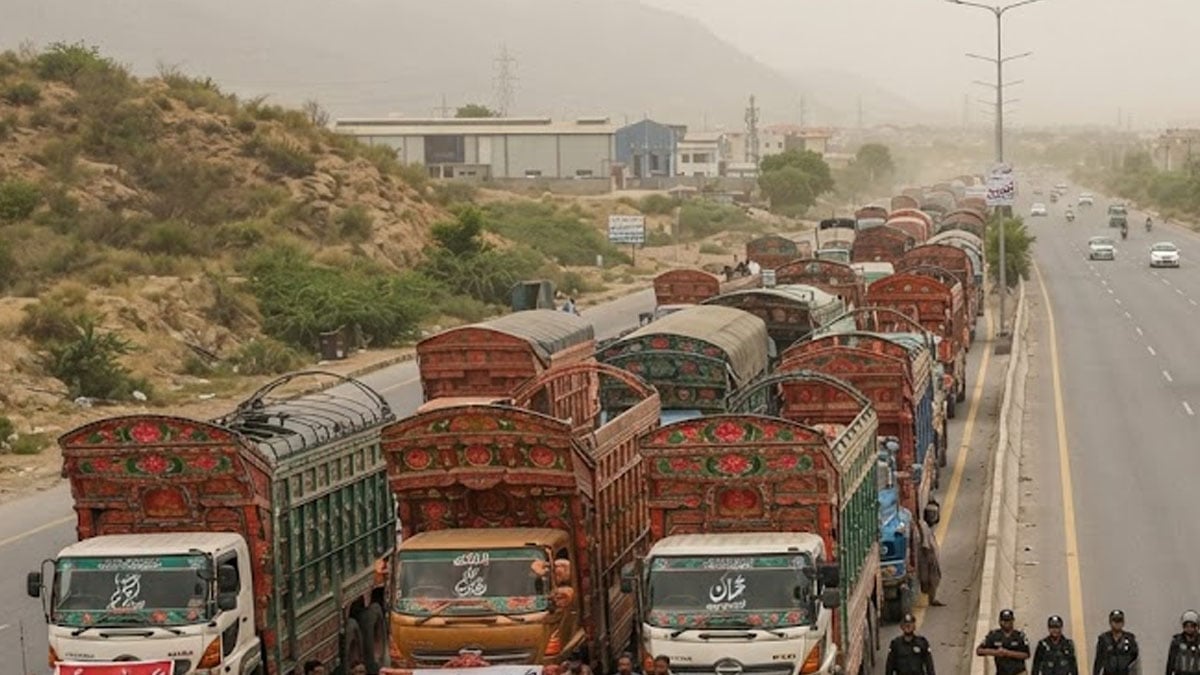
A section of Pakistan’s goods transporters called off its nationwide wheel-jam strike on Friday, 14 August 2026, after reaching an agreement with the government. But major operators running container trailers, trucks and edible oil tankers remained off the roads, prolonging disruption to port operations and the country’s external trade.
The Pakistan Transport Council, a constituent of the All Pakistan Goods Transporters Alliance, announced it was calling off the strike after what it described as successful negotiations with the government. Its office-bearers said at a press conference at the National Press Club that movement of their goods carriers was being restored across the country, and that goods transportation operations from Karachi Port and Port Qasim were being restored with immediate effect.
The council said a special committee formed by the prime minister and headed by Communications Minister Abdul Aleem Khan had held the negotiations. As a result, eight of the transporters’ immediate demands had been accepted, while committees were constituted to address the remaining issues. It said the agreement carried the signatures of office-bearers representing 15 goods transport associations from across the country.
Among the accepted demands were no increase in toll taxes for one year, the removal of additional toll plazas and implementation of a modern automated toll system. The council said an agreement had also been reached for the immediate release, against bank guarantees, of vehicles detained under SRO 1619.
The strike continues for some
The partial call-off did not end the disruption. All Pakistan Goods Transport Owners Association President Muhammad Owais Choudhry said only one segment of the alliance had broken ranks, and that the strike by container trailers and trucks would continue because their key demands had not been met.
He said the strike, which had continued for six days, was adversely affecting port activities. “The smaller goods carrier vehicles have called off the strike, but the large vehicles that move between provinces and carry heavy loads are still off the roads,” Choudhry said, alleging that the government was buying time under the cover of negotiations.
Edible oil tankers also remained on strike. Edible Oil Contractors Association President Tariq Sarbaz said operators were not lifting palm oil and palm olein from the ports for transportation to oil factories, and that the best way out of the crisis was for the government to accept the transporters’ demands.
Oil tankers return
Fuel oil tankers dissociated themselves from the strike after the Oil and Gas Regulatory Authority (Ogra) accepted their key demands. Oil Tankers Contractors Association General Secretary Malik Shoaib Ashraf told Dawn that oil tankers were not part of the strike because their demands had been accepted, and that a notification increasing freight charges was expected the following week. Freight charges are normally adjusted every two years, but the revision had been delayed.
Another meeting between the government and the striking transporters was scheduled at the communications ministry on Saturday morning.
Why it matters
The goods transport strike has disrupted cargo handling at Karachi Port and Port Qasim, the entry and exit points for much of Pakistan’s import and export trade. Container trailers carrying export cargo and edible oil tankers serving food manufacturers were still idle, so the partial call-off left supply chains and export shipments exposed even as smaller operators returned to work.
The dispute is tied to the same cost pressures behind other recent protests, including the petroleum dealers’ margin campaign and Jamaat-e-Islami’s demonstrations over fuel levies and electricity prices. Like those disputes, it pits the government’s fiscal constraints against operators who say their costs have outrun the rates they are paid.
What is still uncertain
The final scope of the settlement is unclear: the government has accepted some demands and referred others to committees, and the transporters who remained on strike had not agreed by the time of reporting. It is also not yet clear how much the stoppage has cost in delayed trade, and whether the Saturday talks will bring the container and edible oil operators back onto the roads.
Sources & reporting notes
This is a summary of published reporting, not independent reporting. Details and the quoted remarks are as carried by the cited sources, which were reviewed on 15 August 2026.
- Dawn — "Containers to stay off roads as transporters remain divided"15 August 2026 · The partial call-off, the demands accepted and the operators still on strike.
- Associated Press of Pakistan — "Transporters call off nationwide strike after successful negotiations with govt"14 August 2026 · The Pakistan Transport Council announcement and the eight accepted demands.
- HUM News — "Goods transporters end nationwide strike, say we are not smugglers"14 August 2026 · The council's decision, the losses cited and the warning that the strike could resume.