What happened
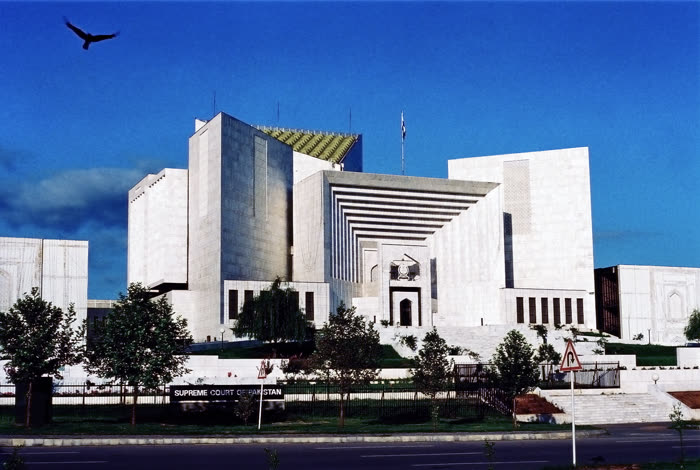
The Federal Constitutional Court released a detailed 92-page judgment on Tuesday declaring Section 7E of the Income Tax Ordinance, 2001, void, holding that the federal government cannot impose income tax on the mere ownership of immovable property in the absence of actual income.
The judgment was authored by Chief Justice of the Federal Constitutional Court Amin-ud-Din Khan and sets out the reasons behind the court’s earlier May 7 short order that had struck down the provision.
Section 7E, introduced through the Finance Act 2022, subjected five per cent of the value of immovable property to tax regardless of whether the property generated any income. The court said the provision effectively imposed a tax on ownership of immovable property rather than on income derived from it.
It ruled that taxing notional or deemed income alone is inconsistent with constitutional guarantees and that taxation should be based on actual income.
The court’s reasoning
The judgment stated that any law may be struck down if it violates fundamental rights or exceeds the limits of legislative authority. It held that Parliament’s legislative authority is confined to matters falling within the federal domain, whereas taxation of immovable property falls within provincial jurisdiction, while taxation based on the value of movable assets remains within the federal domain.
The court said the levy was incompatible with the right guaranteed by the Constitution to acquire, hold and own property, because it imposed a tax on ownership without any corresponding income.
It also found that exemptions granted to certain classes of persons under sub-section (2) of Section 7E were not supported by clear and rational justification, making them inconsistent with constitutional principles of equal treatment, and held that fiscal laws cannot be applied retrospectively.
According to the detailed judgment, Section 7E was intended not only to increase revenue but also to discourage the holding of immovable property. The court found that introducing such a measure through a Finance Bill was constitutionally impermissible.
Addressing a procedural objection, the court clarified that the constitution of benches is a matter within the discretion of the Chief Justice and that, in the absence of any legal impediment, a two-member bench is competent to hear and decide cases.
Why it matters
The detailed reasons were issued as parliament debated the Finance Bill 2026, which includes proposals connected to the court’s May 7 short order. The ruling clarifies the constitutional boundaries between federal and provincial taxing powers, and removes a levy that applied to property owners even when their holdings produced no income.
The Federal Constitutional Court had originally declared Section 7E void on May 7, 2026. The release of the detailed judgment provides the full reasoning for that decision.
Sources & reporting notes
This is a summary of published reporting, not independent reporting. Details are as carried by the cited source, which was reviewed on 2026-06-16.
- Associated Press of Pakistan — "Constitutional limits and fundamental rights govern taxation, FCCP rules in detailed judgment"16 June 2026 · The 92-page judgment, its authorship, the Section 7E findings, the Article 23 property-rights holding, the federal and provincial competence ruling, the exemption finding and the bench-competence clarification.